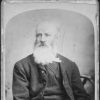
Selected from: The Question of Principle Now Raised in the Free Church Specially Regarding the Atonement (Edinburgh, 1870).
First, what is the matter really in question?
The circumstance which has occasioned the raising of a question here is, that within recent memory there was a controversy about the Atonement in one branch of what now is the United Presbyterian Church; and that in view of that controversy there is a reasonable doubt, whether the United Presbyterian Church is now completely at one with ours with reference to the Atonement. The controversy, while it lasted (1840–1845), appeared to disclose the existence in the United Secession Church of two schools of theological opinion regarding this matter, whose views were seriously antagonistic. The controversy issued in the granting (in 1845), by that Church, of a virtual toleration in her pulpit to those views of the new school which had been denounced by the other party as opposed to the Westminster Confession and the Word of God. In 1847, the United Secession Church became incorporated with the Relief Church as the United Presbyterian Church, without having in any way withdrawn that virtual toleration to those views. And in view of those facts of public history, there is a reasonable doubt regarding the matter of Atonement, whether the United Presbyterian Church is manifestly at one with ours, sufficiently for the purpose of incorporating Union. And it is this occasion of the question that gives the clue for discovering what, precisely, is the matter really in question.
The Committee’s Report, by quoting statements of the Confession regarding all the five “points” of the Calvinistic scheme of doctrine, may tend to suggest the impression that the matter in question is Arminianism or Pelagianism, or some doctrine plainly anti-Calvinistic. If, then, all the Churches be found cordially accepting all the five Calvinistic points, those who here are influenced only by the Committee’s Report may imagine that all reasonable doubt as to the unity of the Churches’ mind is now of course at an end. But this imagination will be a mistake. To direct the mind merely to the Calvinistic points is to lead it away to matters regarding which there never has been a reasonable doubt, and lead it away from the one only matter about which there has been and is a reasonable doubt. For, when we follow up the clue furnished by that occasion of the question, we shall find that the matter, the only matter, really in question here is, not Arminianism, and much less Pelagianism, but what, for brevity’s sake, I shall call Amyraldism.
Amyraldism is a convenient designation for a phase of theological opinion which has repeatedly appeared in the bosom of the Reformed or Calvinistic Church; first in the French Reformed Church two hundred years ago, and more recently in the United Secession Church in Scotland within the memory of this generation. And although the present question has reference only to our new Scotland, yet for illustration of the question it may be profitable to look to old France—after the example of the Committees, which, it appears, have considered these matters “in the full and free light of ecclesiastical controversies, ancient and modern, foreign and domestic.”
As soon as we look at this phase of opinion, “in the full and free light of ecclesiastical controversies,” we become aware that to direct the mind to Arminianism, Pelagianism, or anything directly anti-Calvinistic, is to turn it away from at least Amyraldism. For Amyraldism is at no point directly anti-Calvinistic. It does not presuppose a rejection of Calvinism at any point. On the contrary it presupposes an acceptance of Calvinism at the points on which it touches. The points on which it touches are, election and redemption or atonement. With reference to these points, it affirms the Calvinistic particularism—particular election of God’s love, and particular redemption by Christ’s death. It thus is not directly anti-Calvinistic: no one but a Calvinist can be an Amyraldian. But—and this is the distinguishing characteristic of Amyraldism—while holding the Calvinistic particularism, of election and redemption, it holds, in combination with this Calvinistic particularism of both, an un-Calvinistic (not directly anti-Calvinistic) universalism of both or of either.
Amyrald, for instance, was avowedly a Calvinist. He—along with Testard—was repeatedly absolved by the National Synod of his Church (1637–1645), on the ground that he had not directly impugned any one of the five Calvinistic points as set forth by the Synod of Dordt. But, in combination with the Calvinistic particularism, he held an un-Calvinistic universalism. Thus, with reference to election, he did not deny that there is a special purpose of God, to save a definite number of lost men, which infallibly determines the actual salvation of them all. But he affirmed that there is, besides, a more general saving purpose, intention, or desire of God, having reference to all men, which does not determine the actual salvation of any one, but which puts it in the minister’s power to say with truth to every one, “God loves thee, or desires to save thee.” In conversation with Romanists he had been confronted with the difficulty which we all must have felt in harmonising, if we have attempted to harmonise, the Calvinistic particularism of election with the Scripture universalism of the gospel call; or the fact that God has chosen only some men to salvation with the fact that He sincerely invites all men to believe and be saved. And, without abandoning his professed belief in that particularism, he sought a solution of the difficulty in the doctrine of an un-Calvinistic universalism as now explained—a doctrine which he found in the writings of Cameron his master. But so far was he from regarding this doctrine as directly anti-Calvinistic, that he and his school would not so much as admit they held a new substantive doctrine at all. What they had devised, they maintained, was, rather, merely a new method of dealing with sinners about the gospel call. And hence the name of Methodists, by which they chose to be known.
The inward occasion of the reappearance of Amyraldism in Scotland may, perhaps, have been that same painful feeling of difficulty, referred to as having partly occasioned the rise of the new method or doctrine in France. A disciple of the new school once said to me—“What I want is, to be able to say to every sinner, Christ died for thee.” And if he meant by this to assign to the dying Christ any purpose, intention, or desire to save every sinner of mankind, then his formula was, in meaning, precisely coincident with Amyrald’s “God loves thee, or desires to save thee.” For in all the relative controversies, “ancient and modern, foreign and domestic,” the matter in question has always been the objective destination of salvation to men, or of men to salvation; and it does not affect the question whether we regard the destination as eternally existing in the divine decree of election, or whether we regard it as existing in the mind of God incarnate on the cross, in His execution of that decree in time. In both aspects it occasions precisely the same difficulty with reference to the universal Gospel call:—how can this be consistent with a limited destination? And it is certain that, as in old France, so in new Scotland, the new school of opinion, if not originating in the attempt to solve that difficulty about the gospel call, has at least claimed, as one great advantage on its side, to have found a solution of the difficulty.
While in speculative France the subject—of destination—was discussed in connection with election as well as redemption, in practical Scotland it was discussed almost exclusively in that relation in which it comes most directly home to men’s business and bosoms—i.e., in its connection with the death of Christ. In Scotland, too, the new school was not anti-Calvinistic at any point. The only individuals among them found anti-Calvinistic at any point were expelled from the ministry. The disciples of the new school were thus honourably faithful, in somewhat tempting circumstances, to the Calvinistic particularism of redemption by Christ’s death; or to the doctrine that Christ in dying was giving His life with a view to the salvation of a definite number of lost men, and that the intended effect of His dying for them was infallibly to secure, by purchase, the salvation of them all. But, as in Amyrald’s case, so in theirs. Along with that Calvinistic particularism they contended for an un-Calvinistic (not directly anti-Calvinistic) universalism.
Some of the new school did not manifestly differ from the old: so far as they were concerned, the controversy may have been a logomachy—e.g., Dr Heugh, of Glasgow, in his speech at the Synod meeting, 1845, said that—“He understood by this general relation no more than he had preached since he had preached at all—that the Atonement of the Saviour was sufficient for all, suited to all, and free to all.” Regarding some, it is extremely difficult to determine what they really meant to affirm; and not unlikely that they themselves had no clear consciousness of a definite meaning in their utterances. The difficulty is augmented by the ambiguity of the expression, then much in vogue, a “two-fold reference” of the Atonement. But a judicial consideration of the surviving records of the controversy will result in the conclusion of Principal Cunningham—clarum et venerabile nomen—that the doctrine of the new school, so far as it was a new school, was in substance Amyraldian. And I think that the expression that most fairly defines the theological position of the school, so far as really new, is one that was employed to define it at the time, although it came to be repudiated by members of the school when contending for the thing expressed—viz., a “two-fold substitution” of Christ for sinners in His death. It was not denied that Christ in dying was in a special way the substitute of the elect—that the offering of His life was strictly the payment of the ransom price of theirs, and as such infallibly secured by purchase the salvation of them all. But it was affirmed that there was, besides, a more general substitution of Christ for all men, which has not secured by purchase the salvation of any one, but which puts it in a minister’s power to say with truth to every sinner, “Christ died for thee.”
In illustration of the view I have given of their opinion, I here make some extracts, which I have collected from the published Report of that discussion, of Synod 1845, in which the controversy came to a climax. As to the view really held by the school, the following may be regarded as decisive:—“That the death of Christ is a satisfaction, or atonement for all; that is, a universal atonement, expiation, or ransom.”—Balmer’s Statement, quoted by Hay, p. 12. Hay’s own representation of the new school view is condensed in the expression, “double suretyship” (p. 17), and expanded in the sentences (10–12), of which the following are fragments:—“That Christ had made satisfaction for all men; . . . that Christ had made an atonement for all men. . . . He now found that the doctrine of a general reference of the Atonement was neither more nor less than this, that Christ died for all men.”
After the Morrisons and other anti-Calvinists were expelled, the personal interest of the controversy was concentrated on the case of the two professors, Brown and Balmer, regarding which I here transcribe some notes which I find among my papers. They had been suspected of Morrisonianism. They therefore made their Statements to the Synod of 1843, in which they declared for the special substitution. But they were still accused of having, even in those Statements, declared for a general substitution. Balmer’s Statement (e.g. as quoted above, at second hand from Dr Hay), is perfectly clear and conclusive against him. Brown’s expressions were more guarded. And he may never, with full and clear consciousness, have embraced the doctrine of the new school. But the reading of Dr Cairns’ Life of him has left on my mind a decided impression that he was in the groove of Amyraldism.
The resolution of Synod (1843), on the back of those Statements, expressed delighted satisfaction; and declared (1) unmistakably for particular redemption, but (2) vaguely and ambiguously with reference to the general aspects of redemption. This gave so little satisfaction to the Church (United Secession), that in 1845 there came up forty-seven memorials, petitioning the Synod to rescind the resolution of 1843. The rescission was refused by a majority of Synod, many of the ministers formally dissenting from its finding. And the only satisfaction given to these was in an expression, thrown into the answers to their Reasons of Dissent, affirming the “exclusive suretyship” of Christ, i. e., His being the surety only of the elect.
The Reasons of Dissent contained the following quotation from the Testimony of the General Associate Synod, 1804:—”We assert and declare that Christ died for the elect, and for them only. The death of Christ, possessing infinite merit, is, indeed, in itself sufficient for the redemption of all mankind. But in respect of the Father’s assignation, and His own intention, He died only for the elect. . . . All for whom Christ died shall infallibly be saved. . . . We therefore condemn, and testify against, the following error, . . . that Christ died in some sense for all men.” A curiously ambiguous sentence in the Testimony of 1830 is said to have been inserted at the instance of Dr (then Mr) John Brown.
So far my notes under this first head. They are intended to show that the only matter in question, the only matter, that is, in connection with which there is any reasonable doubt, whether the Churches are at one, is Amyraldism, particularly in the form of a doctrine of universal redemption or “two-fold substitution.” While this has been their leading intention, they have been intended at the same time, with a view to facilitate inquiry under the following heads, to show what, precisely, that Amyraldism is and is not. And, unless the representation have been an utter failure, it has already appeared from these notes that a most effective method of preventing real inquiry into the one only matter here in question would be, to lead the Church away on a wild-goose chase, after everything or nothing, over the whole domain of the doctrine of Grace.
2nd, What is the real question about this matter?
There is a theological question, that has been frequently touched on since the beginning of the Union movements, regarding which I feel disposed to make a statement at this stage of my speech. And yet I am hampered by a fear that the introduction of that statement here may be a contribution from me towards leading the Church courts away from the real question; while I am earnestly persuaded that, for them to be led away in any way from rigorous judicial consideration of that real question would be a serious calamity to the Church. I therefore shall compromise the matter by making the statement, but at the same time formally protesting that it is not regarding the real question. And perhaps it may be found that this ostensibly irrelevant statement shall, apart from its intrinsic merit or demerit as a contribution to Christian theology, do some service by adding to the intelligent interest of readers in the real question of principle about this matter now before our courts.
1. A question which is not the real question. The question which, under this self-condemnatory description, I propose to discuss here is this:—Does Amyraldism (or self-styled Methodism) really give such a solution of the difficulty, in connection with particular election and redemption, as will give it a title to the favour of men who are seriously Calvinistic in their views? To this question I answer, No:—it removes no real obstacle from the sinner’s way to lost life in God, but really interposes obstacles in his way. And the ground on which I answer this is exhibited in the following notes:—
It removes no real obstacle. Amyraldism, with its un-Calvinistic universalism, occasioned, both in France and Scotland, a full and explicit recognition on the part of old-school Calvinists of what I shall call the true Calvinistic universalism. And this true Calvinistic universalism shows that no obstacles really are removed by Amyraldism. For the true Calvinistic universalism extends to the following details:—
First, The Gospel Offer and Call, addressed to all sinners of mankind. How a sincere invitation to all men can be harmonized with the doctrine or fact of the election and redemption only of some men, Calvinists of the old school do not pretend to explain; just as neither old school nor new pretend to explain how God can seriously address the Ten Commandments to all men, while only to some men he has resolved to give the power to obey them. But old school men and new, while confessedly unable to give a rationale or explanation of the fact, yet affirm the fact itself, that God is sincere in bidding all men obey the commandments of the Decalogue. And in like manner the old school men, though confessedly unable to give a rationale or explanation of the fact, yet affirm the fact itself, that God sincerely invites all sinners to believe and be saved. The perfect unanimity with which they affirmed this in the old time is significantly illustrated by our own Confession, in not laying any stress on the fact, not making it the subject of a distinct chapter, article, or even sentence, but simply referring to it cursorily, in an utterance regarding the Covenant of Grace. The fact would certainly have been set forth more formally and prominently in our Confession if in the old time it had been seriously questioned by any noteworthy party among Calvinists; if, for instance, any noteworthy party among them had been of the same mind as Andrew Fuller’s first congregation in our new time, who would have him to preach the gospel only to the elect, and would fain have prevented him from addressing to the unconverted its gracious offers of salvation. The manner in which the fact appears in our Confession really shows that, to the apprehension of the Confessors, the fact was in their old time an undisputed commonplace. And certainly the fact has not been disputed, either in France or in Scotland, by those Calvinists of the old school with whom the Amyraldians have had to do. The most thorough-going old-school Calvinist in Scotland at this hour is as faithful in offering free salvation to all men as any Amyraldian in Scotland can be.
Second, A Divine complacency in man’s well-being and well-doing. While persistently maintaining that there is no such thing in God as a saving purpose, intention, or desire, that does not infallibly determine salvation, the old school maintain also that there is in His nature a certain complacency or delight in man’s holiness and happiness; such that He is really pleased when men obey His law, and really displeased when they obey not; and that He sincerely mourns over the misery of the unbelieving impenitent as lost, while sincerely rejoicing over the blessedness of penitent believers as saved. They affirm that this complacency, inherent in God’s nature, is most wondrously illustrated in the great work of His redeeming grace, and ought to be set forth as a motive and encouragement to saving faith. And they affirm, besides, that it presents the same aspect of motive and encouragement to faith towards all unconverted men alike, without any discrimination of elect from non-elect.
Third, Certain aspects of redemption, as achieved in Christ’s death. While persistently maintaining that there is no real substitution or suretyship of Christ but for the elect, the old school have affirmed that God’s redeeming grace in Christ has certain aspects towards all men indiscriminately. Thus, for instance, it secures to them all a season of suspended judgment and offered mercy. Again, it provides an inexhaustible fulness of saving merit, or power of right amply sufficient in itself for the salvation of all men. And, once more, in the great atoning sacrifice it gives an open way, by which God comes with free salvation to men, and all men are freely invited to go for that free salvation to God. These three general aspects of redemption have been recognised by the old school of Calvinists both in Scotland and in France. But there are points in this connexion on which I must make episodical notes:—
As to the connexion of all-sufficiency of grace with the universalism of the gospel offer. Regarding the nature of that connexion, there has been some disagreement, at least in words. Some have spoken of the all-sufficiency as being a basis of the offer, in the sense of constituting a warrant to sinners in the appropriation of Christ, or to ministers in their invitation to sinners. But this way of speaking has been objected to—in my estimation, justly—as untruthful, dishonouring to God, and fitted to encourage delusive hopes in men. The fact of there being abundant provision in a certain house does not warrant a hungry stranger in entering and feasting. That abundance can of itself serve only as a motive to enter, or encouragement to enter. It cannot of itself really serve as a warrant, in the proper sense of this term. The only thing that can really serve as a true warrant is an invitation or permission from the owner of the house. In like manner, we say, the all-sufficiency of grace in Christ does not of itself constitute a true warrant to us, who “were afar off,” in taking Him and His riches of grace to ourselves. Our only true warrant in this act of faith, the minister’s only true warrant in inviting us to faith, is the permission or invitation of God in His Word. It is only from this Word that we can know it is His will that all sinners of mankind should receive for salvation His riches of grace in Christ. And, having this true warrant in the Word, the express declaration of His will, what we have in the all-sufficiency of that grace is not, properly, a supplementary warrant, but only a motive to faith or encouragement in believing. Otherwise, the invitation shall no longer, on God’s part, be free and sovereign; but constrained, or of necessity, necessity consequent on the death of Christ. And the foolish virgins shall find in eternity that “the door was not shut.” For if the door be now kept open by any necessity consequent on the death of Christ, and not solely by the free sovereign pleasure of God, it will follow that it must remain open for ever and ever; because all through eternity it shall remain a fact that Christ has died, and has achieved an infinite fulness of merit by His obedience unto death. But, on the other hand, if in eternity the door be shut by the free sovereign pleasure of God, it will follow that there is no such thing as a necessity to keep it open consequent on the death of Christ, and that it is only God’s free and sovereign pleasure that now has opened it in time, and keeps it open through time. This question, however, about the precise nature of the connexion between full sufficiency and free invitation is not, properly speaking, a question between Amyraldism and old-school Calvinism, but one that has been discussed among old-school Calvinists themselves, and regarding which they can afford to agree to differ.
These episodical notes I shall now follow up by a digression, in the form of a practical remark. Calvinism is not constituted merely by the five Calvinistic “points.” The “points” in the system are only as bones, by which the fair living body of truth is kept from collapsing into a mere chaotic mud-heap. And the flesh and blood, and blooming beauty, of that fair living body cannot be exhibited nor seen apart from those things I now have enumerated under the description of the true Calvinistic universalism. Those things, therefore, in order that men may be drawn as “with the cords of a man,” must shine on the forefront of all our preaching. To set forth the “points” so as to hide those things from view, would be to present to men’s embrace a frightful skeleton—nothing but bones—instead of the fair living body of truth divine. It may be that some old-school Calvinists in France or Scotland, or both, though theoretically recognising the humaner aspects of the truth, were yet in their practical teaching too exclusive in presentation of the “points”; and that the new movement in both countries may have owed its origin, or force, in some measure, to a recoil of humanity from the ghastly caricature—nothing but bones—thus pressed on its embrace. And certainly if we, in our practical teaching, so caricature our grand Calvinistic system that it shall appear to be all “points,” nothing but bones, there will be a recoil of humanity from our teaching; and the recoil thus provoked may result, in our day, in something far more formidable than mere Amyraldism.
Returning, now, from both digression and episode, I recall attention to that from which I started, viz., the proposition that Amyraldism, both in France and in Scotland, occasioned a full recognition, by old-school Calvinists, of what I have described as the true Calvinistic universalism. When the old-school Calvinism had in this way exhibited its own true nature, Amyraldism was thenceforward manifestly shorn of a large part of its argumentative strength. For a very large part of what has been advanced ostensibly in support of an un-Calvinistic universalism is really relevant only to the maintenance of that universalism which has always been cordially owned by the old school. Thus far, therefore, Amyraldism has really done nothing towards smoothing the sinner’s way to salvation in Christ; for thus far, (i.e., in all that can be truly said in support of a bona-fide gospel call to all sinners, a divine complacency in man’s well-being and well-doing, and some general aspects of redemption), thus far Amyraldism has not originated any thing new or peculiar, but merely given new emphasis to some commonplaces of the Calvinism of the old school.
At the same time, the new school came into peril of losing not a few of its disciples. For many of these, it may be presumed, had been influenced in joining the movement by an anxious desire to vindicate those common-places; and these would find, as soon as the old-school Calvinism had explained itself, that for the vindication of those common-places there is no need of a new school:—Thus one of them once said to me, after I had read in his hearing a paper on the subject, “I prefer your old-school Calvinism to our loose new schoolism.” And when the old school had, by explaining itself, reclaimed its own common-places, the residuum, Amyraldism pure and simple, stripped of popular irrelevancies, presented certain aspects which might well dispose sober-minded men among its adherents to reconsider their position of adherence to it.
The more malignant aspects of Amyraldism are as follows:—
First, The notion of any saving purpose of God that does not infallibly determine salvation; or, in other words, of a frustrated intention or disappointed desire, of His; this notion is not only on the face of it unscriptural, but in the heart of it offensive even to our natural reason, because inconsistent with the very nature and perfections of Deity. Nor does the notion gain anything, in respect of spiritual seemliness, when transferred from God’s eternal decree to the execution of that decree in time on the cross. For the notion of any substitution of Christ that does not infallibly secure by purchase the salvation of all for whom He died, is deeply dishonouring to the person and work of the adorable Substitute.
Again, The two notions alike (or the notion in its two applications alike), must, where seriously entertained, tend to undermine the believer’s assurance of hope. For that assurance is ultimately founded on the truth, that all God’s purposes are unchanging and effectual, and that no sinner can ever perish for whom Christ gave His life on the cross. The assurance, therefore, is fatally undermined by the notion, that there is a changeable or ineffectual purpose of God, and that many of those for whom Christ gave His life shall nevertheless fall into death eternal.
Once more, The two notions alike (or the notion in its two applications alike), must tend, where seriously entertained, to prevent unbelievers from coming to God in “full assurance of faith.” It is at this third point that Amyraldians deem themselves strongest. Hence, as I have said, in France they assumed the name of Methodists, under the impression that their doctrine constitutes a method or way, more excellent than had previously been known among Calvinists, of leading sinners to salvation through faith, and particularly of helping them over the difficulty, already referred to, in the way of believing. And it is at this point—their strongest—that I find them weakest.
Their doctrine here not only gives no real solution of the difficulty it professes to solve, but really tends rather, by creating new difficulty, to harden men in unbelief instead of winning them to faith. For, while presenting to men’s eye a delusion and a snare, it diverts their attention from the one revealed way of life and peace. It thus is fitted to make sceptics rather than believers. Such is my finding, the result of much study of the subject, most of which had no regard to the Union question. And the grounds of this finding may be conveniently set forth in the form of the following apostrophe, to an imagined brother minister of the Amyraldian way of thinking:—
Your notion of a general purpose of God (as distinguished from that special purpose about which you and I are agreed), permits you, you tell me, to say to every sinner, “God loves thee, or intends or desires to save thee.” But at the same time it binds you, if you will be in this matter an honest man, to go on to say, further:—“Yet, I cannot tell thee whether He loves thee so as to secure thy salvation, or so that, once knowing that He loves thee, thou shalt know at the same time that thy salvation is infallibly secure. For aught that I can tell thee, regarding what I call His love to thee, He may have sovereignly ordained thee to thy deserved doom of everlasting death.”
Your notion, again, of a general substitution of Christ in His death (as distinguished from that special substitution regarding which you and I are agreed), enables you, you tell me, to say to every sinner, “Christ died for thee.” But at the same time it binds you in Christian honour to add:—“Nevertheless, I cannot tell thee whether He has or has not really redeemed thy soul from death. If thou believe not now, thou art under condemnation now:—the clouds of God’s wrath brood over thee unremoved; the lightning curses of His law pursue thee through life; and, though Christ have in some sense died for thee, yet, for aught that I can tell, He may, even in dying, have been purposely leaving thee to death eternal.”
To an awakened lost soul, what is this boasted method of yours but a manifest delusion, and snare, presenting a mocking mirage, instead of true water of life; having a word of promise to the ear, which is broken to the hope and faith. And while the lost soul’s attention is thus drawn away by your doctrine to treacherous sinking sands, at the same time it is drawn away from the one solid Rock, the true way of life, as set forth in the old unambiguous language of Canaan. That language runs thus :—
“I cannot tell thee whether God loves thee as He loves His own, nor whether Christ has died for thee, as He surely has died for all the elect: that can be known to men only when Christ lives in thee, and thou lovest God and man. Nor can I explain to thee how the free invitation of the gracious gospel to all may be harmonized with the sovereign particularism of grace in election and redemption. There is a mystery here too vast for my narrow and shallow comprehension. Here I have nothing to draw with, and the well is deep. But this I can tell thee, for this is what God has told me in His word:—His love, with which He loves His own, is freely offered to thee as thy life. The all-sufficient fulness of His Christ is freely offered to thee as a ‘way’ to life in His love. The bosom of that love which is life is wide open to thee as the sky. The arms of that love are stretched out far to thee from the cross. The voice of that love cries, Come, to thee, in the Spirit, through the Bride. And if only thou hear, thy soul shall live. Only give thyself over, a lost sinner, into the arms and bosom of that freely-offered love, and that love of God shall be thy portion, and the righteousness of Christ shall be thy white raiment, and the Spirit of Christ shall be thy new and true life, and thou shalt be saved, for ever and ever.”
So speaks the Calvinism of the old school,—“upright, downright, and straightforward.” The practical tendency of its clear-ringing utterances has been shown, through many ages and lands, in the conversion of myriads of sinners to God, as well as in a peculiarly deep and strong establishment of believers in their faith and hope. In order to be accepted and loved by all true children of God on earth, as it is accepted and loved by all His children in heaven, it needs only to be known and understood by His children on earth as it is known and understood by His children in heaven—who know nothing of an ineffectual purpose of God, or of a substitution of Christ that does not infallibly secure salvation by purchase: (Witness their songs in the Apocalypse.) And thus, for the prevention or cure of Amyraldism, we should prescribe an intelligent appreciation of that old-school Calvinism on which it professes to be an improvement: believing that in this case the principle applies—“No man, having tasted old wine, straightway desireth new; for he saith, The old is better.”
How far such considerations on second thought have influenced the new school, it is not easy to judge with confidence. Amyrald, it appears, after the first heat of controversy was past, refrained in his later years from harping on Amyraldism, having found it, perhaps, to be at best a theological “mare’s nest.” But in other cases in France, it unhappily appeared that Amyraldism was only the first step towards Arminianism or Socinianism. In Scotland, on the other hand, while a few of the early leaders went off into Arminianism, and were consequently expelled from their Church, with the school as a whole, once the new doctrine was fairly articulated, the tide appears to have turned; so that it may now be hopefully inquired whether the surviving members of it have not in substance resumed the position of the old school, though still retaining in some cases an un-Calvinistic form of expression. And, generalising from history and from the nature of the thing, we may speak of Amyraldism thus:—It is not a system on which any community can long repose in stable equilibrium. It represents a condition of unstable equilibrium. Any community that once has embraced it will soon be found moving away from it, either up and back towards Calvinism of the old school, or down and forward towards Arminianism or worse. And the direction of this ulterior movement, upward or downward, will depend, under God, on the general condition, intellectual and spiritual, of the mind of that community in which it takes place.
2. The real question here is, whether, with reference to the matter in question, the Churches have been shewn to be sufficiently at one. There is much reason to believe that Amyraldism is excluded from the pulpit of our Free Church by her law; or, in other words, that it is condemned, expressly and directly, by the Westminster Confession.
What, then, we inquire, is the doctrine of the Confession here? It has been said in this connection, that the Confession speaks only to the positive Calvinistic “points,” or the aspects of sovereign grace towards the elect, and leaves quite undetermined all questions about possible further aspects of that grace, or possible aspects of it towards the non-elect. And this opinion may appear to receive some colour of antecedent probability from the circumstance that, at the time when the Confession was being written, Amyraldism had not yet invaded Britain in any appreciable force. So late as the time of the Revolution, Louis du Moulin, in a Latin pamphlet on the subject published at London, could name no noteworthy British Calvinist, among Non-conformists, by whom the new doctrine had been publicly embraced, excepting the multifarious Richard Baxter.
But, per contra, with reference to antecedent probability, I make the following statement:—The authors of the Confession were bound, in terms of the Solemn League and Covenant, to have due regard, in their whole work of reconstruction, to the example of the “best Reformed Churches.” Their eyes were thus directed to the Continent. And on the Continent, for years before the Westminster divines assembled, the Amyraldian controversy had been raging in the Reformed Church of France, so as to elicit public letters to her of inquiry and warning from the Reformed Churches of Holland and Switzerland. And it is antecedently most improbable that those divines should, in their Confession, have ignored a grave theological controversy, ostensibly affecting the vitals of the faith, which was then convulsing the Calvinistic world before their eyes; and which, as will be remembered by readers of Baillie’s Letters, was at the time a matter of grave solicitude to their minds and their hearts.
The inference suggested by antecedent probability is corroborated by authorities deservedly high in repute. Of these I shall here cite only two, from very opposite quarters. On the one hand, Daillè, the great advocate of Amyraldism, in his Apologia pro Duabus Synodis (A.D. 1655), by far the greatest work in defence of that system, shows very significantly that, in his estimation, the Westminster Confession does not leave the question of Amyraldism open. He manages to fill a whole volume with what he regards as testimonies in favour of Amyraldism from all sorts of leading Calvinistic works, from the Synod of Dordt back to the Reformation, and far back beyond the Reformation, including even the utterances of Dordt Synod itself ! But he does not venture to quote so much as one word from the Westminster Standards. On the other hand, I refer to Dr Cunningham, incomparably the greatest authority in such a case as this,—regarding the meaning of the Westminster Confession in its relative utterances,—that ever has pronounced a judgment in such a case. I have already referred to his having said, in the deliberate and judicial utterances of his Historical Theology, that the characteristic opinion of the new school in the United Secession Church was coincident in substance with that of Amyrald and his school. I now refer to his view of the relative teaching of the Westminster Confession. And I record the fact, patent to any reader of his Historical Theology, that in Dr Cunningham’s estimation the universalism now in question, so far from being left open by the Confession, is condemned by the Confession, formally and expressly, not only once, but again, and again, and again; and that Dr Cunningham not only says this, but in his own estimation proves it, from the relative utterances of the Confession.
The following statements of the Confession are to the point:—
“III. 6. As God hath appointed the elect unto glory, so hath He, by the eternal and most free purpose of His will, foreordained all the means thereunto. Wherefore, they who are elected, being fallen in Adam, are redeemed by Christ; are effectually called unto faith in Christ by His spirit working in due season; are justified, adopted, sanctified, and kept by His power through faith unto salvation. Neither are any other redeemed by Christ, effectually called, justified, adopted, sanctified, and saved, but the elect only.
“VIII. 5. The Lord Jesus, by His perfect obedience and sacrifice of Himself, which He, through the Eternal Spirit, once offered up unto God, hath fully satisfied the justice of His Father, and purchased, not only reconciliation, but an everlasting inheritance in the kingdom of heaven for all those whom the Father hath given unto Him.
“8. To all those for whom Christ hath purchased salvation, He doth certainly apply and communicate the same, making intercession for them, &c.
“XI. 4. God did, from all eternity, decree to justify all the elect; and Christ did in the fulness of times die for their sins, and rose again for their justification.” (The italics in this and the preceding statements are mine.)
The statements themselves, duly regarded in the light of the circumstances in which they were prepared, are manifestly fitted, and presumably intended, to condemn every sort of un-Calvinistic universalism, Amyraldian as well as Arminian. They appear, at least, to be intended to express, among other things, what is expressed in the following statement of the Consensus Helveticus—a document prepared (A.D. 1676) for the avowed purpose of condemning Amyraldism:—“Accordingly, in the death of Christ, only the elect, who in time are made new creatures (2 Cor. 5:17), and for whom Christ in His death was substituted as an expiatory sacrifice, are regarded as having died with Him, and as being justified from sin; and thus, with the counsel of the Father, who gave to Christ none but the elect to be redeemed, and also with the working of the Holy Spirit, who sanctifies and seals unto a living hope of life eternal none but the elect, the will of Christ, who died, so agrees and conspires in perfect harmony, that the sphere of election by the Father, redemption by the Son, and sanctification by the Spirit, one and the same.”—(Canon 13, quoted by Hodge, on the Atonement, pp. 365–366.)
Dr Cunningham contends that this view of the matter results inevitably even from the one statement (VIII.8):—“To all those for whom Christ hath purchased salvation, He doth infallibly apply and communicate the same.” And that the matter has always been thus understood in our national Church, except where there have been circumstances obviously tending to bias the judgment, may appear from the following note:—
There is no good reason to believe that, prior to the rise of that new school in the United Secession Church, an un-Calvinistic universalism was ever embraced by any party of Calvinists in Scotland. It has been said in this connection, that the new school only revived a doctrine that had previously been promulgated by the “Marrow” divines, including the first fathers of the Secession. This has been said so often and so confidently that some may regard it as matter of course. But in fact it is demonstrably the opposite of the truth. From those divines it would be easy to produce statements in favour of some sort of universalism, and in this way to show that they were Amyraldians;—the same way in which Dallaeus could show, to his own satisfaction, that all Calvinists before Amyrald were Amyraldians. But the question here is, whether they deliberately contended for an un-Calvinistic universalism. And to this question it happens that they, with full and clear consciousness, have unmistakably answered for themselves.
The answer is such as might have been expected from their general relation, of antagonism, to Baxterianism. Their adversaries, such as Principal Hadow, accused them, on account of certain statements in the Marrow, of holding an un-Calvinistic universalism of redemption. Those statements of the Marrow have certainly at first sight an Amyraldian complexion: such, for instance, as the statement, addressed to the unconverted sinner, “Christ died for you.” But the “Marrow” divines with one consent repelled the accusation as a calumny. They endeavoured to explain those statements of the “Marrow” in a strictly Calvinistic sense: for instance, they explained the statement, “Christ died for you,” as meaning simply, “Christ is dead for you to come to,” if you will. The repudiation and explanation are recorded in Boston’s Notes on the Marrow; in Riccaltoun’s Sober Inquiry; and, instar omnium in this connection, in the famous doctrinal manifesto of the Secession fathers (A.D. 1742), their “Act Anent the Doctrine of Grace.” The value of their explanations, as an exposition of the Marrow, is a matter of no consequence to us here and now. The matter of real consequence here and now is the fact that, in addition to a general repudiation of un-Calvinistic universalism of redemption, they gave such explanations of the detailed statements of that book as would never have been given by any but Calvinists of the old school. And this is perfectly in keeping with the strain of their statements when the case of the Marrow was before the Church Courts. (For which see Brown of Whitburn’s Gospel Truth.) I do not see how any clear-thinking man, who fairly considers their statements to the point, can fail to embrace as the only tenable conclusion, that those fathers did not hold any really un-Calvinistic universalism, and that the universalism they really held was only what we have described as true Calvinistic.
An experimentum crucis was furnished by the case of Mr Mair, one of those fathers. An overture from the Presbytery of Edinburgh had called the attention of their Synod of 1754 to a “matter of public notoriety, that the Arminian Scheme of Universal Atonement and Redemption as to purchase was lately revived and industriously promoted, in somewhat of a new and ensnaring form.” Thereupon the Synod published an “Act concerning Arminian errors,” including a series of doctrinal articles, of which the following is one:—
“III. That there is but one special redemption, by the death of Christ, for all the objects thereof; as He died, in one and the same respect, for all those for whom He in any respect died: or, He died out of the greatest special love for all in whose room He laid down his life; with an intention of having them all effectually redeemed and saved, unto the glory of His grace.”
The italics here—which are not mine—are very significant. From those articles Mr Mair dissented, at first without reasons; but afterwards (1755), among other reasons, for the following, which was laid before the Synod by a Committee, in an extract from his reasons of dissent:—
“That, besides the special objective destination and intention of our Lord’s death, respecting the elect, there was some kind of general or universal objective destination and intention thereof in the transaction is of the New Covenant: That in some sense Christ was made sin for all the hearers of the gospel, and made satisfaction for the sins of all those to whom he is exhibited by the gospel; yea, that in some sense Christ died for all mankind, or shed His blood for them—making a full payment of their debt, and a satisfaction to justice for their guilt, by some kind or manner of intention in His making satisfaction: And that this universal objective destination of the death of Christ necessarily belongs to the ground on which sinners may be invited to Christ; . . . . . that an excluding all such concern in or claim to the death of Christ, as for the man in particular, until he believe, leaves no access for an applying faith: And that the purchase of Christ admits of a further and larger consideration than is treated of in our Standards.”
In affirming a “special objective destination and intention of our Lord’s death,” Mr Mair showed himself to be no mere Arminian. But in affirming, along with this, “some kind of general or universal objective destination thereof,” he showed himself to be an Amyraldian, precisely anticipating the leading position of the new school in the United Secession Church. And in maintaining that that universalism is necessary as a basis of the gospel offer, and that “the purchase of Christ admits of a further and wider consideration than is treated of in our Standards,” he anticipated, with curious precision, two of the most important subsidiary positions of that school. How, then, was he dealt with by his Church, which that school has in this matter professed to represent to our time?
“The Synod did strictly prohibit him from teaching or venting any tenets or opinions contrary to the articles of truth asserted in the Act of Synod dissented from; and particularly from venting or teaching the above and such other tenets or opinions which were evidently subversive of our received and sworn-to Standards of doctrine.”
After two years of dealing with him, during which he proved invincibly firm in those “tenets or opinions,” the Synod laid him under the censure of deposition and lesser excommunication. The preceding account of his case is derived from a Display of the Secession Testimony, by the master hand of Adam Gib (1774). The Secession fathers, it will be observed, condemn his doctrine as being “evidently subversive of our received and sworn-to Standards,” so that their weighty testimony now falls to be added to what has already been said in support of the view, that Amyraldism is condemned by the Westminster Confession. And their deposition and excommunication of Mr Mair shows how far Amyraldism, or un-Calvinistic universalism, was from being embraced by the only school of Calvinists in Scotland by whom any one imagines that it ever was embraced previous to the rise, within our own memory, of the new school in the United Secession Church.
This historical fact may itself be regarded as a good reason why there should now be serious judicial consideration in our Church Courts with reference to the doctrinal matter in question. For it appears to show that any departure on our Church’s part from her position, as maintaining the Calvinism of the old school, would be on her part a departure from the doctrinal type of the Reformation Church of Scotland. And, on the other hand, the fact that the Scottish Church, up to the rise of that new school within our memory, was uniformly of the old school when Calvinistic at all, is an additional presumptive evidence in favour of the view that the new-school doctrine is excluded from the pulpit of our Church by her law; or, in other words, is condemned by the Westminster Confession of Faith.