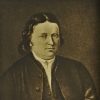
AuthorAdam Gib (1714-1788)

Adam Gib (1714-1788), Scottish divine and leader of the Antiburgher section of the Scottish Secession Church, was born on the 14th of April 1714 in the parish of Muckhart, Perthshire, and, on the completion of his literary and theological studies at Edinburgh and Perth, was licensed as a preacher in 1740. In 1741 he was ordained minister of the large Secession congregation of Bristo Street, Edinburgh.

In 1745 he was almost the only minister of Edinburgh who continued to preach against rebellion while the troops of Charles Edward were in occupation of the town. When in 1747 “the Associate Synod,” by a narrow majority, decided not to give full immediate effect to a judgment which had been passed in the previous year against the lawfulness of the “Burgess Oath,” Gib led the protesting minority, who separated from their brethren and formed the Antiburgher Synod in his own house in Edinburgh. It was chiefly under his influence that it was agreed by this ecclesiastical body at subsequent meetings to summon to the bar their “Burgher” brethren, and finally to depose and excommunicate them for contumacy.

Gib’s action in forming the Antiburgher Synod led to his exclusion from the building in Bristo Street where his congregation had met. In 1765 he made a vigorous and able reply to the General Assembly of the Church of Scotland, which had stigmatized the Secession as “threatening the peace of the country.” From 1753 till within a short period of his death, which took place on the 18th of June 1788, he preached regularly in Nicolson Street church, which was constantly filled with an audience of two thousand persons.

The Open Door of the House of Mercy

T
In the original transaction of the new covenant, all the promises bear a special and particular direction to the elect,—all their names being, as it were, severally recorded therein; so that the promises, as there laid, are an expression of God’s gracious purpose concerning each of them particularly, and them only: But the matter is far otherwise, in the administration of that Covenant by the Gospel. For the Gospel, as it were, brings forth an extract from that glorious original,—in which extract, the promises bear only an indefinite direction; a blank being left, where the names of the elect are recorded in the original; So that these promises, as laid out to men in the Gospel, do abstract from all regard to any as elect,—to any, more than others; or they have a respect to them only as sinners, mankind sinners.

Recent Posts

Popular Tags