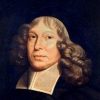
Samuel Rutherford (1600-1661) was born in the village of Nisbet, Roxburghshire. From 1623 he acted as Regent of Humanity at the University, with responsibilities as a Latin tutor. There is a strong suggestion that 1624 was the date of his conversion, and he began reading theology at Edinburgh under Andrew Ramsay.
In 1627 he began a ministry lasting only nine years, yet one ‘whose fragrance and power has left the name of Anwoth forever stamped on the hearts of Christian people’. In July 1636 the High Commission brought his ministry in Anwoth to an end because of his nonconformity, barring him from preaching in Scotland and exiling him to Aberdeen for the duration of the King’s pleasure. It was during his two years in Aberdeen that many of his much-loved Letters were written.
After the Covenanters’ revolution in 1638 Rutherford returned to Anwoth and was a commissioner to the Glasgow Assembly. In 1643 Rutherford left for London as one of the Scottish Commissioners to the Westminster Assembly. He remained in the city four years, preached before the Long Parliament, took a prominent part in the Assembly’s debates on theology and Church polity, and published five major books.
At the Restoration of Charles II in 1661 the Committee of Estates ordered the burning of Lex, Rex, deprived Rutherford of his offices, and cited him to come before Parliament to answer a charge of treason. Rutherford was already terminally ill and replied, ‘I have got summons already before a Superior Judge and Judicatory, and I behove to answer to my first summons, and ere your day come, I will be where few kings and great folks come.’ Death indeed intervened before the charge could be tried.