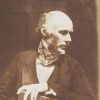
Selected from: Samuel Smith, “Dying unto the Lord,” in The Free Church Pulpit, Discourses by the Most Eminent Divines of the Free Church of Scotland, Vol III (New York: Robert Carter, 1848), 217-18. Preached on the first Sabbath of January 1846.
“And whether we die, we die unto the Lord.”
— Romans 14:8
To die to the Lord, we apprehend, is to have a view to the glory of God in all that pertains to our death.
It is to consult for God’s glory, in the state of our views and feelings in the prospect of death.
It is to consult for the honour and glory of God, in the frames of mind and the tenor of conduct which we exhibit during the confinement, the bodily infirmity, languor and sickness—the privation of wonted enjoyments—the trials, the temptations, and the various exercises of preparation which may precede death.
Finally, it is to consult, for God’s glory, in the last conflict and struggle that attends the hour of dissolution.
Many persons are at times distressed, even in seasons of health, by the fears of death. It is not to be wondered at that the ungodly should experience this fear. They know not at what moment the hand of death shall be laid upon them, from which no human power can rescue them, and they know not of any place of refuge for the soul when it is separated from the body; for they know not that Man who is “a hiding-place from the wind, and a covert from the tempest, as rivers of water in a dry place, and the shadow of a great rock in a weary land.”
It is not wonderful that the ungodly should look at death with terror, should dread the thoughts of appearing unclothed in eternity before a heart-searching God.
But some of God’s people, who are fearful in their minds, who are not firmly enough rooted in Christ and stablished in the faith, are also burdened and oppressed with anxiety, and at times with alarm, in looking forward to the time of their change.
It is not to such believers that the words of our text are applicable, for their conduct in this respect is a disparagement to the honour of Christ’s work. But they are applicable to those who look forward to death with holy calmness and serenity of mind, who no longer regard it as the king of terrors, and who no longer distrust the sufficiency of Christ’s rod and staff then to bear up, and then to comfort people who believed in his name.
The Apostle Paul was an illustrious instance of such holy confidence in the prospect of death. He “counted not his life dear to him, so that he might finish his course with joy, and the ministry which he had received of the Lord Jesus.” “I am ready,” he says, “not to be bound only, but also to die at Jerusalem for the name of the Lord Jesus.”
And so all such believers as count not their lives dear to them, and are ready, if it shall be in any way for good to Christ’s cause, to die when and where it may please the Lord, are in a situation to glorify God. This preparedness, this self-possession and fortitude gives them an enlargement of spirit in following Christ. They are not made to halt and shrink at every turn, lest they should provoke their adversary to spring forth upon them. If arduous services, which involve the hazard of life, are presented before them, they give a testimony to the power of Christ’s religion, by looking death in the face. Christ—they say by their actions—Christ is Lord of all. He hath subdued all my adversaries under his feet—death and the grave have yielded him the victory, and they cannot hurt or injure or distress his saints beyond what Christ permits, and sees to be for their good. The fear of death, therefore, shall not move me, for my life is hid with Christ, and after death I shall appear with him in glory.