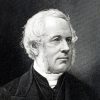
Selected from: Robert Buchanan, God to be Obeyed Rather than Men (Glasgow: William Collins & Co., 1839).
Preface
In giving this discourse to the public, there are two things the author wishes to be borne in mind: The one, that it was not prepared for any special occasion, but delivered to his own congregation in the ordinary course of lecture. The other, that it was written without the remotest view to publication. The former of these considerations may save the author from the charge of dragging unnecessarily a matter of public controversy into the pulpit, as anyone who looks at the passage which forms the subject of discourse must at once be satisfied that falling as it did in this way, it was impossible, consistently with his duty, to avoid making some such exposition and application of it as the discourse will be found to contain. In regard to the latter of the considerations specified, the author’s only reason for alluding to it is that it may serve to explain why, in the discourse, there is no attempt made to go into any elaborate disquisition concerning the principles it is intended to set forth. His sole object was to present such a simple view of the great lesson taught by the portion of Scripture under consideration, as might be readily understood by a general audience, and as might satisfy those who, in deciding on the circumstances in the present position of the church to which it applies, will be contented with a naked appeal to the Word of God.
Sermon
“There came also a multitude out of the cities round about unto Jerusalem, bringing sick folks, and them which were vexed with unclean spirits; and they were healed every one. Then the high priest rose up, and all they that were with him (which were of the sect of the Sadducees), and were filled with indignation, and laid their hands on the apostles, and put them in the common prison. But the angel of the Lord by night opened the prison doors, and brought them forth, and said, Go, stand and speak in the temple to the people all the words of this life. And when they heard that, they entered into the temple early in the morning, and taught. But the high priest came, and they that were with him, and called the council together, and all the senate of the children of Israel and sent to the prison to have them brought. But when the officers came, and found them not in the prison, they returned, and told, saying, The prison truly found we shut with all safety, and the keepers standing without before the doors: but when we had opened, we found no man within. Now when the high priest and the captain of the temple and the chief priests heard these things, they doubted of them whereunto this would grow. Then came one and told them, saying, Behold, the men whom ye put in prison are standing in the temple and teaching the people. Then went the captain with the officers, and brought them without violence: for they feared the people, lest they should have been stoned. And when they had brought them, they set them before the council: and the high priest asked them, saying, Did not we straitly command you that ye should not teach in this name? and behold, ye have filled Jerusalem with your doctrine, and intend to bring this man’s blood upon us. Then Peter and the other apostles answered and said, We ought to obey God rather than men. The God of our fathers raised up Jesus, whom ye slew and hanged on a tree. Him hath God exalted with his right hand to be a Prince and a Saviour, for to give repentance to Israel, and forgiveness of sins. And we are his witnesses of these things; and so is also the Holy Ghost, whom God hath given to them that obey him. When they heard that, they were cut to the heart, and took counsel to slay them. Then stood there up one in the council, a Pharisee, named Gamaliel, a doctor of the law, had in reputation among all the people, and commanded to put the apostles forth little space; and said unto them, Ye men of Israel, take heed to yourselves what ye intend to do as touching these men. For before these days rose up Theudas, boasting himself to be somebody; to whom a number of men, about four hundred, joined themselves: who was slain; and all, as many as obeyed him, were scattered, and brought to nought. After this man rose up Judas of Galilee in the days of the taxing, and drew away much people after him: he also perished; and all, even as many as obeyed him, were dispersed. And now I say unto you, Refrain from these men, and let them alone: for if this counsel or this work be of men, it will come to nought: but if it be of God, ye cannot overthrow it; lest haply ye be found even to fight against God. And to him they agreed: and when they had called the apostles, and beaten them, they commanded that they should not speak in the name of Jesus, and let them go. And they departed from the presence of the council, rejoicing that they were counted worthy to suffer shame for his name. And daily in the temple, and in every house, they ceased not to teach and preach Jesus Christ.”—Acts 5:16–42
The events related in this passage of Scripture are not only most interesting in themselves, but highly important on account of a certain great principle which they serve very clearly to illustrate and confirm. What the sacred narrative brings before us is shortly this:
Certain individuals professing to be followers of Jesus of Nazareth had been publically addressing the people in the courts of the temple, and in the streets of the city on the subject of religion. This they had persisted in doing, notwithstanding that the civil authorities of the land had expressly forbidden them; and had, moreover, straitly threatened them with punishment if they should be found continuing the same course of conduct. The punishment thus threatened had accordingly been put in force, the individuals in question having been arrested by the officers of justice and cast into prison. The contest, however, did not terminate there. Though thus imprisoned for an act of disobedience to civil authority, a divine power interposed to rescue them, and once more they appear in the temple, the most public part of the city, engaged openly and without disguise in the very same proceedings which had already brought down upon them the wrath of the rulers of the people. Again they are summoned by the constituted authorities to answer for their conduct, and again they justify themselves and refuse to obey; and though cruelly and ignominiously beaten for so doing, so far from acknowledging that they had done any wrong, they depart from the council, not covered with shame as convicted offenders, but rejoicing in the sufferings they had thus endured as a mark of special honour and favour from God.
Now let it be borne in mind that the authorities, whose command these individuals thus repeatedly disobeyed, were undoubtedly those to whom it properly and constitutionally belonged to bear rule in Judea. It was from the Sanhedrin, the supreme council of the Jewish nation, the command had issued. Let us turn then to the thirteenth chapter of the epistle to the Romans that we may see what deference such rulers were entitled to receive. “Let every soul,” says the apostle, “be subject unto the higher powers. For there is no power but of God: the powers that be are ordained of God. Whosoever therefore resisteth the power, resisteth the ordinance of God: and they that resist shall receive to themselves damnation” (Rom. 13:1–2). And again, the same apostle, when directing Titus as to the instructions he as a religious teacher ought to give to the people of his charge, expressly enumerates this among others: “Put them in mind to be subject to principalities and powers, to obey magistrates” (Titus 3:1). From these and many similar passages of Scripture, it is abundantly plain that, as a general principle, disobedience to civil rulers is to be held, and that on divine authority, as wrong and sinful; and that submission is to be yielded to their commands, not only for wrath, but for conscience’s sake; not only, that is, from a prudent regard to the consequences of provoking their wrath and displeasure, but from a conscientious regard to what we owe to them as the powers ordained of God. But while this is obvious and undeniable on the one hand, it is equally indisputable on the other, that to the general principle thus laid down, there must be certain exceptions. This is clearly proved by the narrative before us.
In that narrative, we read that when Peter and John and the other apostles were cast into prison for disobedience to the Sanhedrin, God himself directly countenanced that disobedience by sending his angel to deliver them out of the prison, nay more, enjoined them to persevere in that disobedience by ordaining them in direct defiance of the command of the rulers to go again and stand and speak in the temple to the people the very doctrines they had been forbidden to utter.
Now as it is plain that the commands of the only wise God cannot any of them be contrary the one to the other, there must be some way of reconciling, so as to bring into harmony the seemingly opposing statements now submitted to your consideration. How is it then that the general command to obey magistrates is shown to be in perfect consistency with the Divine approbation the apostles in this case so evidently received for refusing to obey? To understand this, it is only necessary to bear in mind that the reason why we are commanded to give obedience to rulers is that they are the ordinance of God. We are to obey them out of deference to Him. But God, in giving power to rulers, could not possibly have meant to denude himself of power—could not have meant to place their laws above His own. This would have been to enthrone the creature at the expense of dethroning the Creator. And while therefore, as his servants, his “ministers for good” unto the people, it is his will and command that they should receive the honour and obedience from their subject, to which, as the powers ordained of God, they are entitled. The very same ground on which this submission to their lawful authority is enjoined imperatively requires that God himself be ever recognised as the Supreme Ruler. And when the commands of these earthly rulers, who are his servants, are manifestly contrary to the commands of Him by whom they reign, the subject must look higher than to the earthly king—he must disobey the king in order that he may obey Him who is the King of kings and Lord of lords.
That these were precisely the circumstances in which Peter and John resisted the authority attempted to be imposed upon them by the rulers of Judea, it can need no argument to prove. Independent of the special interposition by which God gave them an unequivocal intimation of his will, in delivering them by angelic agency from the prison, and expressly commanding them to go again and preach unto the people, they had been acting all along under the immediate authority of God, who, in the person of the Son, had given them commission to preach the gospel to every creature, beginning at Jerusalem. And this circumstance is peculiarly deserving of notice because it points out to us not a mere individual case, but a whole class of cases to which the authority of civil rulers does not and cannot lawfully extend. The apostles were not mere private individuals—they were men acting officially, not under the Sanhedrin, but under the Lord Jesus Christ, and within that province which belonged to them as ministers of the gospel, they were responsible to no civil tribunal, but to their Divine Master alone. Everyone who is at all acquainted with Christ’s office and mission must be aware that his kingdom is, in its own nature, in its constitution, government, and laws, distinct from the kingdoms of this world. The separate existence and the respective provinces of these two kingdoms are thus clearly stated and defined in our Confession of Faith. In the twenty-third chapter, which refers to the ordinance of civil government, we read these words: “God, the supreme Lord and King of all the world, hath ordained civil magistrates to be under him over the people, for his own glory, and the public good: and, to this end, hath armed them with the power of the sword, for the defence and encouragement of them that are good, and for the punishment of evil-doers” (Westminster Confession of Faith, 23:1). And further, that “It is the duty of people to pray for magistrates, to honour their persons, to pay them tribute and other dues, to obey their lawful commands, and to be subject to their authority, for conscience’ sake” (23:4). But again, in the thirtieth chapter, which treats of the ordinance of spiritual government, the church, it is written as follows: “The Lord Jesus, as king and head of his church, hath therein appointed a government in the hand of church officers, distinct from the civil magistrate” (30:1). “To these officers the keys of the kingdom of heaven are committed; by virtue whereof they have power respectively to retain and remit sins; to shut that kingdom against the impenitent, both by the word and censures; and to open it unto penitent sinners, by the ministry of the gospel, and by absolution from censures, as occasion shall require” (30:2). Again, in further elucidation of this important distinction between civil and the spiritual power, we find the respective provinces of both thus admirably discriminated in another great standard of our church, The Second Book of Discipline, in the first chapter of which these passages occur: “This power and policy ecclesiastical is different and distinct in its own nature from that power and policy which is called the civil power, and appertains to the civil government of the commonwealth. Albeit they be both of God, and tend to one end, if they be rightly used, viz., to advance the glory of God and to have godly and good subjects. For this power ecclesiastical flows immediately from God and the Mediator Jesus Christ, and is spiritual, not having a temporal head on earth but only Christ, the only spiritual King and Governor of his church. Therefore this power and policy of the church should lean upon the Word immediately as the only ground thereof, and should be taken from the pure fountains of the Scriptures, the church hearing the voice of Christ, the only spiritual King, and being ruled by his laws.” And further, the same standard proceeds thus explicitly to describe the proper functions and just limits respectively of the civil and ecclesiastical power: “The magistrate, it is said, neither ought to preach, minister the sacraments, nor execute the censures of the church, nor yet prescribe any rule how it should be done; but command the minister to observe the rule commanded in the word,” while on the other hand, it is laid down with equal precision, that the ministers are not “to exercise the civil jurisdiction, but only to teach the magistrate how it should be exercised according to the Word.” “The magistrate,” it continues, “ought to assist, maintain, and fortify the jurisdiction of the church. The ministers should assist their princes in all things agreeable to the Word, providing they neglect not their own charge by involving themselves in civil affairs,” and finally, “to show that all this involves no exclusion of the office-bearers of the church from the ordinary control of civil government, and no exclusion on the other hand of civil rulers from the ordinary discipline of the church.” The chapter from which these passages are taken thus concludes: “That as ministers are subject to the judgment and punishment of the magistrate in external things—that is, in matters of life and property—if they offend, so ought the magistrates to submit themselves to the discipline of the church, if they transgress in matters of conscience and religion.”
The grand doctrine, on which the leading principles thus expounded in the standards of our church proceed, is that which is adverted to by the apostles, while vindicating their resistance to civil authority, at the 31st verse of the passage of Scripture before us—the doctrine, namely, embodied in these words, “Him hath God exalted with his right hand to be a Prince.” That Jesus of Nazareth, whom the chief priests and rulers of Judea had slain and hanged on a tree was now seated at the right hand of the Majesty in the heavens—all power, both in earth and heaven had been given to him—and having, in the exercise of that sovereign power, called the apostles and their successors in the ministry of the gospel to bear rule in his church, and to feed that flock which he had purchased with his own blood, no earthly ruler could interfere with them in the discharge of those functions which are proper and peculiar to their sacred office, without incurring the sin and danger, as Gamaliel expressed it, “of fighting against God.”
Now, brethren, it is impossible not to feel that I should be turning a deaf ear to the plain call of Providence, were I to refuse to make some application of the subject which has this day, in the regular course of lecture, come under our consideration, to the circumstances of the present times. You are well aware it is not my custom to bring matters of public controversy into the pulpit. The grand theme to which I desire ever to consecrate my office here is the preaching of Christ and him crucified, as the power of God and the wisdom of God for the salvation of perishing sinners. At the same time, in order to preach Christ, I must preach him as occasion offers, in all the offices he executes, as our Redeemer, not only as the Prophet and the Priest, but as the King of his church and people. In expounding such a passage of Scripture as the one before us, I should have been failing to declare a most important part of the counsel of God, had I not endeavoured, as I have been doing, to explain to you the grounds of that resistance that was here made to civil authority by the apostles of our Lord. And having shown you that that resistance was respectfully but firmly offered on the ground of their allegiance to Christ their King, to whom, and to whom alone, in matters belonging to their spiritual office, they were bound to yield obedience, it would certainly involve the dereliction of a very obvious duty, were I to refrain from making that use and improvement of the doctrine in question, which the present circumstances of the church to which we belong so imperatively require.
1. I do not need to tell you that our church has most explicitly recognised in her standards the doctrine in question, namely, that in matters spiritual, the church can own no authority but that of the Lord Jesus Christ. This, the passages already quoted sufficiently prove. And the fact that, as recognising these principles, the Church’s constitution and standards have been ratified by the State, would seem to be a sufficient safeguard against the undue interference of the State with the exercise of the Church’s sacred and spiritual power. And there can be no doubt that the best safeguard against all such interference that can be devised, is such an alliance between the Church and the civil power as actually exists and has long existed in this part of the United Kingdom. The Church having embodied in her Confession of Faith the grand doctrine of the sole headship of Christ, and of her intrinsic right and power to administer the affairs of his spiritual kingdom under his authority—the State ratified the Church’s constitution and standards as thus formed by herself. In doing so, not giving the Church those spiritual powers, but recognising them as inherently belonging to the Church, and engaging to respect their exercise, and to support their authority by adding the sanction of civil power. Without such an alliance, there must be a constant danger of civil interference. The State, not understanding its own province, and influenced by mere worldly considerations, would, as in the case of the primitive ages of the gospel, be disposed continually to interrupt the free exercise of spiritual authority, and the faithful performance of spiritual duties, whenever its own selfish and sordid schemes were in danger of being thwarted or opposed. At the same time, any alliance with the civil power on terms different from those described as embodied in the standards of our own church, could not fail to be injurious, and must undoubtedly be sinful. An alliance that shackled the Church, that deprived her of anything essential to her freedom, and to the right discharge of the great duties entrusted to her by her Divine Head, must assuredly provoke and deserve his righteous displeasure. So deeply alive to this truth were the fathers of our church, that in guarding against such a surrender of the prerogatives of Christ’s kingdom and crown, they took joyfully, in times of arbitrary power, the spoiling of their goods, and counted not even their lives dear unto them. The painful and protracted struggles of the seventeenth century were mainly occupied about this fundamental doctrine of the sole headship of Christ; and by the blessing of God on their self-denying labours, the rights they contended for were at length secured, and watered by their tears and blood, they have been handed down, as a precious legacy to us, their children. We have indeed for so many years, enjoyed in peace, what they purchased at the price, to many of them, of liberty and life, that to undiscerning minds it seems like mere fanaticism to talk of the Church’s inherent spiritual power at all. Nor do they seem able to conceive of any circumstances in which the Church could be warranted in refusing submission where the authority of the civil law is interposed. It is undoubtedly owing to this sinful ignorance of, or indifference to the great principle on which the apostles proceeded in pursuing that course which the Scripture before us describes, that we have heard at the present day, so loud an outcry in many questions against the position at this moment occupied by the Church of which we are all members. And this leads me to observe—
2. That if the doctrines in question so clearly embodied in the passages I have cited from our standards are not to be left as a dead letter in our Confession of Faith, then whenever the occasion for acting on them arrives, the Church must be prepared, at the hazard of whatever obloquy1obloquy ― very strong public criticism or blame or danger, to give them a distinct and intelligible expression. It is true that the Church may err both as to the time and manner of asserting these doctrines. She may imagine that her rightful jurisdiction is assailed when no invasion of it has been actually committed; and she may defend it, when really attacked, in an unbecoming spirit. But that there are circumstances in which it will be her most solemn duty to stand upon her border, and refuse to give way, is what must be allowed by everyone who adheres to the Confession of Faith, or who admits that the apostles were right in declining the authority of the Jewish Sanhedrin, when that supreme council of the Jewish nation proposed to interrupt their performance of those duties their Divine Master had called them to discharge. I do therefore most solemnly protest against the wrong that is done to our church by those who, simply because on a late occasion she has felt it to be her duty to refuse compliance with a judgment of the civil courts, presume to accuse her of wantonly defying the law of the land. Of those who have brought this charge against her, how few are there who have studied the question at all? or who know anything of its bearings on the Church’s duty to Christ? And are we to place the crude and hasty opinions of private individuals, formed without any sense of responsibility at all, in the same scale with the deliberate and solemn resolution of the supreme court of the Church—met in the name and acting under the authority of the Lord Jesus Christ, and called in that sacred character to give their judgment on that question as they should answer to Him who entrusted them with the government of His church?2For details of the circumstances surrounding this sermon, see “The History of the Free Church of Scotland” in The Master’s Trumpet (Vols. 11-14) by Rev. Alasdair Macleod. But,
3. What are the circumstances in which the Church has come into collision with the civil power? Has it been in contending for any temporal interest, privilege, or possession? No. It has been while engaged in matters undeniably spiritual, and fully, exclusively within the province of the Church. To the Church, it undoubtedly belongs to set pastors over congregations. And believing, as Scripture and her own standards teach, that the bond between a pastor and his flock is a bond of a mutual kind, laying important obligations upon both; and believing as a necessary consequence of this that where the congregation solemnly and deliberately refuse the pastor, on the ground that they do not think him fitted to edify their souls, it were to lord it over God’s heritage to thrust him in such circumstances upon them. Believing these things, the Church has done no more than this—declared that she cannot consent to commit what she believes to be a sin by intruding a minister on a reclaiming congregation. But while the Church has felt it to be her duty to make this stand, when civil authority seemed to be about to be employed in the attempt to force her to do what she considers unlawful, has she not shown at the same time the most anxious desire to bring the civil and the spiritual courts into harmony with each other? When the apostles were first interdicted from preaching the gospel by the Jewish Sanhedrin, they openly and at once declared that they could not and would not obey such a decree, but at the same time, they appealed to the consciences of their rulers to say whether such an order should ever have been pronounced. “Whether it be right,” said they, “in the sight of God to hearken unto you more than unto God, judge ye. For we cannot but speak the things which we have seen and heard” (Acts 4:19–20). Precisely the same appeal the General Assembly is now making to the rulers of this land, calling upon them to consider whether it be right in the sight of God to ask the Church to intrude ministers upon congregations solemnly protesting against the settlement; nor can I suffer myself to believe that the appeal will be made in vain. Of one thing I am sure—and this makes me less solicitous about the issue—that the Church is standing on a great Scripture principle, that she has no selfish or unworthy end in view, that she is contending for nothing but the honour of her Head, and the spiritual welfare of the people committed to her care.
4. And this leads me, in the fourth and last place, to observe that while the Church is bound to obey Christ her Prince, she must do so remembering that he is a Prince in order that he may be a Saviour; and therefore that in obeying him, it must ever be with a special view to the more effectual accomplishment of the great end for which he reigns—the saving of the souls of men. Him hath God exalted to be a Prince and a Saviour. As a Prince, his church must regard his voice above that of all the princes and kings of the earth; as a Saviour, exalted to give repentance unto Israel and the forgiveness of sins, his church must imitate his spirit, and be patient towards all men, and labour to do good even to them that despitefully use her. And thus yielding devout submission to the will of her Lord, and walking in the footsteps of his holy apostles, it may be he will ere long cause her to come forth from the clouds which at present envelope her, fair as the moon, clear as the sun, and terrible as an army with banners.
But, brethren, let us not forget in conclusion, while applying the great lesson of Scripture before us, to the present circumstances of the Church at large, to apply it also to the circumstances of our own individual souls. I have deemed it an obvious and important duty to use the portion of divine truth given us for our special meditation this day, as a means of guiding you to right views of the present position and duty of the church to which we belong; and the result, I trust, may under the Divine blessing be, to call forth on her behalf, in greater strength and abundance, both your affections and your prayers; struggling as she evidently is, to maintain the honour and authority of her Lord, and the spiritual privileges of her Christian people. But I should omit a part of the lesson most invaluable and most needful to be borne in mind, did I fail to impress upon you, that as it is the duty of the Church in her collective capacity to be guided implicitly by the will of Christ, equally is this the bounden duty of the Church’s individual members. You see how the apostles were ready to go to prison rather than fail in obedience to Christ, and how, when cruelly scourged by their rulers for persisting to do his will, so far from being discouraged or regarding it as a reproach, they departed from the council “rejoicing that they were counted worthy to suffer shame for his name.” You see how some of the courts of our own church have shown themselves prepared, if need be, to suffer cheerfully in the same righteous cause. Ought not this consideration to lead you to ask the question, Why ought they to be more zealous for Christ’s honour than I? They are not more responsible than I am for doing the will of God, and His will is that I should believe on the name of Him whom He hath sent.
Now, dear brethren, is Christ the object of this high veneration with you? Does his honour lie thus near to your hearts? Are you thus prepared to make any sacrifice, rather than disobey his will, and to esteem the reproach of Christ—the reproach that is incurred for his sake—as greater riches than the treasures of Egypt? The man to whom Christ is thus precious, to whom Christ is thus all in all, will rightly appreciate the conduct both of the apostles of old, and of our own church in these eventful times. It need not surprise us if those who care little about Christ for themselves should not be able to see much wisdom in the proceedings of a church that puts any of its temporal interest to hazard for his sake. But let me remind such that without Christ, they must be without God, and without hope in the world. His is the only name given under heaven among men by which you must be saved. And if, when the careless among you think how little you have regarded, how deeply you have offended him, treating the blood of the covenant as an unholy thing, and doing despite unto the Spirit of grace, you feel as if you durst not hope for mercy, let me remind you that Christ is exalted to bestow the “forgiveness of sins.” And if again, when you think that great and manifold though your sins have been, your hearts are still cold and proud—unhumbled and unsubdued—and that for such a rebellious state of mind, there can be no forgiveness in store—let me tell you once more that Christ is exalted to give repentance too. With him is the residue of the Spirit, that Spirit whose work it is to convince of sin. Seek the Lord while he may be found, call on him while he is still near. Let the wicked forsake his way, and the unrighteous man his thoughts, and let him return to the Lord, who will have mercy upon him, and to our God, who will abundantly pardon.
And finally, let the true disciples of Jesus, who have embraced him as all their salvation and all their desire, mourn over their lukewarmness in his cause, over their selfish tendency ever to please themselves rather than take up their cross and follow Christ. Let them remember what Christ sacrificed to redeem their guilty and perishing souls; and, meditating on the length and breadth, the height and depth of his surpassing love, let them study more and more in the time to come to live not unto themselves, and not unto the mere pleasing of men, but unto Him who died for them and who rose again.
Amen.