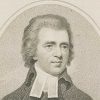
Selected From: John Love, Discourses on Select Passages of Scripture, vol. 2 (Edinburgh: Andrew Jack, 1829), 127-144.
“Who is he that overcometh the world, but he that believeth that Jesus is the Son of God?”
—1 John 5:5
After we have emerged from non-existence, when, by and by, the dawnings of reason begin to appear in the breast, Satan is at hand; and his first secret whispers in the ears of the soul are to this amount, “All is well; thou art an excellent and happy creature. All is fair and friendly around thee. See how thy parents and friends caress and admire thee. Fear not; thou art come into a good world—a world richly furnished to make thee happy.” Such as these are the early sentiments suggested to the unwary soul by the artificer of destruction. They suit the taste and the bias of the corrupted spirit of man. So that fatal, pernicious dream is begun, which, as to some, is hardly ever disturbed till they pass into another world.
By different means, and in various degrees, many are a little roused up. Experience of the disappointing vanity of the world, cool reflection, the stings of conscience, the powers of the world to come—these and similar causes disturb the sinner’s repose. He sees that this is an evil world; that he is fallen into the hands of enemies; that he must struggle for the life of his soul. But what is the issue? Often these struggling have a dismal issue. The captive of Satan rattles his chains, frets himself a little, looks round the walls of his prison, falls asleep again. Perhaps he is terrified into quietness. Perhaps he too soon imagines himself set at liberty, and that the great conflict has come to a happy crisis. Why? He hath been alarmed; he hath heard the Word with joy; Satan hath retired as though he were discomfited. And now the sinner’s dream is sweeter, and his sleep more deep than ever before.
In the midst of these things, the Spirit of the Lord utters his still but awakening voice. With a mixture of triumph and of defiance, the inspired apostle cries out, “Who is he that overcometh the world, but he that believeth that Jesus is the Son of God?” Triumph, ye children of God, for yours is that victory in which others have no share. Tremble, ye philosophers, ye moralists, ye notional Christians; your imagined victories will be your confusion. Your enemies are yet in full power, and will not fail to ruin you, if you continue afar from the only Deliverer.
That we may enter more exactly into the meaning of the important words of this text, it will be useful to attend to the train of the inspired writer’s reasoning. He is inculcating on Christians the practice of a very important duty, that of mutual love. He holds up to view this excellent grace in a variety of postures; as a large and splendid precious stone is turned round in the hand of the artificer that, by beams of light falling on it in different ways, its diversified lustre may delight the beholder’s eye. The apostle represents the peculiar love of Christians to each other as inseparably connected with regeneration, with the saving knowledge of God, with faith in him through the Mediator, and with a sense of his sovereign and incomparable love towards us. At the second verse of this fifth chapter, he excludes those profane counterfeits of Christian affection, which are sometimes exhibited by unbelieving men, whereby the love of the creature is exalted on the ruins of love to God himself. His words are these (verse 2nd), “By this we know that we love the children of God, when we love God and keep his commandments.” That is, not only may we discover the genuine sincerity of our love to God by its influence to kindle in our breasts a supernatural warmth of affection towards his children, but we may reverse the trial—we may judge of the soundness of our affection towards God’s children by observing whether it springs from the right source, namely, love to God himself, and whether it is excited and regulated by his authority and precepts concerning it. For he adds (verse 3rd), “This is the love of God, that we keep his commandments.” That is, here lies the evidence and the native effect of sincere love to the great and glorious God; that love brings the soul to a willing subjection to his sacred authority in all things, and particularly in those just and sweet precepts of God which respect our temper and conduct towards one another. Having advanced thus far, the inspired writer adverts to the difficulties and obstacles which lie in the way of an unreserved and continual observation of God’s commandments. These difficulties he anticipates by appealing, in general, to the equitable and excellent nature of the precepts themselves: “His commandments are not grievous.” But it might be objected, “Though we grant the general truth of that assertion, yet in such a world as this, it is no easy matter to adhere inflexibly to the divine rule of conduct.” The apostle answers (verse 4th), “Whatsoever is born of God overcometh the world.” Still an objector might say, “I grant the new life infused in regeneration tends towards such victory. But is not that new life very feeble and imperfect in its degrees? How is it then capable of encountering so mighty an adversary?” The apostle replies, by taking hold of the infinite strength of Jesus Christ, “This is the victory that overcometh the world, even our faith.”
Then follow the words of the text, in which exclamation the apostle is to be considered as at once filled with a sense of the vast worth of the Christian faith, and fired with just indignation against the empty pretences of philosophers, Pharisees, and all others who attempt to rival the Redeemer of the world by promising their disciples that victory over evil which none but He can bestow. “Who is he that overcometh the world, but he that believeth that Jesus is the Son of God?”
For illustration of this subject, it is necessary to make an inquiry into two things, namely, in what respects the world is a Christian’s enemy, and, how faith in Jesus Christ is a sufficient cause—the only sufficient cause—of victory over this formidable enemy?
To these two points of inquiry, let us, my brethren, bend our most serious attention, looking upwards to the God of all grace, that while we meditate on this grand victory, each of us may feel it in himself, may even now triumph over the world as a conquered enemy, may inwardly bless the great Deliverer of our souls, and may be prepared for every succeeding circumstance of conflict in the spiritual warfare.
I. In the first place, let us look a little in the face of this enemy, “the world.”
That which derives its existence, furniture, and powers from an infinitely good God, that which the generality of men hug in their bosoms as something consummately fair and delicious, must, by a Christian, be treated with jealousy, with fear, with distance, with hatred, with indignation, with mortal opposition. The world must be dealt with as an insidious and deadly adversary, and that for the following reasons: I see thy fatal aim, thou glistering, thou ever-eloquent serpent. It is thy aim to blind and deceive my understanding, to entangle and ensnare my heart, to irritate the corruptions of my nature, to decoy me into evil by the charm of example, or to compel me by thy menaces, by thy punishments.
Let me speak coolly, and in plain terms.
1. The world is our enemy by its influence to enfeeble and corrupt our views of the most important and salutary truths. Divine truth, that is, the truth concerning God and the spiritual system of things, is the life and nourishment of the immortal soul. Those things, therefore, are to be accounted hostile and destructive in the highest sense which rob the soul of spiritual ideas and sink it down into the regions of matter. “That which is born of the flesh,” says the Redeemer, “is flesh.” “To be carnally minded is death,” says the inspired apostle. Such is the strange influence of our original corruption, that it diffuses poison through the whole of nature. The system of material objects which meets our bodily senses, is the work of God, and proclaims his infinite perfections. But even here, Satan entrenches himself, and he gains access to the soul by every one of the senses of the body, and by all the objects which correspond thereto. Satan teaches us to think of sensible objects detachedly from God; then to stick fast in these objects, so as to account them more real and substantial than things divine and spiritual. Then we loathe and recoil from the direct contemplation of God. Then we adulterate and transform the invisible things of God, mixing them with sense, and sinking them in the mire of matter. Is not every one of us conscious of this process? I speak to true converts. Can you not remember the time when the circle of the visible heavens, which confines your senses, was the prison which confined all your thoughts, when you had hardly any steady or vivid idea of anything immaterial, when all beyond the visible things of nature appeared as a huge void and chaos without beauty of delight? At that time, you lived “without God in the world.” When the eye of God then looked into your souls, instead of their being full of the fair and powerful idea of his divine excellency, he saw them in a state like that of the ancient temple when abused by the idolatrous Israelites, as the prophet Ezekiel describes it (Ezek. 8:10), “So I went in and saw, and behold, every form of creeping things, and abominable beasts, and all the idols of the house of Israel, pourtrayed upon the wall round about.” Such is the present situation of the multitude around us. Were we to go into the streets and houses of this city, were we capable to look into the inmost souls of the people whom we meet, we should in general, find all summed up in this, No God. The idea of God and spiritual things we should see lurking ignominiously in chains in a secret corner of the soul, but, expanded and bustling through the heart, the strong ideas of whatever can strike the eye, the ear, the taste, the touch, or smell—money, goods, houses, honour, pleasure, and a countless train of such things. These are the gods which possess the temple of the heart in its corrupt state.
Such is what the apostle calls “the darkness of this world.” It is the darkness, not of this or that monster, but of mankind; and because it is so general, it forms a kind of impetuous torrent which bears down all that comes in its way. In which view, the apostle speaks of the unregenerate as walking “according to the course of this world.” And hence human society becomes more corrupt in proportion to the multitude of men who are collected together. It is in great cities, as though ten thousand pestilential vapours should meet together and condense into one vast cloud of destruction. “I myself,” may each individual say, “am a mass of darkness, error, and delusion. I live in a world crowded with creatures of like blindness. Let me go from house to house, from city to city, from continent to continent, my trifling sentiments of divine and eternal things, and my fiery rage for the world, gather confirmation from every person I meet with. For these are the sentiments which I find inscribed on the countenances, conversation, and decisive conduct of mankind: ‘There is no God, or if there is, his favour is not worth courting; his anger not worth fearing, in comparison of the big, the solid, the substantial things which we are all well assured of in this world.’” Such, my brethren, is the state of things in the world, as the world, and exclusively of that victory of faith which the text presents to view. And is there not an enemy here? What is the consequence of these things? It is that the generality of men have no ideas of God and of divine truth, but such as are feeble, ineffectual, and in an endless variety of ways tainted with destructive error and delusion? Thus the way is opened for all the other hostile operations of the world. For when the understanding is thus distempered and robbed of those lively views of God and divine things which should govern the whole man, when this is the case, it is no difficult matter for the objects of the world to steal into the heart and to take possession of that sacred place which belongs to the infinite God, who is to be confided in and supremely esteemed, desired, and loved.
Then follows a dreadful irritation of that corruption of nature which consists mainly in rebellious enmity against God and hostile malevolence against man. For whether men’s worldly lusts are gratified or disappointed, their hearts become more alienated from God and from each other. If divine sovereignty gives them, for a season, their request, such indulgence strengthens that flame of pride, self-sufficiency, and self-complacency which burns in opposition to God and our fellow creatures. Or if God walks contrary to men in their lusts, and the selfish schemes of others succeed against them, then all the powers of the soul are rankled with virulence against God and against mankind.
In this darkened and debased state of the soul, the examples of the world, its frowns and its terrors are abundantly sufficient to suppress every rising of conscience, and to check every aspiring effort of the soul towards deliverance.
Such is the hostile influence of the world where it fully prevails. And in a way somewhat similar, doth it operate in those molestations and assaults which respect believers in the Son of God. Here indeed a mighty arm opposes itself and crushes that evil influence. But still the aim and tendency of the world is to bring believers into darkness and error, to catch away their affections from God, to irritate them against God and man, to draw them into evil by example, or to drive them into it by terror.
We now see this Goliath, the world, stalking forth into the valley to defy the armies of the living God; we see his fierce aspect, and hear the clattering of his brazen armour. Is this enemy conquerable? Can any mortal being stand up to this contest? Yes, it is possible to overcome the world. It is possible in one way, namely, that mentioned in the text—faith in Jesus, the Son of God will do this business.
II. Let us now inquire, as was proposed, in the second place, how faith in Jesus Christ is the sufficient cause of so important a victory—the alone, exclusive cause.
A whole discourse might be very usefully employed in illustrating the description of faith contained in these words, “He that believeth that Jesus is the Son of God.” This, however, is not my present object. The nature of genuine faith will be somewhat unfolded in some of the following observations. As to this particular account of the Christian’s faith, it may be at present sufficient to take notice that a part of the exercise of true faith is here put for the whole. For though one article of truth is here mentioned, true faith hath respect to a variety of other truths. And that something vastly higher than a notional assent to the truth is intended by the faith spoken of in the text is manifest from the effect here ascribed to faith, and likewise by the first verse of the chapter, where regeneration and faith are connected together: “Whosoever believeth that Jesus is the Christ, is born of God.”
But I pass on to exhibit faith as the conqueror of the world. It is so:
1. Because the believer realises and rests on the testimony of God himself, opposing that testimony to every other, whether from sense, carnal reason, mankind, or infernal spirits. That this idea was full in the apostle’s mind appears from several verses immediately following the text (verses 6–10). In these verses, the apostle lays open the firm foundations in divine testimony of that faith which overcomes every enemy. Let us think for a moment what is implied in taking hold of this testimony of God. It supposes a discovery made of God himself to the soul, as possessing the attribute of infinite veracity, resulting from the infinite perfection of his understanding, rectitude of his will, and majesty of his government. He appears to the soul as God who “cannot lie.” To take hold of the testimony of God respecting the truths of the Scripture implies this farther, that the soul is illuminated to discern the stamp of divine perfection impressed on those truths, to see the glory of Godhead itself shining forth in them. Where now is the world’s testimony? What is the believer’s language concerning it? “Let God be true, and every man a liar.” For in this respect, as in all others, “Before him the nations are as a drop of the bucket, and are counted as the small dust of the balance.”
“Whom say men that I am?” Some, a mere man; some, a superior angel. “But whom say ye that I am?” “Thou art Christ, the Son of the living God.” “Blessed art thou, for flesh and blood hath not revealed it unto thee…On this rock will I build my church, and the gates of hell shall not prevail against it.” Such is the triumphant evidence which attends the whole system of divine truth.
But what are the things which, on this high authority of “Thus saith Jehovah” are brought to the believer’s view? Let it be considered:
2. That faith brings to view an infinity of moral and of penal evil, indissolubly connected with the ways and courses of the world. Under the cover of harmless entertainment, a little liberty of thinking, necessary attention to lawful affairs, a little inordinate fondness and irregularity of enjoyment, a little lingering and negligence—under the cover of these and such like things, faith sees the astonishing deformity and malignity of sin, calling forth the infinitely good and holy God to prepare the abode of misery, to rivet the chains of everlasting darkness, and to kindle those flames which, by no artifice, by no force, by no entreaties, shall ever be quenched. Bring forth now thy vanities, thou gaudy world, or thy boasting terrors! The charm is broken, “for what portion is there of God from above? And what inheritance of the Almighty from on high? Is not destruction to the wicked, and a strange punishment to the workers of iniquity?”
On the other hand:
3. Faith brings to the view of the trembling and humbled soul an infinity of good, of felicity, and glory; for it opens a crevice through which the soul looks into the inner shrines of the loveliness and love of God; and when this is done, talk no more to that man of the poor world. Wonder not at his seeming apathy. It is not from want of feeling that he is dead to inferior impressions. His higher powers are otherwise engaged; they are carried aloft. He dwells in God, and God dwells in him. He is gone into the holiest of all; only his earthly tabernacle remains for a little in the view of mortals.
4. But thou smilest, O world, thou fawnest, thou professest kindness and love! Go, thou believer, “Behold the Lamb of God.” I see the sparklings of love in his infant eyes. O let that suppressed understanding be quickly expanded; let that wonderful heart of purity and compassion diffuse abroad its perfumes! It is done. Look down, ye bright angels, and see your glories eclipsed, your wisdom charged with folly, your flaming affections accused of coldness, your tender compassions of indifference! Who is this King of glory? What voice do I hear? It is the voice of my Beloved! Behold, he cometh leaping on the mountains and skipping upon the hills! But what is now in his heart? His body is on the cross, his soul in the furnace of wrath, burning with unknown fierceness against my sins. My heart and ways are now his torment. But how does he look at me? His faith grasps the supporting omnipotence of Godhead; his love grasps a world of sinners. He will bear them through these flames and floods. Now the conflict is over, he is got to the midst of the throne. What sweetness is now in heaven! What new lustre glistens in the countenances of saints and angels! But whom have I in heaven but thee, O thou adorable Jesus? What have I to do any more with idols? Smile, smile thou upon me to eternity!
5. But perhaps the present frame and fervour is not to be trusted. It is not. What, then, are the believer’s resources? Here I introduce the last particular which is now to be mentioned. Faith overcomes the world because, in connection with those views of divine truth already attained, it takes hold of that everlasting, divine strength, which is able to preserve, to confirm, to renew, and to increase these precious discoveries, so as to secure and complete the begun victory. A believer knows the deceitfulness of his heart, even in its best frames. He knows also that new and astonishing trials may overtake him, and that at length he must go the way which he hath not formerly gone with his feet, even through the valley of the shadow of death. The world’s malice may add to his death some shocking circumstances. But Jesus says, “Be of good cheer, I have overcome the world. I am the first and the last. Fear not, I will strengthen thee. Yes, I will uphold thee with the right hand of my righteousness. My grace is sufficient for thee, for my strength is made perfect in weakness.”
Such is the influence of Christian faith to overcome the world. Suffer me, my brethren, to employ a few moments more in pointing out the…
Application of this subject. How exalted and powerful a thing is the true faith of the gospel! Surely that faith which overcomes the world is of the operation of God—“It is not of ourselves, it is the gift of God.”
How dignified is the present state of true believers! They are the people who, in God’s infallible estimation, dwell on high. The highest earthly things are far beneath their feet. Their thoughts, pursuits, and delights savour of victory and of heaven.
But they are destined to more sublime honours and to more public exaltation than they experience in their present pilgrimage. Yet a little while and the world shall see its conquerors, with the Prince of Glory at their head. The upright shall have dominion in the morning. They shall stand with the Lamb, with crowns of immortality on their heads, and palms of complete victory and joy in their hands.
Let us, therefore, put ourselves to the trial, whether our faith is indeed of this quality to overcome the world. Have you seen the world as an enemy, or are you secret in friendship with it? Has your bondage under this and other spiritual enemies become intolerable? What were your designs yesterday at the Lord’s table? What are your feelings now? Do you feel this victory, or do you heartily groan after it? I dare administer no present comfort to any who are not included in those words of Christ, “Blessed are the poor in spirit. Blessed are those who mourn. Blessed are they who hunger and thirst after righteousness.”
If we have found a true beginning of such victory, let us follow it out, and exhibit it in its true lustre to the view of the deluded world. “Be not conformed to this world, but be ye transformed by the renewing of your mind.” Thy indulged carnality, O Christian, grieves the Spirit and hurts your soul. But it does more. Perhaps some poor unbeliever, who knows thy profession, is secretly watching thee, that he may form a judgment whether there is any reality in those truths which thou professes. But when he finds little else about thee besides the stench of a carnal worldly spirit like his own, what is likely to follow? He may stumble over thee into hell, though thou shouldst scramble into heaven by means of that little sincerity which was but little cherished and manifested on thy part.
Let us be solemnly concerned for those miserable beings who, either with or without a profession, are overcome by the world, and helping forward each other to the place of woe. Are there any such in this assembly? Are there any of those who halt between God and the world, who, for one morsel of meat, like Esau, sell their title to eternal blessedness? If there are, I give them warning to flee from the wrath to come, and invite them to receive deliverance from unbelief and all its dreary effects, from Jesus, the Messiah, the Son of God.
Let those who truly fight against the world, and have begun to conquer it, confide still more in Jesus Christ, and bless the author of their deliverance. Let him inhabit your praises. Observe that signal passage (Gal. 1:3–5), with which I now conclude, “Grace be to you, and peace, from God the Father, and from our Lord Jesus Christ, who gave himself for our sins, that he might deliver us from this present evil world, according to the will of God and our Father: to whom be glory for ever and ever. Amen.”