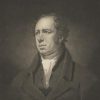
Selected From: John Brown, “Letter III on the Nature of Holiness,” in Letters on Sanctification, with a Memoir of His Life and Character (Edinburgh: William Oliphant and Son, 1834), 243–253.
IV. Improve the comforts of religion for promoting holiness. The religion of Jesus is highly comfortable—it exhibits to a sinful creature a redeeming God—as the God of all consolation—the Saviour, as the consolation of Israel—the Spirit, as the spirit of gladness—the blessings of grace, as wells of salvation, from which we may draw water with joy. Realizing these truths by that divine principle which makes future things present, and unseen things visible, and taking them home to ourselves, we are filled with joy and peace, and the joy of the Lord is our strength.
This is not a pleasure which, like many worldly enjoyments, weakens the power of the mind, and disposes it to indolence and inactivity; but, on the contrary, it rouses every latent energy, and urges to strenuous exertion. Under the influence of this joy, the Christian feels a supreme desire to glorify that God who appears so glorious in himself, and so kind to him. He sings in the way of the Lord; he runs in the way of God’s commandments. When his heart is enlarged with views of the Divine love, he rejoices and gives thanks at the remembrance of God’s holiness, manifested in the atonement. Agreeably to this view of the subject, we find that in the fifth chapter of Paul’s epistle to the Galatians, love, joy, and peace stand foremost in the list of the fruits of the Spirit—afterwards follow long suffering, gentleness, faith, and meekness.
V. Often contemplate the doctrines of grace—the exhibitions of Christian privilege—as a powerful mean of promoting holiness. The doctrines of the gospel respecting God as glorified in Christ, and of grace reigning through righteousness, have been considered by some as principally to be taught to those who are entirely ignorant of Christianity; and that the great duty of intelligent Christians is to attend to God’s law, and endeavour to keep it. In their estimation, the principal, if not the only duty of a Christian minister is to explain and enforce duty. The apostles of our Lord were obviously of a different opinion. They largely, and in the first place, explain the doctrines of religion, and then proceed to the enforcement of duty. Nay, the Lord of the apostles occupied the greater part of his last discourses to his disciples with explications of the nature and consequences of faith, union with himself, and the sanctifying influences of the Divine Spirit. The doctrine of Christ crucified, in its true extent, is the instituted mean for producing and nourishing the divine life, and will form the grand subject of the sermons of every minister who wishes to promote the holiness of his hearers.
That public instructor, and that private Christian too, who does not view union with Christ as the spring of spiritual life and obedience: who does not habitually advert to the excellence and necessity of the atonement of Jesus, as our only righteousness before God; who does not perceive that Christ is the only fountain of sanctification and source of saving influence; and that it is necessary constantly to rely upon him, by a lively faith, for direction, assistance, and acceptance in duty, though they should have the most just and extensive views of duty, and all the motives which urge to its performance, exclusive of those which are strictly evangelical, will be found to labour in vain, and to spend their strength for nought. Their exertions to make others or themselves holy are but like the rubbing of a dead body, which may produce some degree of external heat, but cannot revive the extinguished spark of life. But a believing consideration of Jesus, in his glory and grace, will purify the heart, and produce real and active holiness.1When the doctrines of grace are opposed, or laid aside and concealed, and mere morality fills the room of doctrine, the influence on holiness must be fatal. It is a general complaint that a degeneracy of manners universally prevails. Now, I may venture to affirm that moral preaching, so much in vogue, is the cause of this. In fact, we have preached morality so long that we see hardly any morality left. And how should it be otherwise? We have forsaken the Christian doctrine, the fountain of living waters, and hewn out to ourselves cisterns which can hold no water.—Jones’ Visitation Sermon. For a more convincing proof of the connection of holiness with what are termed Evangelical Doctrines, see Milner’s History of the Church of Christ, passim.
VI. As holiness is secured in many great and precious promises, endeavour to plead them in faith, and there will be a performance of them to you in your increased sanctification.
I mention the following particularly, and recommend them to your devout attention: “Who is a God like unto thee, who pardoneth iniquity, and passeth by the transgressions of the remnant of his heritage? He retaineth not his anger for ever, because he delighteth in mercy. He will turn again, he will have compassion upon us; he will subdue our iniquities, and he will cast all our sins into the depths of the sea.”—“Sin shall not have dominion over you; for ye are not under the law, but under grace.”—“And the Lord shall guide thee continually, and satisfy in drought, and make fat thy bones; and thou shalt be like a watered garden, and like a spring of water, whose waters fail not.”—“I will instruct thee, and teach thee in the way which thou shalt go: I will guide thee with mine eye.”—“My grace is sufficient for thee; for my strength is made perfect in weakness.”—“I will be as the dew unto Israel: he shall grow as the lily, and cast forth his roots as Lebanon.”—“I will give them a heart to know me that I am the Lord.”—“In his name shall the Gentiles trust.”—They shall look on him whom they pierced, and shall mourn.”—“I will put my fear in their hearts.”—“The Lord will circumcise your heart to love him.” Lay these before the throne of grace, saying, “Do as thou hast said. Remember thy word to thy servant, on which thou caused him to hope.”
VII. Exercise an assured appropriating faith, in a manner suited to your state of union with Christ, in order to promote holiness according to it, and not at all according to your natural state. True holiness is a putting off the old man, and a putting on the new. In this case, we must live under a deep impression of the remaining corruption of our nature and practice; we must never satisfy ourselves with a trusting in Christ’s grace, merely to assist our endeavours, but wholly distrusting our own strength and best meant endeavours, trust in him alone to perform, in and for us, every thing necessary for his honour and our happiness; we must never perform any duty in order to obtain God’s judicial pardon of our sins, an interest in his favour, or a title to eternal life, but as persons already pardoned, accepted, secured of heaven, and possessed of his Spirit and gospel comforts; and in fine, we must never set ourselves to the performance of any duty, by whatever motives we are urged to it, without first of all, by faith, applying Christ and his grace to our souls, and improving those benefits of the new covenant, which are peculiarly fitted for urging us to and encouraging us in the duty.
VIII. Carefully study the word of God. In the divine Word, read or preached, we have a mirror, in which we may behold the gracious designs of God respecting us; the all-sufficiency and glory of Christ, together with the finished salvation which he has wrought out for the guilty. And beholding, as in a glass, these glories of the Lord, we are changed into the same image, from glory to glory, even as by the Spirit of the Lord. As the countenance of Moses, after his intercourse with Jehovah, shone with such radiance that the Israelites could not steadily behold it, so the believer, viewing Jesus, the King of Glory, in his matchless beauty, derives a likeness to the glorious object of his faith and love. The more frequently he contemplates, the more fully he knows those perfections of which holiness is the great ornament. The more fully he knows them, the more ardently does he love them. The more ardently he loves them, the more earnestly does he desire conformity to them. As our holiness consists in the conformity of our heart and life to the will of God revealed in his Word, it would be useful to set before ourselves a set of Scriptures, as rules for our conduct, to ponder them frequently, and if we cannot walk up to them, to endeavour at least to walk after them. Even this will, through Christ Jesus, be accepted as a demonstration of our love to God. For the regulation of our thoughts, the following passages may be useful: “Wash thy heart from wickedness; how long will vain thoughts lodge within thee?” (Jer. 4:14). Let the unrighteous man forsake his thoughts” (Isa. 55:4). “My meditation of him shall be sweet” (Ps. 104:34). “Whatsoever things are true, honest, just, pure, of good report, and lovely, think of these things” (Phil. 4:8). “Let none of you imagine evil things in your heart against his neighbour, for these are the things I hate, saith the Lord” (Zech. 8:17). For the regulation of our affections: “Set your affections on things above, and not on things on the earth” (Col. 3:2). “They that are Christ’s have crucified the flesh with its affections and lusts” (Gal. 5:24). Our delight: “But his delight is in the law of the Lord, and in his law doth he meditate day and night” (Ps. 1:2). “Delight thyself also in the Lord, and thou shalt get the desire of thy heart” (Ps. 37:4). Our joy—“Rejoice in the Lord always; and again I say, rejoice” (Phil. 4:4). Our desire—“The desire of our soul is to thy name. With my soul have I desired thee in the night, and with my spirit within me will I seek thee early” (Isa. 27:8–9). Our sorrow—“But they that escape shall be on the mountains, like doves of the valleys, all of them mourning, every one for his iniquity” (Ezek. 7:16). Our love—“Oh how love I thy law, it is my meditation all the day” (Psa. 119:97). Our hatred—“O ye that love the Lord, hate evil” (Ps. 97:10). Our fear—“Fear him, who, after he has killed the body, is able to cast into hell; yea, I say unto thee, fear him” (Matt. 10:28). Our hope—“And now, O Lord, what wait I for, my hope is in thee” (Ps. 39:7). Our trust—“Trust ye in the Lord for ever; for in the Lord Jehovah is everlasting strength” (Isa. 27:4). For regulating our speech—“Let no corrupt communication proceed out of your mouth, but that which is good for the use of edifying, that it may minister grace to the hearers” (Eph. 4:4). “Let your speech be always with grace, seasoned with salt, that ye may know how to answer every man” (Col. 4:16). “Let my mouth be filled with thy praise, and with thy honour all the day” (Ps. 71:8). For our conduct—“This is a faithful saying, that they who have believed in God, be careful to maintain good works. Put them in mind to be ready to every good work” (Tit. 3:8; 2:2). “Well reported of for good works;…having diligently followed every good work” (1 Tim. 5:10).
IX. Improve the proper motives for holiness. You would justly condemn the preacher who would press upon believers motives to holiness quite inconsistent with their intimate and irrevocable union with Christ, perfect and universal justification through him, and infallible conservation in him—to thunder forth liableness to condemnation against those who have passed from death to life, and cannot come into condemnation—whose life is hid with Christ in God, and who must live because he liveth—to talk to the divinely established and immutably secured heirs of God, and joint heirs of Christ as if they had their title to eternal life, or their claim to its actual possession, to earn by their exertions, is certainly worse than absurd—it is highly criminal. Beware of an evil heart of unbelief and legality, which would lead you to act under the influence of such motives. Having your conscience sprinkled by the blood of Christ, engage in the practice of holiness, under the influence of evangelical motives. For this purpose, consider the offices, relations, works, and fulness, the redeeming love, and the endearing example of Christ and his Father—the authority of God, as our God and Father—the indwelling and influence of the Holy Spirit in the heart, and our advantages and disadvantages as stated by the covenant of grace. As to the motives arising from the sanction of the law as a rule—its rewards and chastisements—they are necessary to stir us up in our state of minority to our duty, but we must always view them in an evangelical light. We must always remember that whatever reward here or hereafter is annexed by promise to the holiness of believers in heart or life, is freely bestowed on them, not properly for their work, but because their persons are united to Christ, as the Lord their righteousness, in whom their holiness and comfort connectedly come to them as equally free mercies and privileges. As to afflictions, you must view them always not as a destructive punishment of sin, but as a kind of chastisement, a precious blessing to you, purchased by the righteousness of Christ, your Surety; and bestowed by God, as your wise, faithful, and loving friend.
X. Never forget that our continued reception of Christ’s righteousness and grace by faith is the only and immediate means of all our gospel holiness, repentance, love, and new obedience. Hence, this is said to proceed, not only from a good conscience, but from faith unfeigned. Holiness is called a living by the faith of the Son of God—a walking by faith—the obedience of faith. According to the strength of our faith will be the strength of our other graces, and the progress of our holiness.2“We are to abide at the well-head of life, by a frequency of the acts of faith upon the person of Christ. Faith is that grace, not only whereby we are implanted into Christ, but whereby we also abide in him. If so, methinks the frequent actings of faith upon the person of Christ are a drawing near to the well-head of life. And though we are to put forth the vigour of the watchfulness of our hearts unto obedience, yet a ceasing to continue in the actings of faith upon the person of Christ, even under the vigour of our own endeavours, by those several outward desires of walking with God, and living to him, will weaken us, and we shall find ourselves losers by it.”—Dr. Owen. Before I leave this part of the subject, I may observe that no marks of holiness are to be trusted but such as may be traced up to a believing of the record which God hath given of his Son, as the depositary and dispenser of eternal life to us sinful men, and to our spiritual union and fellowship with him by faith.
XI. Upon the whole, we should walk by rule. Indeed, to fix and observe a certain method of procedure is of high importance in a life of religion. I hope my friend will begin the day with God. When you awaken in the morning, let Him have your first thoughts. Lift up your heart in thankfulness to Him for the preservation of the night, and in supplication for his presence with you in the duties of the commencing day. After such ejaculations, before you rise from bed, you will do well to consider what are the duties to which you are called this day—in what manner you may most honour God, do good to others, and promote your own spiritual interests. While rising from bed and dressing yourself, meditate on subjects suited to the occasion, such as the necessity of your resurrection from spiritual death, the certainty and consequences of the final resurrection at the great day of Christ’s appearing, and the necessity of being clothed with the righteousness and grace of Jesus. Engaging in reflection on such subjects will be found an excellent preparation for the duties which lie before you.
Retire as soon as you conveniently can to your closet, read a portion of God’s word, mixing it with faith, giving a close attention, making devout reflections, and occasional aspirations suited to the nature of the passage perused. After reading, pause a little and endeavour to affect your mind with lively impressions of the infinite greatness and absolute perfection of the glorious majesty to whom you are about to approach. Lift up your heart to God in earnest desires for the influences of the Divine Spirit to help your infirmities, and enable you to pray as you ought. Thus, in the name of Christ, come before God with an awful sense of the infinite distance between him and you, and of your extreme unworthiness of his favour: yet with a humble hope and confidence in his infinite grace, reigning through righteousness. Keep a strict and continual guard over your thoughts and your affections, that they do not wander from the business before you, and render the duty a mere superficial service.
From your closet, proceed to the duties of family worship. Call your whole household together. Let no ordinary excuse for absence be sustained. Sing part of a Psalm or hymn, read a portion of the Holy Scriptures, and I would advise you generally to read in a regular order that the whole of the sacred Word may be heard by all your domestics. Engage then in solemn prayer, and having thus conducted the devotion of the morning, dismiss them to their various secular employments.
Having thus carried yourself and your family through the morning sacrifices, do not suppose that you are discharged from all attention to religious and spiritual concerns till the stated hours of divine worship. Endeavour to preserve and cherish a spiritual frame, intermixing frequent ejaculations with the business in which you are engaged. I would advise you to retire after dinner into your closet for the purposes of devotion. Imitate David and Daniel in the frequency of your secret retirements, and make it a rule, if possible, in the evening, in the morning, and at noon, to pray, and let God hear your voice.
Appropriate some time every day for the purpose of religious meditation. In this exercise, spend, at least, every day, half an hour. Let the time be stated; and let no ordinary avocation prevent the regular performance of this duty. Perhaps experience will teach you, with the patriarch, Isaac, to choose the evening for this service, but in this, you must be regulated by your own Christian prudence. The whole Word of God will afford you matter for meditation. There you have a large field, enough to keep you happily employed to all eternity. The subjects it offers are almost endless, but the perfections of God, the astonishing work of redemption through Jesus Christ, the excellence of his person, the wonderful benefits of his salvation, the incomparable glories of the heavenly world, your own wants, etc., ought most frequently to engage your attention. Betake yourself to this, and every duty, as in the presence of God. Call in your thoughts from every foreign concern, and keep closely fixed. Muse deeply till the fire burns. Meditate on divine and eternal things till they become real and visible to the eye of the mind.
And now, brought to the close of the day, end it as you began, with respect to the duties both of the family and closet. Before you betake yourself to rest, review the conduct of the day, and consider what matter of repentance and of thanksgiving is thereby before you. Improve also your waking minutes on your bed (whether before you fall asleep, or when you awaken during the night), in religious meditation, that when you awake in the morning you may still be with God.
Besides these daily exercises of religion, I need scarcely say to you, there are seasons wherein the whole day should be taken up in the immediate service of God, excepting when we are called off by the works of necessity and mercy. Such is the Lord’s Day, the Christian’s Sabbath, which ought to be so strictly sanctified that we should not so much as allow ourselves to think our own thoughts, or to speak our own words. Such are likewise occasional days of thanksgiving and humiliation. The frequent and devout observation of these days has often proved eminently useful in promoting the life and power of godliness.
To your question, What is the best way of keeping up religion in a hurry of business? I answer in the words of an eminent Christian, “It is to look on it as a duty of the eighth commandment of our sovereign Lord, Creator, and Redeemer; and so going about it in a compliance with his will, who has allotted to every man his station, and determined the duties of it, to make application to him ordinarily in your stated addresses to the throne of grace for wisdom to guide your affairs with discretion, and for the success of them, according to his promise thereanent, and actually to go about them in a dependence on the Lord. Thus, while you serve your lawful purposes in the world, you will serve the Lord Christ. From the little experience I have had of the management of worldly things, I can say, there is communion with God to be had in that way of management. Sweet lessons of dependence, experience of the accomplishment of promises, and ever kind relentings for heart sins, sweeter than the world’s sweetest enjoyments.” I now bid you adieu, praying that God may bless these remarks, for the increase of your holiness and comfort.
I am, my dear friend, your most affectionate, Aspasio.
Footnotes
- 1When the doctrines of grace are opposed, or laid aside and concealed, and mere morality fills the room of doctrine, the influence on holiness must be fatal. It is a general complaint that a degeneracy of manners universally prevails. Now, I may venture to affirm that moral preaching, so much in vogue, is the cause of this. In fact, we have preached morality so long that we see hardly any morality left. And how should it be otherwise? We have forsaken the Christian doctrine, the fountain of living waters, and hewn out to ourselves cisterns which can hold no water.—Jones’ Visitation Sermon. For a more convincing proof of the connection of holiness with what are termed Evangelical Doctrines, see Milner’s History of the Church of Christ, passim. ↩︎
- 2“We are to abide at the well-head of life, by a frequency of the acts of faith upon the person of Christ. Faith is that grace, not only whereby we are implanted into Christ, but whereby we also abide in him. If so, methinks the frequent actings of faith upon the person of Christ are a drawing near to the well-head of life. And though we are to put forth the vigour of the watchfulness of our hearts unto obedience, yet a ceasing to continue in the actings of faith upon the person of Christ, even under the vigour of our own endeavours, by those several outward desires of walking with God, and living to him, will weaken us, and we shall find ourselves losers by it.”—Dr. Owen. ↩︎