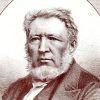
Selected From: William Arnot, Laws from Heaven for Life on Earth, Illustrations of the Book of Proverbs (Edinburgh: T. Nelson and Sons, 1859), 88–96.
“If thou seekest her as silver, . . . thou shalt . . . find the knowledge of God.” —Proverbs 2:4–5
Wisdom continues still to cry unto men with the affectionate authority of a parent. The incarnation of the Son is God’s grand utterance to mankind. The Word was made flesh, and dwelt among us. He came to make known the Father. “No man hath seen God at any time: the only begotten Son who is in the bosom of the Father, He hath declared him.”
Such is the speaker, and such the theme. Wisdom cries, “Incline thine ear unto wisdom.” Christ calls on men to come unto Christ. It was He who opened the Scriptures; and He taught from them the things concerning Himself. He is Prophet and Priest. He gives the invitation; and the invitation is, “Come unto me.” It is Christ offering Christ to sinners; the teacher and the lesson alike divine. The preacher and the sermon are the same. He is the beginning and the ending. He is all in all.
The matter of the whole passage, Proverbs 2:1–9, consists in a command to seek, and a promise to bestow. The same speaker, at a later day, condensed his own discourse into the few emphatic words, “Seek, and ye shall find.” In this passage, there is a needful expansion and profitable repetition of these two great pillar thoughts.
The seeking is in verses 1 to 4; the finding in verses 5 to 9. A Father speaks, and He speaks as unto children. He demands a reasonable service, and promises a rich reward. In the fourfold repetition of the command, there seems an order of succession; and the order, when observed, is both comely and instructive. It combines the beauty of the blossom and the profit of the fruit.
Receive my words, and hide my commandments.
Incline thine ear, and apply thine heart.
Cry after knowledge: lift up thy voice for understanding.
Seek her as silver: search for her as for hid treasure.
1. “Receive my words.” This is the first thing. Practical instruction must ever begin here. The basis of all religion and morality is the Word of the Lord, taken into the understanding and heart. When the sower went forth to sow, some fell by the wayside, and the fowls came and devoured it. This is the first danger to which the published truth is exposed. It does not enter the ground at all. It tinkles on the surface of the mind, like seed on a beaten path, and next moment it is off, no one knows whither. It never penetrated the soil; it was never received. Corresponding to that first danger is the first counsel, “My son receive my words;” and if there should be any doubt about the meaning of the precept, the clause which balances it on the other side supplies the comment, “hide my commandments with thee.” Our adversary the devil goeth about like a roaring lion, or ravening bird, seeking whom he may devour. He carries off the word from the surface of listless minds, as birds carry away the seed that lies on the surface of unbroken ground. The Word of God is a vital seed, but it will not germinate unless it be hidden in a softened, receptive heart. It is here that Providence so often strikes in with effect as an instrument in the work of the Spirit. Especially, at this point, bereaving providences work together for good. Even these, however, precious though they have been in the experience of all the saved, are only secondary and subordinate agencies. Sorrow is not seed. A field that is thoroughly and deeply broken may be as barren in the harvest as the beaten pathway. The place and use of providential visitation in the divine administration of Christ’s kingdom, is to break up the way of the Word through the incrustations of worldliness and vanity that encase a human heart and keep the Word lying hard and dry upon the surface.
Every one is capable of perceiving the difference between merely hearing the Word and receiving it. It is a blessed thing to have that Word dwelling richly within you, felt in all its freshness touching your conscience and enlightening your mind, during the busy day and in the silent night, giving tone to your spirit within, and direction to your course through life.
The Word was made flesh, and dwelt among us. Behold, He stands at the door and knocks; if any man open, He will come in. To as many as receive Him, He gives power to become the sons of God.
2. “Incline thine ear.” The entrance of the Word has an immediate effect on the attitude of the mind and the course of the life. The incoming of the Word makes the ear incline to wisdom; and the inclining of the ear to wisdom lets in and lays up greater treasures of the Word.
In practice, it will be found that those who hide the Word within them, feeding on it as daily bread, acquire a habitual bent of mind towards things spiritual. On the other hand, when the truth touches, and glances off again, like sunlight from polar snows, it is both a symptom and a cause of an inclination of the mind away from God and goodness. The great obstacle to the power and spread of the gospel lies in the averted attitude of human hearts. The mind is turned in another direction, and the faculties occupied in other pursuits. How hopeful the work of preaching becomes when the lie and the liking of the listener’s soul is towards saving truth. When the heart is applied to it, some portion of the Word goes in, and that which has obtained an entrance prepares the way for more. To him that hath that little will be given much, and he shall have abundance. A man inclines his ear to those sounds which already his heart desires; again to turn the ear, by an exercise of will at God’s high command, to the Word of wisdom, is the very way to inoculate the heart with a love to that Word passing the love of earthly things. The leaning of the disciples’ hearts in the days of old drew them to Jesus; and Jesus near, made their hearts burn with a keener glow. The ear and the heart!—precious gifts! He that hath an ear to hear, let him hear what the Spirit saith. He that hath a heart to love, let him love with it the altogether Lovely. The ear inclined to divine wisdom will draw the heart; the heart drawn will incline the ear. Behold one of the circles in which God, for his own glory, makes his unnumbered worlds go round.
3. “Cry after knowledge.” The preceding verse expressed the bent heavenward of the heart within and the senses without; this verse represents the same process at a more advanced stage. The longing for God’s salvation already begotten in the heart, bursts forth now into an irrepressible cry. It is not any longer a Nicodemus inclined toward Jesus, he cannot tell how, and silently stealing into His presence under cloud of night; it is the jailor of Philippi springing in, and crying with a loud voice, “What must I do to be saved?” While the man was musing, the fire burned; and now it no longer smoulders within, it bursts forth into a flame. He who gave Himself for His people loves to feel them kindling thus in His hands. Men may be offended with the fervour of an earnest soul—God never. “Hold thy peace,” the prudent will still say to the enthusiastic follower of Jesus; but he feels his want and hopes for help; he heeds them not; he cries out all the more, “Jesus, thou son of David, have mercy on me.” Even disciples, apparently more alarmed by what seem irregularities in the action of the living than they were by the silence of the stiffened dead, may interpose with a frown and a rebuke; but compression will only increase the strength of the emotion struggling within. That word hidden in the heart will swell and burst and break forth in strong crying and tears, “Whom have I in heaven but Thee? And there is none upon earth that I desire besides Thee. My flesh and my heart faileth, but God is the strength of my heart, and my portion for ever.” (Psalm 73:25–26)
4. “Seek her as silver.” Another and a higher step. The last was the earnest cry; this is the persevering endeavour. The strong cry is not enough; it is a step in the process, but the end is not yet. It might be Balaam’s cry, “Let me die the death of the righteous,” while in life he loved and laboured for the wages of iniquity. Fervent prayer must be tested by persevering pains.
Seek wisdom. Not only be inclined to spiritual things, and earnestly desire salvation, but set about it. Strive to enter in; lay hold on eternal life. Work out the salvation. “The kingdom of heaven suffereth violence, and the violent take it by force.” The Christian life is a battle to be fought; the reward at last is a crown to be won.
More particularly, the search for wisdom is compared to another search with which we are more familiar. Seek her as silver. Those who seek the treasures that are at God’s right hand are referred to their neighbours who are seeking treasures that perish in the using, and told to go and do likewise. The zeal of mammon’s worshippers rebukes the servants of the living God. We are invited to take a leaf from the book of the fortune-seeker. Besides the pursuit of money in the various walks of merchandise, there is, in our day, much of a direct and literal search for treasures hid in the earth. A prominent part of our daily public news for years past has been the stream of emigration from the settled countries of Europe to the western shores of America and the great Australian Continent, in search of hid treasure. The details are most instructive. Multitudes of young and old, from every occupation and every rank, have left their homes and traversed stormy seas and desert continents, to the place where the treasure lies. Not a few have perished on the way. Others sink under privations on the spot. The scorching sun by day, and the chill dews at night; labour all day among water, and sleeping under the imperfect shelter of a tent; the danger of attack by uncivilized natives on the one hand, and by desperately wicked Europeans on the other,—all these, and a countless multitude more, are unable to deter from the enterprise, or drive off those who are already engaged. To these regions men flock in thousands, and tens of thousands. Those shores lately desolate are in motion now with a teeming population.
Search for her as for hid treasure! He knows what is in man. He who made the human heart, and feels every desire that throbs within it, takes the measure of men’s earnestness in their search for silver. He pronounces it sufficient for the object which he has at heart, the salvation of sinners. He points to it as a fit measure of the zeal with which a being, destitute by sin, should set out in the search for the salvation by grace. He intimates this will do—this earnestness, if directed upon the right object. How all this puts to shame the languid efforts of those who do seek the true riches! There may be an inclination on the whole rather to the imperishable riches—a wish to be with Christ rather than left with a passing world for a portion. There may be the desire in that direction, but another question comes in, what is the strength of that desire? That blessed portion in Christ is what you desire; well, but how much do you desire it? Will not the far-reaching plans, and heroic sacrifices, and long-enduring toil of Californian and Australian gold diggers rise up and condemn us, who have tasted and known the grace of God? Their zeal is the standard by which the Lord stimulates us now and will measure us yet. Two things are required in our search—the right direction, and the sufficient impulse. The Scriptures point out the right way; the avarice of mankind marks the quantum of forcefulness, wherewith the seeker must press on.
But the search for hid treasure, which reads a lesson to the church, is not confined to the gold regions and the gold diggers. They dig as hard at home. It cannot be told how much of plan and effort, of head and hand are expended in making money. It is no business of ours here to draw the nice distinctions between the rightful industry of a Christian merchant, and the passage through the fire of mammon’s child. This is not our present theme at all. What we want is to get our slackness in seeking a Saviour rebuked and quickened by the parallel movement of a more energetic search. Our question here is not, How much is gold worth? but, Is gold worth as much as the grace of God in Christ to a sinner? You answer, No. This is our unanimous reply. It is true in its own nature; and sincerely it is uttered by our lips. Out of our own mouths then, will we be condemned, if He who compasseth us about like air in all our ways, feels that we strive with our might for the less, and but languidly wish for the greater. Seek first the kingdom.
Those who seek thus shall not seek in vain; we have the Word of the true God for it in many promises. Among the gathered multitudes in the great day, it will not be possible to find one who has sought in the right place for the right thing, as other men seek money, and who has nevertheless been disappointed. No doubt, there are some who seek after a fashion, and fain nothing by it; who vent a wish to die the death of the righteous, and never attain to the object of their desire. But none fail who seek according to the prescription of the Word, and after the example of the world.
Many people proceed upon a principle the very reverse of that which the Word inculcates. They search for money as if it were saving truth, instead of searching for saving truth as if it were money. These must be turned upside-down ere they begin to prosper. There is no promise to indolence. The hand of the diligent maketh rich. As to what ye should seek, hear what the Lord says; as to the earnestness of the search, observe how the world does. Those who keep between these two lines are sure to gain in godliness.