Editor’s Introduction
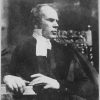
The following sermon was preached by the Rev. David Welsh (1793-1845). Though less known today than Thomas Chalmers, William Cunningham, and James Bannerman, David Welsh is a significant figure in the history of the Free Church. Welsh pursued his theological training in the University of Edinburgh. He was licensed in 1816, but instead of entering the ministry immediately, he continued to teach for a season in order to give himself time to develop his learning and gifts. He was later ordained a minister of the Church of Scotland in 1831. Given the timing of his theological and ministerial training, he was engulfed by the events and conflicts leading up to the Disruption of 1843. He was a member of the evangelical party that contended for the rights Christ had given to his people to call her officers. This controversy spanning 1834-1843 became known as The Ten Years’ Conflict and was the material cause that led to the establishment of the Free Church of Scotland.
Welsh is perhaps best-known as the last Moderator of the Church of Scotland prior to the Disruption. It was he who, in 1843, opened the General Assembly of that church with prayer, following immediately with the reading of the Protest. The famous “Disruption Painting” by David Octavius Hill portrays Welsh holding the Protest on Chalmers’s righthand side. After delivering a speech, he led the ministers and elders out from St. Andrews Church to Tanfield Hall in order to constitute the first General Assembly of the Free Church of Scotland.
Welsh illustrated one of the many types of sacrifice our Disruption fathers endured. Upon casting his lot with the Free Church, his position as professor of church history and his appointment as Secretary to the Board for the publication of the Bible were relinquished, losing a significant portion of his income and daily provision. Yet he threw his remaining life into helping the Free Church establish itself in service to the Lord. He served as the first Professor of Ecclesiastical History at New College, the newly established divinity school. Laboring while in declining health, he would die in 1845 just before the two-year anniversary of the Disruption. Upon his passing the General Assembly recorded its grief and gratitude for the services of Rev. Welsh as recorded in the Act Anent the Lamented Death of Dr. Welsh. Among other things it noted, “His life throughout was eminent for learning, judgment, purity of heart, gentleness of manner, capacity of service, and, above all, for piety and humble dependence on the will of his divine Master…” Additionally, the Act noted, “…he was called to the sacred duty and lasting honour of being in the foremost in her ranks, on the day when, in the face of the world, she asserted her freedom.” He is buried in St. Cuthbert’s churchyard in Edinburgh.
– Jonathan D. Mattull
The Blessedness of the Believer
O Lord of Hosts, blessed is the man that trusteth in thee! Psalm 84:12
Selected from: David Welsh, “Trust in God—The True Blessedness,” in Sermons by the Late Reverend David Welsh, D.D (Edinburgh: W. P. Kennedy, 1846), 141-169. This sermon is also printed in the second volume of The Free Church Pulpit; Consisting of Discourses by the Most Eminent Divines of the Free Church of Scotland (New York: Robert Carter, 1848), 157-170.
In the book of Psalms, we have the record of the experiences of the believer, and the utterance of his feelings in almost every variety of interesting circumstances, and upon subjects of all others the most important. There is not a systematic enunciation of doctrinal truth, or a regular and arranged collection of precepts of conduct, but we have in a much more interesting form the substance of Christian doctrine, and duty, and privilege, brought forward as suggested by the holy Spirit, according to the peculiarities of the situation and character of the sacred writer. Thus, in the verse before us, we have not the mere statement of the truth, that the man who puts his trust in the Lord is blessed; we have it confirmed by the personal experience of the Psalmist himself, and it is breathed forth with all the sympathetic power that can be given to it by a heart overflowing with gratitude to God, and with holy zeal for his glory in the filial affiance of the children of men. All that had befallen him in the course of his eventful life, all that he had witnessed in the ways of divine providence, and all that had been revealed in the law of the Lord, convinced him that they only were blessed who placed their confidence in God; and the goodness of the Lord which he individually had tasted in the fulfilment of the promises, in the holy peace which he enjoyed in the deliverances which were effected for him, and in the hopes set before him, and the persuasion that these blessings were unto all, and upon all them that believed, led him, in accents of exulting gratitude and fervent zeal to exclaim, “O Lord of Hosts, blessed is the man that trusteth in thee.”
It was by the influence of the holy Spirit that the Psalmist was enabled to put his trust in God—it was in the gracious provisions of the new covenant that he experienced the blessedness of this holy reliance, and it was by the divine inspiration that he was taught to make this record of his rejoicing convictions, that others might be brought to exercise the same faith, and be glad in his delight. It is to be observed, that the truth contained in these words is not directly addressed to mankind. It was for their benefit that the truth has been recorded, but in the first instance it was addressed to God. We have here the exercise of a soul in communion with God, and in this exercise we have the most convincing evidence of the doctrine revealed. The declaration is made to God himself, as the natural expression of adoration, and thankfulness, and joy; and it is made to him because he alone could bestow upon others that filial confidence which constitutes the true happiness, and highest perfection of our nature.
he doctrines of Scriptures are revealed, that we may walk in their light—precepts are inculcated for the regulation of our conduct, and to these there is added the example of holy men, affording us a living illustration of the spirit in which we are to receive and yield ourselves to the truth, and presenting us at the same time with a constraining motive to obedience. In the record which is given us of the holy walk and conversation, of the spiritual employments and devout sentiments of righteous men, we have an embodying as it were of Divine truth, there is exhibited before us the model according to which we should form ourselves, the temper and spirit which we should imbibe. In this respect there are few exercises more profitable than to take the sayings of prophets and apostles, and to seek not merely that we may thoroughly understand their import, but that the spirit which they express may dwell in us. With this view we propose at this time to consider the words before us; and may the Holy Spirit, who first inspired the Psalmist to utter them, be given unto all of us, that we may not only understand their meaning, and be convinced of their truth, but be so filled with the experience of the blessedness of trusting in God, that we may find no rest till we approach the Almighty himself, and taking his name in our lips, pour forth the expression of all the emotions of thankfulness, and joy and love, in the inspired accents—“O Lord of Hosts, blessed is the man who trusteth in thee.”
I. Trusting in God
Let us, then in the first place, towards this end inquire what we are to understand by trusting in God. In the most enlarged Scriptural sense, the man who trusts in God is he who has such apprehensions of the faithfulness and mercy of God in Christ Jesus, as lead him to repose undoubting confidence in him for the fulfilment of all his promises, and especially for those which relate to the pardon of sin, to protection and deliverance in periods of trial, and to all the blessings of a glorious eternity. It implies an acquaintance with the Divine character and perfections as revealed in the Scriptures, and as confirmed in the experience of every believer. “And they that know thy name,” as we read in the 9th Psalm, “shall trust in thee for thou Lord hast not forsaken them that seek thee.” They that know thy name, i.e.—they that are acquainted with thy character—as the support of those who are in trouble, as the fortress and shield of those who are encompassed with danger—as the comforter and friend of all those that diligently seek after thee—they that know this, thy glorious character, will put their trust in thee. And as we are all by nature sinners—having broken his holy law and subjected ourselves to his wrath, and forfeited all claims to his support, or favour, or countenance—it is necessary before we can repose a reasonable confidence in him, that we should be acquainted with the revelation he has made of himself as a God of grace, as in Christ Jesus reconciling a guilty world unto himself, not imputing unto men their trespasses. If we know not God in Christ Jesus, upon what grounds can we trust in him? We have set ourselves in opposition to his authority—we have disobeyed his righteous commandments—the honour of his government is involved in inflicting punishment upon us as transgressors; and what grounds have we to hope that he will pardon our iniquities, or consult for our safety, or interpose for our deliverance? What confidence can we repose in him who has declared that his righteous soul abhorreth iniquity—that the soul that sinneth shall die—and that cursed is every one that continueth not in all things which are written in the Book of the law to do them? His bounty to bestow, his wisdom to guide, his power to protect, what can all these avail us if we have awakened his justice against us, and are unable to satisfy any of its claims? Upon such a view of the Divine character, our confidence must be presumption, and our hope must reap shame. But in the glorious gospel we are presented with abundant grounds of holy reliance. A sacrifice has been made for the sins of the world, by which God may be just, and yet the justifier of the ungodly. The Almighty hath declared that he taketh no pleasure in the death of the wicked, but would rather that they would repent and turn unto him; and so complete is the satisfaction which has been made for sin, that the faithfulness and justice of God are pledged to bless with the remission of their sins all those who put their trust in the great atonement.
We have, then, the strongest possible grounds for placing our trust in God. We have the declaration of the Almighty himself that he is a God of grace. We have his promise that, if we come unto him in faith, he will receive us graciously, and love us freely, and take away from us all our iniquities. Nor is this all. He has revealed to us how it is that he can exhibit himself to us in this character—he has made known to us the way by which it is consistent with his hatred of sin, and the truth of his threatenings against transgressors, and the honour of his holy law, and the stability of his government, that he should receive in mercy the penitent who puts his trust in him. And such is the excellence of this method of reconciliation, that the glory of God is promoted in the salvation of souls—that he not only has given us his faithful word, confirmed by an oath, but the most affecting and most certain pledge, in the gift of his Son, of his willingness to receive all those who come in faith unto him; and, while the perfect and accepted works of the Son give him a claim upon the faithfulness of the Most High for the security of all his believing people, the love of God, manifested in the mission of his Son, shews that he is well pleased to fulfil his part in the eternal covenant in accepting those who believe in Jesus, and in blessing them with all spiritual blessings.
Now, to see the excellency of this scheme of redemption—the perfections of the Most High manifested in it—its suitableness to our condition as fallen creatures—its sufficiency for even the chief of sinners—and consequently its sufficiency even for us—to perceive all this, and perceiving it, to acquiesce in this method for our salvation—this is the first step towards putting our trust in God. When we speak of this as the first step in putting our trust in the Most High, we are far from affirming that it is uniformly, or even that it is frequently, the first exercise of the awakened soul in regard to religion. In many instances it may be long indeed ere the soul is brought to perceive the fulness and freeness of the gospel offer, or the warrant that is given to all that hear to believe in Jesus. But, till the nature of this warrant is understood in some measure, and till, in consequence of this, the heart complies with the warrant in some degree, however feeble, the soul cannot be said to exercise trust in God. There may be the efforts of an inquiring mind, or the fears of a doubting spirit, or the sorrows of a troubled conscience, or the agitations of a harassed soul, or the endeavours of a convinced understanding,—there may be the workings of a general faith in the truth revealed, and of hope that that truth may yet be appropriated; but we cannot be said to trust in God till his promises are appropriated by the soul reposing its confidence in them.
This, then, is the first point at which all those who have been living without religion, or who, convinced of its importance, have been making ineffectual efforts to attain it, ought to aim—to see their condition by nature as ruined and undone—to see the suitableness of the offers of the gospel to their condition as perishing sinners—and to embrace those offers with a believing mind. There is not any individual to whom the glad tidings of the gospel are brought who is not invited thus to appropriate the blessings of redemption; and this is the only way in which they ever can be effectually appropriated. These are points of much importance. There is not any individual to whom the gospel is preached who is not invited to make appropriation by faith of all the blessings of salvation. He is called upon to put his trust in God, as having entered into a covenant well-ordered in all things and sure, in which provision is made for every variety of character and condition. “Ho, every one that thirsteth! come ye to the waters, and he that hath no money”—“Come unto me, all ye that labour”—and “Whosoever cometh unto me I will in no wise cast out.” And, as every one is invited thus to receive the blessings of redemption, so this is the only way by which they ever can be effectually appropriated. We may think to attain to many of them by our own unaided exertions, or we may think that they will be bestowed, in the abundant mercy of God, without any effort of our own at all. But both ideas are equally inconsistent with that blessed scheme of redemption, by which we are commanded to work out our own salvation, while, at the same time, we are expressly taught that God works in us both to will and to do of his good pleasure. This arrangement presents a speculative difficulty, which the efforts of human ingenuity will never be able to reconcile or explain, but which finds a practical solution in the experience of every true believer.
The first step, then, towards trust in God, and which is necessary, as a preparatory condition, to every other exercise of this grace, is to believe in him as in Christ reconciling the world unto himself. There can be no doubt that there are many who conceive that they are reposing their confidence in God for the exercise of many of his perfections, while they have never been brought to see him in this character. But in all such instances, these hapless individuals are deceiving their own souls. Were we by nature without sin, and in a state of favour with God, then doubtless we might in any situation hope for the divine blessing and assistance, according to our special requirements. But, in a state of enmity as the carnal heart is against him, and alienated as we are from him by wicked works, how can we hope for his interposition in our behalf, till the middle wall of partition is broken down between us—till all grounds of controversy are removed—and till we are reinstated in his favour; and how can we hope for all this to be effected but in the way of his own appointment, even by receiving his offers of mercy in Christ Jesus? If we have no love to God—if we are not seeking after him—if we are living in the neglect of the work which he specially requires, it is not pious confidence, but unwarranted presumption, to hope for any token of his goodness.
But while to exercise faith in God as in Christ reconciling the world unto himself is the first step in the trust that is spoken of in Scripture, and is involved in every future exercise of it, this by no means comprehends the whole of this grace. This habitual reliance upon God as a reconciled Father must be accompanied with the special actings of faith for the fulfilment of the promises, according to our special circumstances and requirements—for light, and encouragement, and strength in the path of duty—for grace to resist temptation—for the sanctified use of affliction—for deliverance from difficulty and danger—and for the final enjoyment of the inheritance of the saints in light. The grounds for all these varied forms of the exercise of this grace are, to a certain extent, the same as those already mentioned, namely, the fulness of the divine promises—the completeness of the provisions of the covenant of grace—and the power and the willingness of God to perfect all that concerneth his people. In this more advanced exercise, the grace of filial confidence is most frequently spoken of in the sacred volume. The inspired writers who chose God as their portion, and rested in him as their covenant God, are represented as themselves exercising and as exhorting others to exercise trust in God as able to give them the victory over all their enemies, to defend them in the midst of every danger, and to carry them on from one degree of strength unto another, till at last they should appear before the Lord perfect in Zion. And in these instances of holy reliance it is to be observed, that believers have an additional ground of confidence. In what the Lord hath already done for them, in the instances in which he has strengthened them to do his will or suffer, and in the interpositions he has made for their well-being, in the answer he has returned to their prayers, and in his fulfilment of the promises, they have not only a personal experience of his power, and goodness, and faithfulness, but they have also the evidence of the Spirit testifying with their own spirits, that they are the children of God, and that as children, all the promises are yea and amen unto them in Christ. Not that any additional evidence can render the faithfulness of God in itself more certain, but what comes within the scope of our own observation, and still more, what is a matter of personal experience, produces a greater effect upon our mind than what we only hear of by the hearing of the ear. Thus, though the truth cannot be made more certain, our belief of it may be made more lively. Besides, we thus also receive evidence of our personal interest in the promises. Even in the first hearing of the offers of the gospel, if we are satisfied that the truth is from heaven, we are warranted to embrace these offers, and we may embrace them rejoicing. But then, in regard to this act of faith, there may be a twofold difficulty. There may be a doubt resting in our mind as to whether that is true which we do believe, and there may be a doubt as to whether our faith in it, admitting it to be true, is genuine. This is to be ascertained only by an examination of the grounds of the doctrines we believe, and by an enquiry into the effects of our belief upon our own mind. The state is similar to that of a man who has been restored to sight. If the restoration has been complete when he opens his eyes, he must experience the pleasing benefits of the light that shines around him. But if the restoration is at first only in degree, he may have doubts as to whether it is the light of the blessed sun that he conceives to be shining, or whether he beholds it with a perfect vision. This can be ascertained only by comparing what he experiences with the perceptions of others, and by examining and comparing the evidence of the different senses of his corporeal frame. What light is to the eye, truth is to the mind, and by an analogous process to that which we have mentioned, we must ascertain whether it is the truth that we are believing, and whether our faith is in perfect exercise. And if we find that our faith works by love—that it gives us the victory over temptations that formerly misled us, and animates us in a course of holy obedience—then we have surely satisfactory proof that our faith is of God. It is of infinite importance that we should “know God;” but it is of importance also that we should ascertain whether this knowledge is genuine; for the Apostle has given us a test for this purpose. “Hereby,” says he, “do we know that we know him, if we keep his commandments.” In addition, therefore, to the general grounds which all who hear the gospel have of putting their trust in God, namely, that he has the power to do all that he promises, and that he is faithful, and will perform, the believer who has manifested his faith by his works, has evidence of his personal interest in the promises, and that he who has begun a good work will carry it on, and at last perfect it. He not only trusts in God, but he knows in whom he trusts; and the instances of the faithfulness of God which he individually has witnessed enlivens his faith, that he who has exhibited towards him such tokens of goodness will continue to love him to the end. In whatever circumstances of difficulty or perplexity he may be placed, he refuses to cast away his confidence, which has great recompence of reward. Like the patient sufferer of old, he is enabled to exclaim, “Though he slay me, yet will I trust in him, for I know that my Redeemer liveth.” In the spiritual life he enjoys, he has the proof, he has the experimental knowledge of a present and of a living Saviour, and he knows the faithfulness of him who hath said, “because I live, ye shall live also.”
It is ever to be remembered that it is the Holy Spirit that enables us to put our trust in God, and that he works out this grace within us by revealing to our souls the character of God as set forth in the gospel, and by affording us evidence in the effects which he produces upon our character that we are the children of God; and that, as his children, we have a right to all the privileges of the covenant of grace. This blessed state of mind is opposed to our living in the forgetfulness of God altogether, to seek our happiness and resting all our hopes upon the world and the things of the world, and to a building up of a presumptuous hope upon unwarranted views of the Divine character, and to a giving ourselves up to despair in the dread that we will never be the objects of the Divine care or compassion. And the grace itself, as spoken of in the Scriptures, may be defined to be a filial reliance upon God for acceptance with him, for guidance and support amidst the difficulties and dangers of life, and for an inheritance among them that are sanctified, founded upon just views of the character of God as set forth in the gospel, and illustrated in the experience of sincere believers, and in our own individual experience.
II. Blessed Trusting in God
I now proceed as was proposed, in the second place, to inquire into what constitutes the blessedness of those who put their trust in God.
And under this head we remark, in the first place, that those who trust in the Lord are blessed, because the very exercise of this grace implies that we have received of the Divine spirit. Trust in God, as we have seen under the former head, involves the exercise of saving faith; and that is the gift of God wrought in us by the Holy Spirit. We cannot by the exercise of our own unaided powers put our trust in God. The natural man discerneth not the things of the spirit of God. We are prone to trust in ourselves, or in the devices of our own imaginations, and the truth as it is revealed appears foolishness to us. If upon Scriptural ground we are enabled to repose trust in God, we have evidence that the Spirit of God has been bestowed upon us. Not that we are asked to believe contrary to, or without evidence; far from it. It is only in opposition to the pride and carnality of our hearts. The light is good, but our eye is evil; and the Spirit helps to open the eye that we may see.
In the second place, those who trust in the Lord are blessed in the holy peace which they experience.
Peace is the portion of all those who place their confidence in God. “In that day,” saith Isaiah, “shall this song be sung in the land of Judah. We have a strong city, salvation will God appoint for walls and bulwarks. Open ye the gates that the righteous nation which keepeth the truth may enter in. Thou wilt keep him in perfect peace whose mind is stayed on thee, because he trusteth in thee. Trust ye in the Lord for ever, for in the Lord Jehovah is everlasting strength.” There is blessing in the very exercise of this grace. A holy composure diffuses itself over the mind. A Divine tranquillity takes up its abode in the breast. The soul, wearied out and disappointed in the pursuit of earthly vanities, has found at last a satisfying portion: Long tossed upon the billows of a wild and distracting uncertainty, it has entered into a quiet haven at last.
From the account which was formerly given of the nature of trusting in God, it must appear obvious that in the exercise of this grace there is every thing to enhance the feeling of security—the magnitude of the dangers from which there has been deliverance—the assured safety which has been attained amidst circumstances which appear most threatening, and the manifestation of the condescension, and mercy, and faithfulness of God in this sure refuge.
From the account which was formerly given of the nature of trusting in God, it must appear obvious that in the exercise of this grace there is every thing to enhance the feeling of security—the magnitude of the dangers from which there has been deliverance—the assured safety which has been attained amidst circumstances which appear most threatening, and the manifestation of the condescension, and mercy, and faithfulness of God in this sure refuge.
In every form in which trust is rightly reposed in God, there is a peace which passeth all understanding that takes possession of the soul. Do we trust in God for the pardon of sin? In order to conceive in any degree the blessedness of those who thus trust, something must be known of the terrors of an awakened conscience, when the soul is brought to perceive that it has violated a righteous law—that it has offended an infinitely holy God—that even in this world it may be overtaken with a punishment greater than it can bear—and that after this world is passed away there remaineth the trial and the doom of the great day of the Lord. Those who are engrossed with the things of this present life—who take little thought of the character of God, as revealed in his word, and illustrated by the visible judgments which often, even in this world, overwhelm the ungodly, and which speak, in language not to be misunderstood, of a more fearful judgment that awaits mankind at last—those who take little thought of those things may make light of the fears of those whose hearts condemn them; but the soul which has been made alive to its sinful state perceives that there is a cause too real for all its apprehensions—a horror of great darkness seizes upon it, and the feeling of sin weighs upon it with a load that is intolerable. To a mind in such a state, where is peace to be found?—where can the conscience-smitten man find an answer to the accusations of his own mind?—what reply can he make to the charges brought against him by the great adversary of souls?—how can he repair the evil he has done to others or to himself?—above all, how is he to appear before the judgment-seat of Christ, and answer for the deeds done in the body? “Oh, Lord of Hosts, blessed is the man who trusteth in thee!” There is only one source of true comfort to those convinced of sin, and that is, in coming to God as he is revealed in the gospel, and trusting in him for forgiveness. Here there is indeed rest to the weary soul. The very knowledge that we are still in a world in which Christ died for sinners— that we have still the Word of God in our hand—and that the gospel is preached to us—is calculated to save from utter despair. Farther views of the wisdom and truth, and love of God, as manifested in the scheme of redemption—of the grace of our Lord and Saviour, in suffering the punishment due to transgression, and in bringing in an everlasting righteousness, are calculated to awaken hope in the mind. But it is not till the penitent is emboldened to draw near unto God himself, and confessing all his sins, and humbling himself in the very dust because of his unworthiness, and acknowledging that he is deserving of nothing but condemnation, and, at the same time, looking to the cross of Christ, pleads the merits of him who was made a sin offering for us, and trusts in this sacrifice as all sufficient—it is not till then that peace arises in the mind. But in this exercise of holy trust there is the blessedness of heavenly peace. He whom we had offended is seen to be reconciled to us. And if God be for us, who can be against us? “It is God that justifieth; who is he that condemneth? It is Christ that died, yea, rather that is risen again from the dead.” The evil we have done to ourselves and to others we must continue to deplore; but, while we mourn in ourselves, we must rejoice in the Lord, who is able to bring light out of darkness, and order out of confusion, and good out of evil. The dishonour we have done to the holy law of God must ever keep us humble; but the soul that is thus abased in self is exalted in Christ; for such is the riches, both of the wisdom and mercy of God, in the scheme of redemption, that his glory is promoted in extending pardon even to the chief of sinners. Thus, while the believer’s soul is filled with loathing and abhorrence in the remembrance of his sins, these feelings are absorbed in wondering adoration of the riches of that grace that could forgive them, and he does not even shrink from the judgment which is to reveal the full extent of his unworthiness; for he knows that this disclosure will magnify the pardoning mercy of the Almighty, and the efficacy of the great atonement in the view of assembled worlds. He can unveil his sins before God, and hope for pardon; and it is little if need be that they should be made manifest to the creatures whom God has made. It is, indeed, essential to his peace that he should attempt no concealments with his God—that he should not even seek to make excuse for any of his transgressions, but that he should carry all his sins before the Lord, and that, after looking at them in all their extent,—in all their height and depth, and length, and breadth—he should yet see that the mercy of God in Christ Jesus is greater than them all.
The same remarks may be applied to every particular in which trust is exercised in God. In all of them there is a holy composure of mind arising from a perception of the perfection of the Almighty, of the perfect and wondrous adaptation of the covenant of grace to every variety of character and condition, and of the fulness that is in Christ Jesus for supporting and perfecting all his people. Whatever it is for which they place their confidence in the Lord, they feel that their foundation is upon a rock, and that they never can be moved. They have the Divine warrant for their trust, and they know that Omnipotence can effect whatever mercy has promised, whether it is grace to war against sin, or strength to endure temptation, or light to guide amidst the difficulties of life, or refuge from its ills. And the feeling of security is increased by the remembrance of the dangers from which they have escaped, and in many cases, also, by the apparent evils which threaten to hinder the fulfilment of the promises. Formerly, they were without any sure source of happiness—they walked in a vain show—they disquieted themselves in vain; and what abundant thankfulness have they to God, who has called them out of darkness into his marvellous light. They might still have been pursuing lying vanities—they might still have been the slaves of their own evil passions, and been led captive by the devil at will; and can they ever sufficiently adore the goodness of the Lord, who checked them in their sinful career, and translated them into the kingdom of his dear Son, and enabled them to draw water out of the wells of salvation? The outward evils of their condition, also, often enhance their spiritual blessings. The more the world frowns upon them, the more they are led to value the approving smile of their heavenly Father. Where troubles abound, the consolations of the gospel much more abound. And where outward circumstances appear most adverse, the more they are led to see the value of an undoubting reliance in the Divine providence that can make “all things work together for good.” The exercise, then, of trust in God carries the Divine blessing along with it in the holy peace that it diffuses over the mind.
III. The Recompense of Reward
But we go on to observe, in the third place, that they who trust in the Lord are blessed in the recompense of reward that is promised to them.
The very existence of trust involves some measure of present enjoyment, for it is belief in present, or it is the assured prospect of future, good. Farther, as genuine trust involves the exercise of saving faith, he who exercises it in any instance, is blessed as the object of the Divine favour and regard. And as enjoying the favour of the Most High in the present, he has the pledge that the mercy he now experiences will be continued in a measure always increasing. They that honour God will be honoured of God. And the trust which is reposed in the Most High is acknowledged by Him in the bestowing of blessings, not only of such as were hoped for, but of such as could neither be asked for nor thought of.
When we speak of the recompense of reward which is promised to those who put their trust in God, we use the language of the Scriptures. And while we humbly bear in mind the lost condition of our nature, so as to acknowledge that of ourselves we are unable to do anything meritorious of any blessing from on high, yet we must also gratefully remember the grace of the new covenant, under which our imperfect graces and services are accepted, and honoured, and rewarded through Christ. In this respect, trust in God is especially distinguished. “Save me, O Lord,” exclaims the Psalmist, “for I trust in thee.” The exercise of trust is brought forward as constituting a claim upon the Divine protection. And again, in the passage already quoted from Isaiah, there is the promise that God will keep them in perfect peace who trust in him; and the reason is given, because they trust in him. It is to be observed, however, that the very nature of trust in God, as formerly explained, excludes the idea of absolute merit, as if there were any thing in us that could entitle us, of our own right, to the favour of God; for the essence of the grace consists in our believing the promises of God as made to us, who are of ourselves undeserving of any good; and every act of trust in God involves faith in Christ, through whom alone and in consideration of whose merits alone, we can be accepted.
But with this explanation, there is an obvious suitableness in the promises which are made to the exercise of this grace. And it would be contrary to all our ideas of the Divine goodness were any who in truth put their trust in God allowed ultimately to be put to shame. Among men, when those that have injured us throw themselves wholly upon our mercy, the ends of justice are, in many cases, sufficiently served by their acknowledgment of our right to punish, and the trust they repose in us would make it cruelty not to forgive. When the defenceless and forlorn flee to us for succour, the very confidence they repose in us constitutes a claim upon our aid. Even with the lower orders of existence, when the victim of a savage pastime, in the hopelessness of escape, flies to man for refuge from its pursuer, the appeal is irresistible. And is it to be supposed that when a soul exposed to the snare of the subtle fowler, or borne down by the pursuit of sin and Satan, betakes itself to God for protection, the claim will be disregarded? But this is not all. The Almighty himself has invited us to put our trust in him. He has given his promise that those who hope in him will not be confounded. It is by his holy Spirit that we are enabled to exercise this grace, and everlasting blessings, therefore, must be upon the head of all those who place their confidence in God.
In putting their trust in God, they tender all the honour that is in their power to all the attributes of the Most High, especially to his mercy in promising, and to his faithfulness and power in fulfilling, they renounce all other dependence and acknowledge their utter helplessness in themselves, and thus present an appeal to Divine benevolence. They act according to the Divine authority, and under Divine impulse, and their trust cannot be in vain. Nor is it in vain. He, in whom they place their confidence, has in store for them blessings incomparable and inconceivable in their value. They that trust in the Lord shall be Mount Zion which cannot be removed, but abideth for ever. As mountains are round about Jerusalem, so the Lord is round about his people from henceforth and for ever. Nay, the bulwarks of nature and the strength of the earth themselves are declared to be less sure, and less to be depended on, than the refuge of the Lord’s people. “For the mountains shall depart, and the hills be removed; but my mercy shall not depart from thee, neither shall the covenant of my peace be removed, saith the Lord, who hath mercy on thee.”
We have thus considered, my friends, the nature of trust in God, the blessedness of those who exercise this grace; and we may now be prepared to consider with what feelings we ought to join the Psalmist in the words before us. If we would in truth unite in heart with Psalmist, we must learn to exercise trust in God; and if we do, then we will consider it our duty to imitate the example set before us, and approach the Almighty himself, and pour forth our hearts in words before him.
We will do this in gratitude and joy, for all things are of God. Every good and perfect gift—every pure and spiritual blessing—cometh down from him. He devised the way by which we might be reconciled to him—he bestows the spirit of affiance—he protects by his Omnipotence all that is entrusted to him! If there be any of you, then, my friends, who have been enabled to put your trust in God, should not your hearts be filled with holy gratitude, that the Lord hath been thus gracious to you. Should not you adore his loving kindness and his truth. Should not your hearts be enlarged to participate in the happiness that has been experienced in the ages that are past, and that is to be experienced in the ages everlasting by those who know the Lord, and trust to his grace; and if these sentiments of gratitude and holy joy do fill your bosom, you will approach the throne of grace, and, in the consideration of your past privileges and future prospects, and in the contemplation of the blessings which the Father of mercies so liberally dispenses, you will, in the fullness of your heart, exclaim, “O Lord of hosts, blessed is the man that trusteth in thee.”
But farther, you will employ these words in earnest desire that the Almighty would bestow upon others that filial confidence which constitutes the true happiness and highest perfection of our nature. If you have indeed tasted the heavenly gift, and the good word of God, and the powers of the world to come, the desire of your heart will be that others should participate in these blessings. And while you will be careful to use every means to awaken those to whom your influence may extend to seek after God, you will feel that all your efforts must be in vain without the Divine blessing, and that the earnest prayer for that blessing is the most effectual means you can employ. When you see multitudes around you given up to sinful indulgences, or engrossed with worldly pursuits—careful about many things, and neglecting the one thing needful—fearing to give themselves up to religion lest it might interfere with their temporal employments—the superior happiness of those who put their trust in God will force itself upon your mind. How insecure are all temporal advantages, without the Divine blessing!—of how little value are they even when most secure! How does a divine contentment render every situation the situation of truest happiness! You will bear testimony to the ennobling joys of the righteous, and you will pray that the Almighty would pour down a spirit of wisdom upon mankind, and lead them to seek after God.
There may be some of you who, though convinced that a life of religion is a life of the truest happiness, have in your own experience known it more in its sorrows than in its joys. In your outward condition there may have been much to agitate and perplex, and you may have gone mourning all the day. But do you not see that the cause of the gloom which is within you is that you do not wholly rest upon God? You are more occupied with the things of the present life than with those of eternity. You desire more to bring the will of God to coincide with yours than to submit yours to the will of God. Seek, then, first the kingdom of God and his righteousness; leaving the consideration of the things of time, seek to secure an interest in the new covenant, and then all things will be added unto you. God, in his good providence, will order events to your outward comfort; or, if circumstances continue adverse, you will learn to see that they are working for your good—you will submit to the chastisement of a wise and kind Father—you will even rejoice in your tribulation, and in the experience of the benefit you derive from the severest dispensations, your very trials will add to the fervour of the gratitude with which you will exclaim, “Oh Lord of Hosts, blessed is the man that trusteth in thee!”
We cannot conclude without beseeching those of you who are without this religious trust—satisfied with the form of godliness and the name to live, while you are dead—to consider how great is that happiness of which you are deprived. What is all that you enjoy, if it be compared with the indwelling of the Spirit of God—the holy peace of reconciliation to him, and the hope that is full of immortality? It is not yet too late for you to make trial of this blessedness. The Almighty still waiteth to be gracious: Christ still knocketh at the door: the Spirit and the bride say come. Be wise, now, therefore, and be instructed: serve the Lord with fear, and rejoice with trembling. Seek ye the Lord while he may be found, and call ye upon him while he is near. Kiss the Son, lest he be angry, and ye perish from the way, when his wrath is kindled but a little. Blessed are all they that put their trust in Him.