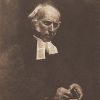
Selected From: The Scottish Pulpit: Sermons Eminent Scottish Divines, Vol 1, New Ed (Glasgow, London, Edinburgh: 1839), 37–41. Preached in the High Church, Edinburgh, on the Afternoon Thursday, 22nd March, 1832, Being the Day Appointed by His Majesty to be Observed Throughout Scotland as a National Fast.
Wherefore the Lord said, Forasmuch as this people draw near me with their mouth, and with their lips do honour me, but have removed their heart far from me, and their fear toward me is taught by the precept of men; therefore, behold, I will proceed to do a marvelous work among this people, even a marvelous work and a wonder; for the wisdom of their wise men shall perish, and the understanding of their prudent men shall be hid. —Isaiah 29:13–14
Of the Prophet Isaiah, we are told by himself that he prophesied concerning Judah and Jerusalem in the days of Uzziah, Jotham, Ahaz, and Hezekiah, kings of Judah. By referring, therefore, to the history of these reigns, as they are recorded in the books of Kings and Chronicles, we may form a correct estimate of the character of the age in which he lived, and of the state of religion among the people whom he addressed; and I shall at present attempt little more than a sketch of this history, believing that every reflecting man will be able to apply it, in so far as it is applicable, to our condition and circumstances.
From that history, we learn that Uzziah, in whose reign Isaiah began to prophesy, was the ninth king who had reigned over Judah, subsequent to the death of Solomon, and the revolt of the ten tribes who constituted themselves into the kingdom of Israel. And of the eight kings who preceded Uzziah, four, we are told, did that which was right, and four did that which was evil in the sight of the Lord—the two classes following one another, two and two, in succession. In the reigns of the wicked kings, we are informed, as might be expected, that:
Judah did evil in the sight of the Lord, and they provoked him to jealousy with their sins which they had committed above all that their fathers had done. For they also built them high places, and images, and groves, on every high hill, and under every green tree. And there were also Sodomites in the land, and they did according to all the abominations of the nations which the Lord cast out before the children of Israel. —1 Kings 14:22–24
Under the other class of kings, those who did that which was right in the sight of the Lord, this openly-avowed rebellion against the God of heaven was partially checked; and by the influence and example of some of them, the worship of the true God was restored to something like its original purity. Yet it appears of the very best of them, that they violated the great fundamental principle of that covenant which God had made with their fathers; for they were ever disposed to betake themselves, in seasons of difficulty and danger, to the aid of the heathen nations around them, instead of relying on the solemnly-pledged protection of God—a fact which does itself show how far they degenerated from that simple dependence on the promises of God, which was at once their security and glory. And of the whole of the four good kings, it is said that, though their own hearts were right with God, and though they did much to bring back the people to an outward acknowledgment of him, yet the people still sacrificed and burnt incense on the high places.
Such was the state of things before the accession of Uzziah to the throne of Judah, in whose reign Isaiah began his ministry; and although it is said of him that, on the whole, he did that which was right in the sight of the Lord, yet besides his daring to burn incense in the house of the Lord—for which he was made a leper, and continued a leper till the day of his death—besides this, it is also recorded in the way of qualifying that he did that which was right in the sight of the Lord, “that the high places were not removed,” and that “the people sacrificed and burnt incense still on the high places” (2 Kings 15:4). Of Jotham, too, it is said that he “did that which was right in the sight of the Lord; he did all that his father Uzziah had done. Howbeit the high places were not removed; the people sacrificed and burnt incense still on the high places” (2 Kings 15:35). With respect to Ahaz, it is recorded that “he did not that which was right in the sight of the Lord, for he walked in the way of the kings of Israel, and made also molten images for Baalim. Moreover, he burnt incense in the valley of the son of Hinnom, and burnt his children in the fire, after the abominations of the heathen whom the Lord had cast out before the children of Israel. He sacrificed also, and burnt incense in the high places, and on the hills, and under every green tree” (2 Chron. 28:1–4). And even in the reign of Hezekiah, the last and by far the best of the kings under whom Isaiah prophesied, there must have been a manifest appearance on the part of the people of Judah to depart from God. That a marvelous reformation was wrought by his influence and example is indeed true, for “he, in the first year of his reign, in the first month, opened the doors of the house of the Lord, and repaired them,” and declared, “It is in mine heart to make a covenant with the Lord God of Israel, that his fierce wrath may turn away from us” (2 Chron. 29:10). Accordingly, he called together the priests and the Levites, and they sanctified themselves, and cleansed the house of the Lord, and offered burnt offerings in abundance, and the service of the house of the Lord was set in order. Moreover, he “sent to all Israel and Judah, and sent letters to Ephraim and Manasseh, that they should come to the house of the Lord at Jerusalem to keep the passover” (2 Chron. 30:1). And although they laughed his messengers to scorn, and mocked him, yet the people of his own kingdom humbled themselves and came to Jerusalem and killed the passover; “so there was great joy in Jerusalem, for since the time of Solomon the son of David king of Israel, there was not the like in Jerusalem” (2 Chron. 30:26). And “when all this was finished, all Israel that were present went out to the cities of Judah, and broke the images in pieces, and cut down the groves, and threw down the high places, and the altars out of all Judah and Benjamin, in Ephraim also, and Manasseh, until they had utterly destroyed them all” (2 Chron. 31:1). But notwithstanding this apparently universal and, in so many cases, no doubt, real reformation in the people of Judah, it is plain that they were too far from that state of simple reliance on God, which constituted at once their honour and security, and by the exercise of which, it was designed that they should bear testimony for God against the idolatry of the heathen. Hezekiah himself, after having been thirteen years king of Judah, on the first occasion that his land was invaded by Sennacherib king of Assyria, hesitated to cast himself on the power of God for protection, but with fear and faint-heartedness, sent to the king of Assyria, saying, “‘I have offended; return from me: that which thou puttest on me will I bear.’ And the king of Assyria appointed unto Hezekiah king of Judah, three hundred talents of gold. And Hezekiah gave him all the silver that was found in the house of the Lord, and in the treasures of the king’s house. At that time did Hezekiah cut off the gold from the doors of the temple of the Lord, and from the pillars which Hezekiah king of Judah had overlaid, and gave it to the king of Assyria” (2 Kings 18:14–16). It is true that on a subsequent occasion, when the land was again invaded by the Assyrians, Hezekiah, encouraged by the assurance of Isaiah the prophet, acted a different part, throwing himself on the promised protection of God, and setting at defiance the armies of the invader. But at a still later period, when towards the close of his life, the Lord had so prospered him that he rose in honour, his heart was lifted up; and when a heathen prince sent messengers to congratulate him on his recovery from sickness, he was tempted to show “all the house of his precious things, the silver and the gold, and the spices, and the precious ointment, and all the house of his armour, and all that was found in his treasures: there was nothing in his house, nor in all his dominion, that Hezekiah showed them not” (2 Kings 20:13), forgetting that his strength and glory lay not in the amount of his riches, but in confidence of the promise of his God. And that the people were, all this while, equally ready to forget their privileges and security, was but too obvious; for no sooner was Manasseh come to the throne, than he reared up altars for Baal, and made a grove, and worshipped all the host of heaven, and served them, and built altars for them within the very house of the Lord, and set up a graven image of the grove in the house where the Lord had chosen to put his name. One of his sons he sacrificed to Moloch, and he himself used enchantments, and dealt with familiar spirits and wizards. And, so far from finding the people unwilling to go with him, it appears that they were glad to make their escape from the restraints under which Hezekiah’s recognition of the true God had brought them.
It appears then that the best commentary on our text is just the history of the reigns, during which Isaiah prophesied, as it has been recorded partly by him, and still more fully in the books to which I have referred. Whatever be the period, during the Prophet’s public life, in which these words were uttered, we can be at no loss to know on what ground he charged his countrymen with delinquency. The prophecy was spoken during the reign of one of the kings of Judah, and they were at that time making something like a profession of religion, drawing near to God with their mouths, and honouring him with their lips. But we have already seen that, under Hezekiah himself, after all he did to put down idolatry and reestablish the worship of the true God, which under his predecessor seems to have been altogether abandoned, there was too good ground to say of the people of Judah what is here said of them by the prophet. The charge brought against them consisted mainly in this, having withdrawn their confidence from God and placed it on some devices of their own; substituting for the worship of the true God the idolatrous worship of the heathen, whose manner they adopted, and whose aid they coveted. It is admitted that they did draw near to God with their mouths, and that they did honour him with their lips; but it was not from any love to the worship itself; it was not from any settled idea of God’s absolute sovereignty; it was not from any resolution or any secret purpose of taking his sure word of promise as their sole strength and security, be their difficulties and dangers what they might—their hearts were far removed from God—they desired not the knowledge of his ways. Though in obedience to an authorized order, in obedience to the example of a pious sovereign, or from some indefinite dread of coming judgment, they had external worship, as prescribed by law, yet their hearts were not with God; and though finding themselves on the eve of being threatened by calamity from without, such as invasion from a foreign foe, or the attack of a dangerous malady, they still had secret misgivings in committing themselves to the protection of God; though pledged to him by solemn covenant, they were disposed, like the king of Israel that we read of, to send messengers to inquire, not of God, but of Beelzebub how they should escape the impending evil. If all this was applicable to Judah under the reign of good king Hezekiah, can anyone doubt, when he sought to buy peace with the king of Assyria, that Hezekiah was driven to this measure—a measure the most impious in itself, and the most degrading to the Lord’s heritage, of whom it had been promised, that the fear of them and the dread of them should be round about them; can anyone doubt that he was driven to this course, by finding that his people placed more dependence upon the influence of Beelzebub than in the power and faithfulness of God to drive him hence? It was no slight crime with which the people of Judah were actually chargeable—it was indeed a denial of God’s sovereignty, although by that very sovereignty, it was that they and their fathers had for seven hundred years been in possession of the land of Canaan. Though they might make an outward profession of respect for the ordinances of God, yet the spirit by which they were actuated was essentially an atheistical spirit, inasmuch as with all the outward observance of divine ordinances, they looked for continued prosperity or deliverance from adversity, not to the wisdom of God, but to their own counsels, and the help promised to them by their idolatrous allies.
And the judgment threatened was in accordance with the nature and manifestation of their sin. They were not to be overwhelmed with irresistible calamity, in order to punish their flagrant idolatry; but they were to be left to the effect of their own devices, and their own schemes, and by these they were to be entangled. They were to work by their own skill, and in so doing, to be working their own ruin: and when all their plans were brought to their completion, the effect was to be, to bring utter desolation on the land; for “behold,” says the Prophet, “I will proceed to do a marvelous work among this people, even a marvelous work and a wonder, for the wisdom of their wise men shall perish, and the understanding of the prudent men shall be hid.”
It will not be necessary to enter at any great length on the illustration of the practical lessons suggested by the subject of these remarks. Mankind, with all their varieties of character, are essentially so much the same in all ages, and the Scriptures do, on the one hand, so graphically portray the leading features of human nature, and on the other, set forth so clearly the great unchangeable principles of the divine administration, that none who read that book with soberness and attention, and look around them on the world with ordinary observation, can fail to see that the sins of individuals or of nations there reproved, are, with some modifications it may be, the same sins which are still prevalent, and that if unrepented of and unforgiven, their consequences must in the end be the same. No nation, it is true, is precisely in the same circumstances with the kingdom of Judah, for, in the case of none is deliverance wrought or judgment executed so immediately as to require those miraculous interpositions that so often took place in the history of Israel and Judah; but still the great principles of the divine government are unchangeable and eternal. It is one of these, that sin is the reproach of any people. One end of the Jewish economy was to illustrate this principle; but we are not to be mistaken as to even divine interposition in the history of this people, for frequently their punishments happened by the operation of natural causes, under the controlling and ruling providence of God. But it were absolute atheism to maintain that, because sentence against an evil work is not speedily executed, by suspending the ordinary laws of nature, therefore divine agency has nothing to do with prosperity or adversity, or that these are not determined by the moral character of those who are the subjects of it. If there be among us, possessing as we do a full revelation of the will of God, a disposition to deny or overlook his supremacy as Sovereign Disposer of all events, and to trust to the wisdom of human counsels for national deliverance or prosperity, without any devout recognition of absolute dependence upon him, are we not chargeable with the very sin with which Judah of old was charged, and which was the source of all their multiplied offences? And if, along with this, there be a profession of faith—an external compliance with the ordinances of the Gospel, are we not in the condition of drawing near to God with our mouths, and honouring him with our lips, while our heart is far removed from him? It cannot be denied that this description is too applicable to us in our national capacity; that though professedly a Christian people, with laws and ordinances, we are looking mainly to our own skill and resources for the advancement of our national prosperity; that whether our schemes are successful or not, we are too ready to rest satisfied with looking to natural causes, without any solemn or serious recognition of the hand of God, and that this practical infidelity characterizes no small portion of our public enterprises. It is a fact which no devout man can contemplate but with sorrow, that the appointment of this very day for humiliation and prayer, and for the confession of sin, has in various quarters been made the subject of indecent scoffing. And granting that they who have done so are fewer in number and less influential than I fear they are, the practices too common among us show that such sentiments are more general than is openly avowed, inasmuch as such practices are altogether incompatible with an habitual acknowledgment of God as the disposer of every event, or that his blessing can alone secure public blessings or private prosperity. If the want of directly avowing the watchful providence of God, in whatever prosperity or adversity befalls us, is held openly in scorn and derision; if, in forming schemes for giving permanence to the one, or working out deliverance from the other, it be plain that nothing is looked to beyond the agency of human strength; and if, in the pursuit of individual interests, practices are become very prevalent in which men cannot dare deliberately to ask God’s blessing, is not our national character to this extent essentially the same with that of Judah of old? And if the principles of divine government be the same in all ages, must we not soon, in one form or other, experience the bitter fruits of sin?
We are already reaping these fruits. I allude not merely to the immediate effect of that visitation of Providence, which, with appalling rapidity, has swept away thousands of people, but to the immense extent of its operations already in the commercial interests of our country—the indefinite misery it may continue to entail, and the countless multitudes, the most industrious of our countrymen, to whom the usual channels of subsistence have been absolutely shut. And yet, what is this but an intimation of what God may do in the way of visiting upon us our sin of forgetting and forsaking him? For should He, by whom kings reign and princes decree justice, withdraw that secret influence, by which he directs the thoughts of men to the accomplishment of his own objects; should he give us up to worldly power, however imposing; should he surrender the guidance of our concerns solely to the exercise of mere human talents, at the expense of the glory due to God, even yet, without the interposition of famine or pestilence or sword—those more immediate executioners of divine judgments—how fearful may be the result, if we are left to our own devices! How unquestionable our calamities, treasured up in that solemn declaration, “the wisdom of their wise men shall perish, and the understanding of their prudent men shall be hid!”
And what, then, is our duty as individuals? We may be able to do little in the way of bringing back men to the acknowledgment of God as Supreme Ruler among the nations; but there is a refuge to which the humblest among us may betake himself—the refuge of prayer. Our sovereign has called on us, in language which breathes a devout and humble spirit, to make confession, and to offer up supplications for him, and for ourselves, and for our country. Let us, therefore, say, in all humility of soul, with pious Nehemiah of old,
Now . . . our God, the great, the mighty, and the terrible God, who keepest covenant and mercy, let not all the trouble seem little before thee, that hath come upon us, on our kings, on our princes, and on our priests, and on our prophets, . . . and on all thy people, . . . Howbeit, thou art just in all that is brought upon us: for thou hast done right, but we have done wickedly: neither have our kings, our princes, our priests, nor our fathers, kept thy law, nor hearkened unto thy commandments and thy testimonies, wherewith thou didst testify against them. —Nehemiah. 9:32–34
And while offering this prayer and confession, let us inquire how far we have contributed to the national guilt of forgetting and disowning God, in the sentiments we have entertained in respect of our national concerns, or in the principles on which we have acted in our individual pursuits. And let us beware lest our very confession go to aggravate our sin; if it be found that we draw near to God with our mouths, and honour him with our lips, while our hearts are far removed from him. Let us beware lest it should be found that our coming towards God has been taught us by the precept of men.
God bless his word, and to his name be the praise! Amen.