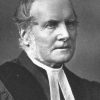
Selected from: Alexander Moody Stuart, The Song of Songs: An Exposition of the Song of Solomon (London: James Nisbet and Co., 1857), 295-298.
Who is this that cometh out of the wilderness perfumed with myrhh and frankincense, with all powders of the merchant? (Song 3:6)
As for Jesus himself, so much more for the Bride who has nothing good of her own, the wilderness yields rich perfumes peculiar to itself. The balm, the myrrh, the cassia, and the frankincense come not from the plains of Egypt, but from the mountains of Palestine and the sands of Arabia. Thither the merchant goes to purchase them, at the hands of those who have gathered them on the spot. At great cost he buys them, and seldom sells them pure, so that when he returns back from the wilderness with his fragrant powders and gums unmixed, he is laden with a treasure of vast price. But thither personally the Bride of the true Solomon goes to gather spices for herself, and thence she never returns without the richest stores. You never met the Bride of the Lamb coming out of the desert of trial, of desolation, of poverty, without recognising her at once by the costly ointment bewraying itself. She needed not to tell you where she had been, for the fragrance of which she was herself unconscious announced that she had just come up from the wilderness. Or if the Bride is soon to ascend to the heavenly Jerusalem, how often do all her garments smell of myrrh and frankincense, as one taking a final farewell of the desert.
The meek and quiet spirit, which is in the sight of the Lord of great price, is the product of the desert, where no man is, and where Jesus with his name as ointment outpoured meets the soul in its desolation. Close beside it grows the plant of strong faith, of ‘precious faith’ like Abraham’s – which can hope against hope, and retain its savour though plunged in many waters. Prayer fills its golden vials full of odours faster in the desert than elsewhere, for in the day of trouble men call on the name of the Lord. Brotherly love is a balm of the wilderness, for the Brother born for adversity is near, and the holy oil flows from his head to all the skirts of his garments. Saints who were distant in the crowded city of prosperity, draw close together in the desert of distress; the ointment of brotherly love is fragrant on them all, and men say of them, Behold how they love one another. The spirit of self-sacrifice, the noble and generous spirit is oftener acquired in the wilderness than elsewhere; or there at least it attains its richest brightness, and distils its most frequent odours; for the deep poverty abounds to the riches of liberality, and the desolate widow with prince-like freeness casts all her living into Jehovah’s treasury. Nowhere except in the wilderness is the love of reproof acquired, which says, Let the righteous smite me, and it shall be an excellent oil on my head; for that which elsewhere would only have broken the head, when found in the desert of the chastened soul is borne away as a precious balm. Even sorrow itself is gathered there like myrrh in drops of rarest value; and as the aromatic shrubs of the desert weep their costly odours under the heat of the sun, so the tears drawn forth from the desolate by fiery trials are kept as precious drops in the Lord’s own bottle, and preserved forever amongst heaven’s treasures as the produce of choice exotics such as Paradise itself does not yield. Intense love for Jesus is another of those spices, love that bathes his feet with tears, and counts no spikenard too costly to anoint them – love that seeth not yet believeth, and loveth much the Beloved unseen. Finally, the good name that is better than precious ointment, which often loses its sweetness in the harvest-field of prosperity, usually acquires its fragrance in the desert and in the time of trial; and is never more fresh and rich with attractive odors than when men first ask, Who is this that cometh out of the wilderness perfumed with myrrh and frankincense?
But who is that virgin coming to meet the King with raiment rank with the garlic and onions of Egypt? Is that a fitting bride for the Lamb, arrayed with the selfishness, the pride, the covetousness, the vain-glory, the sordidness of earth; bearing uncrucified and unmortified the lust of the flesh, the lust of the eye, and the pride of life; full of the spirit of the world which is odious to Jesus; adorned with what is highly esteemed among men, but is abomination in the sight of God? Or who else is that not bringing Egypt in its grossness, the world with all its ill savour into the presence and the marriage feast of the King, but with a dead fly marring all the ointment? The ointment truly is the growth of the desert, pure and fragrant, but whence came the dead fly that so spoils it all, and turns it into an offense? Not from the wilderness, but from Egypt. Ah! child of God, heir of heaven, bride of the great King, why preserve the dead fly as if it were some precious relic to be embalmed; you cannot carry it through heaven’s gates and why so cherish it here? Oh! search it out and cast it away, though it be like cutting your right hand off and plucking your right eye out. Even if in order to detect it you must break the alabaster box, find it out and cast it forth, that your ointment may be fit to pour upon the blessed feet of the Lord.