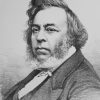
Selected From: James Bannerman, Sermons (Edmonston and Douglas: Edinburgh, 1869), pp. 382-408.
And the Spirit and the Bride say, Come; and let him that heareth say, Come; and let him that is athirst come; and whosoever will, let him take the water of life freely. – Revelation 22:17.
The place which these words occupy at the close of the revelation made by God to man, hardly less than the meaning of the words themselves, unquestionably gives to them a very marked and peculiar importance. With the exception of the Apostolic benediction which is contained in the last verse of the chapter, and of the awful threatening against adding to or taking from the words of the prophecy of this book, which occupies the verses immediately following our text, the language before us forms the latest audible utterance of God’s lips to this world.
For a period of nearly four thousand years, downward from the fall of man to the close of the Old Testament dispensation, the Almighty had been accustomed to make extraordinary communications of His will to mankind. At sundry times, and in divers manners, He had departed from the silent and ordinary method of His government of human affairs, and spoken His will and revealed His counsels to the world through the instrumentality of men whose lips He inspired for that purpose. From time to time the voice of God issued out from the throne of heaven, and was heard upon the earth, warning its inhabitants of their sins, and foretelling the great salvation that was to come; and down to the appearing of the last of the Old Testament prophets in the person of Malachi, the words of inspiration were still found to linger among men, and were lifted aloud at intervals to condemn or to awaken a sinful and a slumbering world. These Divine revelations from heaven to earth did not close with the closing of the ancient dispensation. “God, who in times past spake unto the fathers by the prophets, did at length speak unto men by His Son” (Hebrews 1:1-2); and the voice of the Divine will was heard, for the last time in this world, from the lips of the Son of God Himself. In Him, and in the Apostles whom He personally commissioned and qualified to bear the message of the Gospel after Him, the last revelation of God to mankind was completed. The Most High, who had been wont at intervals for four thousand years to make audible announcements of His will to the world, was about to withdraw Himself into silence again; His last word had been uttered; the long intercourse between heaven and earth, which had taken place in the way of extraordinary revelation, was to continue no more; and the Apostle John, the latest of the inspired servants of the Saviour that lingered here below, was commanded, in the chapter before us, to close up the words of God to man, and to denounce a curse upon those who should thereafter either add to or take from them. The words of our text, then, stand in the remarkable position of being, as it were, the last message of God to mankind,–the latest utterance of the voice of inspiration before it was to cease from this world for ever. And, independently altogether of the solemn and emphatic nature of the communication itself, the words before us cannot fail to derive a very peculiar and awful importance from the fact that they seal up and terminate the Divine revelations of four thousand years; that they form the last audible announcement of the Divine word which mankind are to hear until the day of judgment; and that they embody the last message, for good or for evil, which the Almighty was ever to leave with His fallen creatures.
Such is the marked and striking position which the words of our text occupy, as standing on the extreme limits of the Divine revelation to our world. The first question that naturally arises out of a consideration of the words themselves is, what are the meaning and application of the phrase, “the water of life,” which is here employed? Now, to those who are in any measure acquainted with the figurative language made use of in Scripture generally, or even in this very book, there can remain no difficulty in answering that question. In the seventh chapter of the Gospel by John, the same figurative expression is made use of, in circumstances which can leave no doubt as to the interpretation to be put upon it. “In the last day,” we are told, “that great day of the feast, Jesus stood and cried, saying, If any man thirst, let him come to Me and drink. He that believeth on Me, as the Scripture hath said, out of his belly shall flow rivers of living water.” But “this,” adds the Evangelist, in explanation of the language employed – “this spake He of the Spirit, which they that believe on Him should receive” (John 7:37-39). The “living waters” spoken of in this passage of the Evangelist John, then, are plainly meant to be understood as the blessings of Christ’s salvation, communicated by the Spirit of God unto those that believe. And in perfect accordance with this interpretation will be seen to be the use of the phrase in other passages of Scripture. “Ho, every one that thirsteth,” says the prophet Isaiah, in the invitation which he addresses to sinners to embrace the Gospel, – “Ho, every one that thirsteth, come ye to the waters, and he that hath no money; come ye, buy, and eat.” “If thou knewest the gift of God,” says the Saviour to the woman of Samaria, whom He conversed with by the side of Jacob’s well, – “If thou knewest the gift of God, and who it is that saith unto thee Give me to drink, thou wouldest have asked of Him, and He would have given thee living water. Whosoever drinketh of the water that I shall give him, shall never thirst; but the water that I shall give Him shall be in him a well of water, springing up unto everlasting life” (Isaiah 45:1; John 10:10-14). And, even in the Book of Revelation itself, the joys of a salvation completed and made perfect in heaven are spoken of under precisely the same figure. In the chapter immediately before that from which our text is taken, we find that in the vision of the new heavens and the new earth, which was given to the Apostle John, the risen and glorified Saviour is introduced as making promise of an everlasting salvation to His people in these terms: “I am Alpha and Omega, the beginning and the end; I will give to him that is athirst of the fountain of the water of life freely.” And finally, in the first verse of the chapter before us, the joys of the celestial world are spoken of in exactly the same way; “And he showed me,” says the beloved Apostle, “a pure river of water of life, clear as crystal, proceeding out of the throne of God and the Lamb.”
Interpreting, then, the language of our text in accordance with the passages now referred to, and with the general tenor of Scripture, we can be at no loss to understand either the meaning or the application of the phrase here made use of,– “the water of life.” The invitation to come and take of that water is an invitation to sinners to embrace the salvation offered to their acceptance in the Gospel. It plainly declares that in the blessings there held out to them they shall find a happiness complete in its own nature, and permanent in its duration. It necessarily implies that every fountain of enjoyment to which a man may betake himself for satisfaction, except the Gospel of Jesus Christ, shall, sooner or later, leave him disappointed and athirst. And it gives us to understand that it is only the favour of a reconciled God, and the peace of a full forgiveness in Christ, and the deliverance of the soul from the debasing influence of sin, that will prove life and blessedness to the sinner’s soul. Such, if we interpret the phrase according to the ordinary language of Scripture, is obviously the import of the invitation to “come, and take the water of life freely.” It is an invitation which most deeply concerns every man who knows that he has not yet complied with it. It is fearfully important to all who feel themselves to be sinners. It is of vital moment to every one who is conscious that he is unhappy, and that he has not yet found the fountain, in partaking of whose waters he shall thirst no more. It is the last invitation which God saw meet to leave with this fallen world. And it is pressed upon our attention and urged upon our acceptance from every quarter, and by every possible motive; for “The Spirit and the Bride say, Come; and let him that heareth say, Come; and let him that is athirst come; and whosoever will, let him take the water of life freely.”
I. We are told in the language before us that “the Spirit saith Come, and take the water of life freely.”
It is, indeed, known to all who know anything of the work and office of the Holy Spirit of God as these have been explained to us in Scripture, that it is His peculiar province to “take of the things that are Christ’s, and to show them unto our souls,” to convince men of sin, and to apply to their conscience the Gospel of the Redeemer; and that to Him, in an especial manner, are to be ascribed, from first to last, the conversion, the regeneration, the sanctification, and the ultimate salvation, of every sinner. In every step taken by a sinner along that pathway which conducts him to heaven, –whether it be the first movements of his heart towards the Saviour when awakened to a sense of his guilt and danger, or whether it be his future and more matured efforts after the progressive sanctification of his nature,–he is indebted to the Spirit of God alike for the will and the power to go forward; and when the Christian “works out his own salvation” successfully, it is on this ground and for this reason alone, that “God worketh in him both to will and to do of His good pleasure” (Philippians 2:12-13).
Taking, then, this great Scriptural doctrine along with us, that every saving impression made upon the heart of any of us; that every conviction of sin and spiritual danger; that every holy desire after Divine things is awakened and produced in us by the Spirit of God,—we can be at no loss to understand the statement of our text, when it declares that it is the work of the Spirit to invite us to take of the waters of life freely. That invitation, indeed, is urged upon our hearts and our acceptance by the Holy Spirit in a thousand different ways; and if you will but revert to the history of your past lives, you cannot fail to see that these afford a sufficient commentary upon the declaration as to the work of the Spirit in the text. If you are Christians indeed, if you have embraced the Gospel, not in name but in truth, then you will be able to tell me that not to yourselves but to the awakening energies of the Spirit of God, you are indebted for all the light and life of your souls; that you would still have remained insensible to the evils of sin, and deaf to the calls of the Gospel, and unimpressed by a Saviour’s love, and utterly dead to spiritual things, had not a Divine power been put forth upon your heart, and a Divine teaching enlightened your understandings. And when you look back upon all your former aversion to God and godliness; on the determined efforts you were wont to make to shut out the Gospel from your thoughts; and on the means by which your hearts were at last arrested, awakened, and converted, you will be constrained to confess that it is the doing of the Lord, and that if you now sit by the side of the fountain of life and drink of its waters, it is because, with a power and an urgency more than human, the Spirit of God said to you, Come.
But even if you do not belong to the number of those to whom the invitation of the text has been brought home with saving power, yet it is no less certain that the Spirit of God is in many different ways still addressing you with the invitation to come and take of the water of life freely. It may be true that you have not yet been made “a willing people in the day of God’s power;” and there may be some of you inclined to justify your neglect of Gospel truth by alleging that a Divine energy must be put forth on your behalf before you can do anything. But if you consider the subject for a moment, you will perceive that God has done much, and in a thousand different ways, to begin and carry forward within you the work of salvation; and that His Spirit has been striving, by every possible method, to urge upon your hearts and your attention the invitation of our text, to come and take of the water of life freely. You cannot deny that, in the course of Divine Providence, you have had the Bible, which the Spirit dictated concerning Christ, put into your hands in a language which you could both read and understand; that you have been familiar, even from your youth up, with the great truths which it proclaims of your own lost condition by nature, and of the method of recovery through a Saviour; and that these truths have been pressed home upon your attention so often and in so many ways as to leave you without excuse, if still careless or unmindful of them. Nay, is it not possible for you to recollect certain seasons in your past history, when Divine things were more peculiarly brought home to your hearts; a season of affliction, perhaps, when you were clearly taught the unsatisfactory nature of present enjoyments; a season of personal danger or family bereavement, when the thought of death and eternity overawed your soul; a season of conviction, when such views of your own character as sinners, and such impressions of your own danger as rebels before God, were awakened, as almost forced you to cry out in terror, What must I do to be saved? It is possible for you to recollect perhaps such seasons as these; and unless you are disposed to deny altogether that such things are sent from God, you cannot fail to acknowledge that these feelings and impressions were wrought by God’s Spirit on your souls, striving to begin the work of your salvation; so many endeavours, as it were, on His part, to urge upon your attention the invitation contained in the text.
We verily believe that there is no man living, who has not thus at times been made to pause in the career of insensibility and ungodliness, and been awakened for a season by quickening and painful thoughts in regard to the safety of his soul and his prospects for eternity. These thoughts may have been speedily put aside, and the painful convictions to which they gave rise forgotten; but unless you are disposed to forget also that God orders all these events according to His wisdom, you must be constrained to admit that every such event was sent by Him for the purposes of your spiritual awakening and conversion. They were so many distinct demands upon you on His part to consider your ways, and to repent and be saved. They were so many practical calls to your conscience by the Spirit of God, inviting you to come and take of the water of life freely. It is in this manner that you can understand how the Spirit of God, both in respect of sinners and of saints, is continually holding forth to the soul the invitation of the Gospel, and carrying home to the conscience of every one a witness and a testimony on behalf of Divine things. And we know not a more solemn consideration, or one better calculated to awaken both the Christian to diligence and the sinner to repentance, than the fact that a Divine power is ever accompanying and bearing testimony to the Gospel, when either read, or heard, or thought of, by any man, and that to set aside, therefore, or disregard the impressions which it makes, is directly and immediately to resist the Spirit of God.
II. We are informed in the passage before us that not only the Spirit but “the Bride saith, Come, and take the water of life freely.”
That by the expression here made use of – “the Bride” – is meant the Church of Christ, will be apparent to every one who has read the Bible with attention. In various parts of the inspired volume the Saviour and His people are represented, either expressly or by implication, under the figure of a bridegroom and bride; and the close and endearing relationship of the marriage state is employed to shadow forth the union of Christ and His Church. Thus, for example, in the chapter immediately preceding that from which our text is taken, the Apostle John speaks of the heavenly Jerusalem, or the Church made perfect in heaven, under the title of “the Bride, the Lamb’s wife.” “And I John saw the holy city, new Jerusalem, coming down from God out of heaven, prepared as a bride adorned for her husband.” And again: “And there came unto me one of the seven Angels which had the seven vials full of the seven last plagues, and talked with me, saying, Come hither, and I will shew thee the Bride, the Lamb’s wife. And he carried me away in the spirit to a great and high mountain, and shewed me that great city, the holy Jerusalem, descending out of heaven from God” (Revelation 22:2, 9, 10). And, more expressly still, the Apostle Paul, in his Epistle to the Ephesian believers, when speaking of the duties of the marriage state, and of that close and intimate union which subsists between the husband and wife when joined together as one flesh, makes use of these remarkable words: “This is a great mystery; but I speak concerning Christ and the Church” (Ephesians 5:24-32). It is plain, then, that “the Bride,” in the passage before us, is to be taken as denoting the Church of Christ. And the point to which our attention is called is this, that the Church is found to join with the Spirit of God in reiterating the invitation to sinners to come, and take of the water of life freely.
And if we consider the subject for a moment, we cannot fail to see that such, in fact, is the very purpose and design for which Christ has ordained and constituted a Church upon earth. If we view that Church generally, as a community of believers separated from the world around them by the possession of the peculiar faith and privileges and hopes of Christ, or if we view the Church more especially in reference to the office-bearers whom Christ has appointed, and the ordinances He has established in the midst of it; in either case it must be apparent that one of its grand purposes is to hold forth a witness in behalf of the Gospel among men, and to make provision for the pressing of its invitations and its claims upon all.
The very fact of the continued existence for eighteen hundred years of a visible community of saints, divided from the rest of mankind, and united together by the belief and practice of the Gospel, notwithstanding of the enmity and persecution of a hostile world, is the strongest of all historical testimonies to the Divine and saving power of that faith which they profess. Every saint within that Church has been a witness on behalf of the truth to the men of the age and the place where he lived. His faith, his hope, his holy life, his triumphant death, have each been a testimony to others that was neither silent nor unseen; and the humblest believer who has been numbered with the community of Christ, has been instrumental in his day and generation in pressing the claims of the Gospel upon the attention and the consciences of his fellows around him. But more especially will this influence of the Church of Christ be apparent, if we remember the provision that its great Head has made within it by means of its appointed ordinances for diffusing the Gospel, and handing it down unimpaired from age to age. From the very first foundation of the Church on earth, He has set apart and constituted a peculiar order of men to preach the Word and to administer the Sacraments. He has provided for an uninterrupted succession of these men, from generation to generation, to carry the message of salvation to their fellows, and to be, in a peculiar manner, His witnesses unto the world; and there never have been wanting in any period, or during any trials of the Church, those appointed office bearers to do the work of the ministry in the midst of it. And when we consider the provision that has been made in the ordinance of a stated ministry, and of the administration of the Sacraments, for the preservation and furtherance of the Gospel in the world, we cannot fail to perceive the force and propriety of the statement of the text, that “the Bride,” or the Church, joins with the Spirit of God in the invitation to sinners to take of the water of life freely.
In every sermon that is spoken by the lips of Christ’s ordained servants upon earth; in every ordinance that is administered by their hands, we see the invitation contained in our text pressed upon the notice, and, as it were, urged upon the acceptance, of all. Is it the ordinance of a preached Gospel which we witness in the Church? –Then the words of salvation which are heard from the lips of the rightly-constituted messenger of heaven, as he speaks in behalf of God to sinners, are in sum and substance the invitation of the text; “Whosoever will, let him take of the waters of life freely.” Is it the ordinance of Baptism that is administered to the little ones of Christ’s flock? –Then the waters sprinkled on the forehead of those who receive it, what are they but the sign and the token of the necessity of Christ’s blood to wash away sin, and of the power of His Spirit to cleanse the polluted soul from its uncleanness? Is it the ordinance of the Lord’s Supper that is dispensed to the members of the Church? –Then do not the bread and the wine of that consecrated Table in most emphatic terms declare the Gospel of a crucified Saviour unto men, and show forth the freeness and fulness of His salvation? In every ordinance and appointment of the Church on earth, we behold, in fact, provision made for preserving unimpaired, and showing forth publicly, the great truths of salvation through a Redeemer; and every time that these truths are thus brought under your consideration, and pressed upon your regard, you hear the voice of the Church speaking to you in the language of the text, to “come, and take of the waters of life freely.”
It is thus that the Spirit and the Bride have maintained a united testimony on behalf of the Gospel in every age; and that they are at this moment urging its invitations and its claims upon the consciences of all. It is the Spirit that carries its witness into your inward and secret hearts; it is the Church that bears its testimony openly and outwardly to your senses. Your ears have heard the witness of a preached Gospel, when it has told you of sin and of a Saviour. Your foreheads have been touched with the waters of a Christian Baptism, when it prefigured the sprinkling of the Saviour’s blood and Spirit. And your lips have partaken of the bread and wine which declared the ransom of your souls through His broken body and shed blood. These were the invitation of the Church to partake of the offered mercy of the Gospel; and every time you have listened to the sound of the preacher’s lips, or witnessed the administration of ordinances by his hands, you have heard the voice of the Bride, when it unites with the Spirit of God, and says to all, “Come, and take of the water of life freely.”
III. We are told in the passage before us, “Let him that heareth say, Come, and take of the water of life freely.”
It is not merely the Church of Christ in its collective capacity, whose duty and province it is to lift up a testimony on behalf of the truth among men, and to transmit, by means of its ordinances and its ministers, the invitations and claims of the Gospel from one generation to another. But every individual within that Church has equally his part to perform in disseminating around him the truths which he himself has received, and in pressing upon the consciences of others the freeness and fulness of God’s offers of salvation.
There is something, in fact, in the very constitution of man’s nature that is fitted to bring about this result. There is no man, of whatever character, that either lives or dies for himself alone (Romans 14:7); he must be the means of spreading either a salutary or a pernicious influence around him. If a man is still under the bondage of sin, and cherishes in his bosom a principle of ungodliness, he will become the centre, so far as his influence extends, whence moral evil is diffused about him. If, on the contrary, he has been himself converted, and regenerated, and saved by the Gospel, his life and character will bear testimony to the truths which he has believed; and he must, from the very nature of the thing, become a witness for God and the Gospel in the sight of all with whom he associates. And how much more will this be the case, when the Christian sees in the common ruin in which all men are by nature involved, the equal necessity which all have for some method of recovery and salvation; and when he recognises in the Gospel, which he himself has believed, a provision made for reaching the case and ministering to the wants of all. He sees, on the one hand, in every sinner of the human race a necessity and a ruin equal to his own; and he sees, on the other hand, in the preciousness of the Saviour’s blood, a remedy sufficient, not only for himself, but for others also. And the man, therefore, who has received the Gospel into his heart, and found it to be peace and life to his own soul, will need no motive but what he finds in its grace, and no warrant but that which he had for himself, to prompt him to carry its invitations to others. Having tasted of the waters of salvation himself, he will be anxious to unseal the living fountain to his fellowmen. And even did he bear no testimony to the Saviour, but that which his faith and holiness and heavenly peace and joy afforded, yet these alone would speak in a language which could not be misunderstood, and would proclaim to all the grace and blessedness of the Gospel. It is thus that not only the Church in its collective character, but every individual believer that is gathered within its pale, becomes a missionary of the faith to press its claims and its importance upon the attention and the consciences of his fellowmen; and while the Spirit is striving with the hearts of sinners in secret, and the Bride is openly proclaiming the tidings of salvation to all, the man whose ears have been opened to hear and receive the truth, will find in that fact both the warrant and the will to join in the united invitation to others to “come, and take of the waters of life freely.”
Such, then, are the appointed sources from which the invitation of our text is continually heard to issue forth, –the appointed means through which the overtures of God’s mercy are pressed upon the attention and the consciences of men. It is not enough that the Gospel is written in every page of the Bible; and that the Word of God submits its silent testimony on behalf of the invitations and claims of the Gospel to all who read it. God has appointed, in addition to this, the living witnesses of His Spirit, and His Church, and His people, to proclaim it aloud in the ears of all, and to bear testimony continually to the heart of every sinner, that the Most High “willeth not the death of him that dieth” (Ezekiel 18:32; 1 Timothy 2:4). The invitation in our text to come and take of the water of life freely is not only found recorded in holy Scripture as the last and most solemn message which God had to leave with men; but even after the voice of inspiration ceased from the earth, and could repeat it in the ears of sinners no longer, other witnesses were appointed to take up the same glorious testimony, and have declared aloud in every age the overtures of salvation, whether men would hear, or whether they would forbear. The Spirit of God has never ceased to strive with the hearts and consciences of men, in order to gain for the Gospel an entrance into their souls. The Church of God, by means of its public ordinances and its solemn appointments, has never failed to show forth the virtue of the Saviour’s blood in the sight and hearing of sinners. The people of God, who have themselves been converted and changed, have joined in this testimony on behalf of their Lord; and both by their lives and by their lips have united in the general invitation to take of the freely-offered mercy of the Gospel. “The Spirit and the Bride,” and “he that heareth,” have in every generation lifted up their voice among men, and proclaimed aloud the last message of God to this sinful world, to “come, and take of the waters of life freely.”
Such are the living witnesses which God has appointed in the world to hold forth a perpetual testimony on behalf of the Gospel, and to urge continually its invitations on the consciences of sinners. But who are they to whom these invitations are addressed? And what is the description or class of persons who are warranted to close with and to take to themselves the offered mercy? “Who are the individuals who are urged and invited to come and take of the waters of a free salvation? An answer to this question will be found if we attend to the statement in the latter half of our text.
IV. The last clauses of the verse before us indicate the characters of those to whom the invitation of the three Witnesses is addressed: “Let him that is athirst come; and whosoever will, let him take the water of life freely.”
It will be found that these two expressions – “he that is athirst” and “whosoever will” –are to be taken together, and interpreted in connection with each other, inasmuch as, although at first they seem to apply to two different classes of persons, yet they will prove, I think, on inquiry, to be descriptive of essentially the same class. The expression, “whosoever will,” is evidently applicable to the case of every human being without exception; and is plainly demonstrative of the freeness with which the Gospel invitation is addressed to all, without reference to character, or circumstance, or condition. The expression, “he that is athirst,” is no less universally applicable to all mankind, inasmuch as it is descriptive of the condition of every human being who is not in possession of happiness up to the full measure of his desires, and who still longs after the experience of a peace and blessedness which may be permanent and satisfying. Every son of man who feels in his heart one unsatisfied desire, –one disappointed hope, –one bereaved affection, –one yearning after happiness which he does not yet enjoy, –one aching wish to attain to a blessedness which he is conscious that he does not yet possess; in short, any human being that knows the existence of human feeling within his bosom, comes under the description of “he that is athirst.”
The two expressions, then, are virtually the same; they embrace essentially the same description of persons; and they prove that the invitation of the text is not confined to any particular class or character of individuals, but is equally and unreservedly addressed to all. If anything additional were required, indeed, to show that this is the case, it would be found in the expression “freely,” which accompanies the invitation contained in the words before us: “Let him that is athirst come; and whosoever will, let him take of the waters of life freely.” The force of that expression evidently goes to prove the unconditional and universal character of the offer of mercy which the Gospel holds out; and it removes every difficulty that may be felt by any sinner on the score of character or the want of qualification, because the waters of life are freely offered and freely given to all.
Such, then, are the persons to whom the invitation in our text is addressed, and who are entreated to take of the waters of life freely. Such are the persons to whom the Spirit, and the Bride, and every man that heareth, say, Come. The invitation of the Gospel is directed to every sinner of the human family, to every man that lives and breathes upon the earth; to the poor and the needy, the guilty and the lost; to the man without worth and without righteousness; to him that has no money and no price; to the destitute, the sorrowful, the unhappy; to him that is athirst; to whomsoever that wills. If you belong not to any of these classes or descriptions, then the blessings of salvation are not offered to you, and you are not concerned in the tidings which the Gospel brings. But if, on the contrary, you bear about with you the form and the nature of humanity, –if you carry in your bosom the burden of sin, –if you feel that you are a lost and degraded being in the sight of God, –if you know that all that you ever tasted of earthly happiness has never sufficed to quench the longings of your heart, –if you are conscious that, notwithstanding of the position which the world has given you, and which you have enjoyed, your soul is still unsatisfied and athirst, –then unto you is this salvation sent, and the fountain of life is unsealed and free to your lips if you will.
Have you never, at any season, felt weary under the burden of a conscience which tells you that all is not right with God, –the burden of an accusing voice within your bosom, that whispers of sin unforgiven, and guilt uncancelled, and eternity near, –a burden that weighs you down to the dust, and forbids the soul to look upward with confidence to heaven? Have you never felt disappointment and disgust at the unsatisfying nature of those worldly enjoyments on which you have set your affections, and toiled to acquire as your portion? And do you not now feel the weariness of many a baffled hope, and fruitless exertion, and vain desire, expended upon objects destined by the infallible appointment of heaven to grieve and pierce the heart that trusts in them? Have you never felt the bitterness of being made to see the impossibility of satisfying the demands of that law which you have broken, –the hopelessness of those efforts by which you have sought to work out a justifying righteousness for yourselves, and earn, as it were, your own acceptance with God? Then unto you is this salvation offered, freely and without price. The Redeemer asks no money for the blessings He bestows. Neither silver nor gold are needed to purchase from Him of the fountain of life: “The righteousness of God which is by faith of Jesus Christ is unto all and upon all them that believe” (Romans 3:22). The invitations of mercy in the Gospel are urged upon your acceptance, and the last message which God has left with a guilty world tells you to “take of the waters of life freely.” Your past experience will bear witness that that message has been pressed upon your attention and your conscience in a thousand different ways; and if it is even now to meet at your hands the same rejection which it has met with before, then yours assuredly will be the responsibility and the sin. For “the Spirit and the Bride say, Come; and let him that heareth say, Come; and let him that is athirst come; and whosoever will, let him take the water of life freely.”