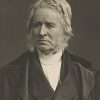
Selected from: The Presbyter, No. 23, January 1881, ed. Rev. Arthur Paul (Australia: Synod Archives, Presbyterian Church of Eastern Australia, 1995), 202
At the induction of Dr. Thomas Smith as successor to the late Rev. Dr. Duff in the chair of Evangelistic Theology, in the New College, Edinburgh, Dr. Begg, who addressed the newly appointed professor, made the following very admirable remarks on the true source of ministerial usefulness and success.
Before a young man is allowed to enter the Hall1To enter studies for divinity – Ed., or devote himself professedly to the work of the ministry, there ought to be a thorough scrutiny not only in regard to his general talents and attainments, but especially as to his personal motives, and as to his having experienced the power of truth in his own soul. It is of vast importance, no doubt, to have ministers of competent gifts and scholarly attainments; but the paramount qualification is an earnest devotion to God, from personal experience in the gospel of his Son. Hence the great importance of evangelical and evangelistic training.
The question is sometimes asked, whether the pulpit has lost its power? We have no hesitation in answering this question in the negative. In connection with the intellectual agencies which exist around us, the pulpit has not lost its power, either for good or evil. In so far as it is supposed to have lost its power for good, it is not the pulpit that is really indicated, but the men that occupy it. Give us a minister in real earnest, and entirely devoted to his work, and he will not fail to have influence, or to speak impressively. The very eccentricities of the day prove this. But whilst it is a dream to suppose that the power of preaching the gospel for good can ever die, it is a solemn consideration that the power of preaching is being extensively used for evil. Here I do not intend to enter into details, especially in regard to passing events, but experience proves that there are two evil processes which have, in all ages, made an unsound ministry a source of evil.
The flock may be starved, or they may be poisoned. The prophet speaks of men who “feed themselves, and not the flock.” Our blessed Lord calls upon his people to “beware of false prophets, which come in sheep’s clothing, but inwardly are ravening wolves.” A contrast has lately been instituted betwixt Great Britain and the Continent, to the effect that here there are few military, there, in all directions, a bristling of arms; here the ministry is respected, there it is almost universally hated and despised. The facts are correctly stated but the causes are not explained. The universal military spirit is simply the result of fallen human nature, full of mutual suspicion, and ignorant of the spirit of the Prince of Peace. It has been truly said that men must be ruled “either by the Bible or the bayonet” and, in proportion as we set aside sound Bible teaching, and turn the day of sacred rest into a day of secular amusement, we shall find that we must also introduce the reign of force. The elements of change in this respect are already at work in this land.
In regard to the other peculiarity, why are the professed ministers of Christ respected in this country? It is because from the days of Knox, a large number of them have been earnest and consistent men. Wherever they are consistent now, they are cordially respected still, even when men have little regard for their principles. “Herod feared John, knowing that he was a just man and a holy.” But let the professed ministers of Christ assume largely a different character, let them become mere spiritual showmen and players upon the ecclesiastical stage, entering upon their office by perjury, and making their whole official lives a living lie, and you shall soon see a mighty change. They may contrive to stave off the issue for a little by unscrupulously profaning the house of God, and turning it into a theatre of amusement, but, as sure as the law of gravitation, will godless ministers incur the contempt of the community. This is seen on an extended scale on the continent of Europe; and we see this holy and just contempt for the ministerial office already upon a small scale in our own land; and woe to our children, and our children’s if the evil is allowed to spread. It is of great importance that there should be in our Halls an able and faithful exposition of all these dangers, and an earnest and kindly dealing with the students in regard to the absolute necessity of making the Word of God a matter of loving and reverential study.
A firm adherence to the Word of God, moreover, and a readiness to give from that blessed book a reason of the faith that is in us, will increase our reverence for truth and lawful authority, give vigour and moral courage to the servants of Christ, and prevent that weak-kneed spirit of wavering, cowardly in man-pleasing, and studying the tide, which are the bane of so many, and which make them contemptible to onlookers and weak and helpless in the hour of danger . . . .
My dear brother, I humbly think the church, as I have said already, has been wisely guided in your appointment, and I cannot doubt that the various gifts and graces with which you have been endowed by the Head of the church, and the kindly spirit and large experience which you possess will, through the prayers of many, redound, by your instrumentality, to the glory of God and a wide extension of his cause. Meantime, I most cordially “commend you to God and to the Word of his grace, which is able to build you up, and to give you an inheritance amongst all them that are sanctified.”
Footnotes
- 1To enter studies for divinity – Ed. ↩︎