Editor’s Introduction
Religion and politics do not mix well, or so we are told. Yet Scripture teaches that Jesus Christ is Lord over both. The Establishment Principle asserts the obligation of the State to recognize, support, and promote the true Christian religion. God rules over the affairs of Church and State, having established a relationship between these two separate spheres, in which the State and the Church must recognize each other as God-appointed, mutually support and encourage each other, but not interfere in each other’s God-given province.
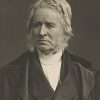
The Rev. James Begg (1808-1883) was a notable Free Church of Scotland minister. Throughout his service in the Church, he fearlessly engaged in defense of church principles. The excerpt below comes from a publication in which Dr. Begg demonstrates that the principle of National Religion is embedded in the Constitution of the Free Church of Scotland. With an eye for historical detail and passion for principle, Begg shows how the Free Church upheld the Establishment Principle and opposed the unlawful exercise of State power in church matters.
– James A. Wanliss, Ph.D.
The Spiritual Independence of the Church
Selected from: James Begg, Memorial with the Opinions of Eminent Counsel in Regard to the Constitution of the Free Church of Scotland and Remarks on our Present State and Prospects (Edinburgh: Johnston and Hunter, 1874), 124-133.
For a considerable number of years previous to 1842, many belonging to the Established Church of Scotland believed that the Civil Courts of the country were interfering with and encroaching on the jurisdiction of the Church in matters spiritual; and at the General Assembly of that year, a Claim, Declaration, and Protest was adopted, setting forth the interference and encroachment of which the Church complained, and seeking redress from the Queen and Parliament.
This deed began with a notice of the solemn circumstances in which the Church was placed, and showing that the “liberties, government, jurisdiction, discipline, right, and privileges,”1Claim, Declaration, and Protest, Anent the Encroachments of the Court of Session, The Subordinate Standards and Other Authoritative Documents of the Free Church of Scotland (Edinburgh: Blackwood & Sons, 1973), 235ff. which it was thought were so well defined and secured to her, as to be certain to be enforced by the Civil Court, had been assailed by parties holding opposing views, and supported by the Civil Court. Hence the General Assembly resolved on making a Claim, Declaration, and Protest, of what it considered its rights and privileges. The Claim of Right then went on to state that it was an essential doctrine of the Church of Scotland, and a principle of the Confession of Faith, that “there is no other Head of the Church but the Lord Jesus Christ,” and that, according to the said Confession, and to the other standards of the Church, and agreeably to the Word of God, this government of the Church was appointed by the Lord Jesus to be “in the hand of Church officers, distinct from the Civil Magistrate” or supreme power of the State, and comprehended as the objects of it, the preaching of the word, administration of the sacraments, correction of manners, the admission of the office-bearers of the Church to their offices, their suspension and deprivation therefrom, the infliction and removal of Church censures, and generally the whole “power of the keys.”
Further, “this jurisdiction and government, since it regards only spiritual conditions, rights, and privileges, doth not interfere with the jurisdiction of secular tribunals, whose determinations as to all temporalities conferred by the State upon the Church, and as to all civil consequences attached by law to the decisions of Church Courts in matters spiritual, this Church hath ever admitted, and doth admit to be exclusive and ultimate, as she hath ever given and inculcated implicit obedience thereto.”
The Claim of Right then proceeded to show that the above were essential doctrines and fundamental principles of the Constitution of the Church, and were recognised by many Acts of Parliament, to which reference is then made. It further set forth, that by certain other Acts of Parliament it was enacted that the Church was to be aided by the magistrates, judges, and officers of the law, in enforcing its jurisdiction, and the tenor of these is also given.
The Claim of Right further declared that at the Union2The Union of Scotland and England (the Union with Scotland Act 1706 passed by the Parliament of England, and the Union with England Act passed in 1707 by the Parliament of Scotland) united the Kingdom of England and the Kingdom of Scotland, into one Kingdom by the name of Great Britain. it was expressly provided that the Constitution and powers of the Established Church of Scotland were to remain unaltered, and that Act was therefore inserted in the Act of the English Parliament for the Union of the two kingdoms. It then declared that although the Act of Queen Anne3Anne, Queen of Great Britain (1702-1707). restoring patronage was in violation of the Treaty of the Union, yet it did not infringe on the right of congregations to assent to, or dissent from, ministers presented by patrons; and then narrated the opposition which the restoration of patronage received from the Church, and further asserted that it was a fundamental principle in the Church’s Constitution that no pastor be intruded upon any congregation contrary to the will of the people, and that this principle was recognised by the 14th Act of the General Assembly of 1736, and re-declared by the 9th Act of the General Assembly of 1834. It then showed how the decision in the House of Lords on the Auchterarder Case4In 1834 the Church parish of Auchterarder unanimously rejected the patron’s nominee to be their Minister – and the Presbytery rightly refused to proceed with his ordination and induction. Later the civil authorities wrongly ruled that the Church had overstepped its lawful authority in refusing the patron’s candidate. (1839) was beyond the powers of the Civil Court as far as regards the spiritual jurisdiction of the Church, but that the Church was willing to recognise that decision as binding in matters civil, and that this had been the course followed by the Civil Court in a number of cases then quoted.
Therefore the General Assembly claimed that, while acknowledging the jurisdiction of the Court of Session in civil matters, the Church “shall freely possess and enjoy her liberties, government, discipline, rights, and privileges according to law, especially for the defence of the spiritual liberties of her people, and that she shall be protected therein from the foresaid unconstitutional and illegal encroachments of the said Court of Session, and her people secured in their Christian and constitutional rights and liberties.”
The General Assembly finally call the Christian people of the kingdom, &c, to witness for what they are called to suffer, and for what they are willing and ready to resign connection with the Established Church, and to:
Unite in supplication to Almighty God that He would be pleased to turn the hearts of the rulers of this kingdom to keep unbroken the faith pledged to this Church in former days by statutes and solemn treaty, and the obligations come under to God himself to preserve and maintain the government and discipline of this Church in accordance with His Word; or otherwise, that He would give strength to this Church – office-bearers and people – to endure resignedly the loss of the temporal benefits of an Establishment, and the personal sufferings and sacrifices to which they may be called, and would also inspire them with zeal and energy to promote the advancement of His Son’s kingdom in whatever condition it may be His will to place them; and that in His good time He would restore to them these BENEFITS, THE FRUITS OF THE STRUGGLES AND sufferings of their fathers in times past in the same cause, and thereafter give them grace to employ them more effectually than hitherto they have done for the manifestation of His glory.
This Claim, Declaration, and Protest was forwarded to the Queen, and was also discussed in Parliament, but without good result. It was refused, and in consequence, when the Commissioners to the General Assembly of 1843 met in St Andrew’s Church, Edinburgh, on the 18th May 1843, and were about to be constituted in the usual way into a General Assembly, Dr Welsh, Moderator of the General Assembly of 1842, said:
Fathers and brethren, according to the usual form of procedure, this is the time for making up the roll. But in consequence of certain proceedings affecting our rights and privileges – proceedings which have been sanctioned by her Majesty’s Government, and by the Legislature of the country, and more especially in respect that there has been an infringement on the liberties of our Constitution, so that we could not now constitute this Court without a violation of the terms of the Union between Church and State in this land as now authoritatively declared, I must protest against our proceeding further. The reasons that have led me to come to this conclusion are fully set forth in the document which I hold in my hand, and which, with permission of the House, I shall now proceed to read.5David Welsh, quoted in W. Stephen, History of the Scottish Church, Vol. 2 (Edinburgh: David Douglas, 1896), 487.
These Commissioners therefore protested, that after the rejection of their Claim of Right, they deemed the conditions declared by the State as those on which they must remain in the Established Church contrary to the Revolution Settlement of the Church,6The Revolution Settlement (1690) re-established the Presbyterian Church as the National Church of Scotland. and inconsistent with the recognition of Christ as Head of the Church; that any Assembly so constituted, and under the coercion which had been brought to bear on the election of Commissioners to it:
is not, and shall not be, deemed a lawful and free Assembly of the Church of Scotland, according to the original and fundamental principles thereof. And that the Claim, Declaration, and Protest of the General Assembly, which convened at Edinburgh in May 1842, as the act of a free and lawful Assembly of the said Church, shall be holden as setting forth the true constitution of the said Church; and that the said Claim, along with the laws of the Church now subsisting, shall in nowise be affected by whatso ever acts and proceedings of any Assembly constituted under the conditions now declared to be the law, and in submission to the coercion now imposed on the Establishment.
“And finally,” they protest that:
while firmly asserting the right and duty of the civil magistrate to maintain and support an establishment of religion in accordance with God’s Word, and reserving to ourselves and our successors to strive by all lawful means, as opportunity shall in God’s good providence be offered, to secure the performance of this duty, agreeably to the Scriptures, and in implement of the statutes of the kingdom of Scotland, and the obligations of the Treaty of Union, as understood by us and our ancestors; but acknowledging that we do not hold ourselves at liberty to retain the benefits of the Establishment, while we cannot comply with the conditions now to be deemed thereto attached; we protest that in the circumstances in which we are placed, it is and shall be lawful for us, and such other Commissioners chosen to the Assembly appointed to have been this day holden as may concur with us, to withdraw to a separate place of meeting, for the purpose of taking steps for ourselves and all who adhere to us – maintaining with us the Confession of Faith and Standards of the Church of Scotland, as hereto fore understood – for separating in an orderly way from the Establishment, and thereupon adopting such measures as may be competent to us, in humble dependence on God’s grace, and the aid of the Holy Spirit, for the advancement of His glory, the extension of the gospel of our Lord and Saviour, and the administration of the affairs of Christ’s house according to His Holy Word; and we do now for the purpose foresaid withdraw accordingly, humbly and solemnly acknowledging the hand of the Lord in the things which have come upon us, because of our manifold sins, and the sins of this Church and nation, but at the same time with an assured conviction that we are not responsible for any consequences that may follow from this our enforced separation from an Establishment which we loved and prized, through interference with conscience, the dishonour done to Christ’s crown, and the rejection of His sole and supreme authority as King in His Church.
The Commissioners to the General Assembly of the Church of Scotland having met, as above seen (in St Andrew’s Church, Edinburgh), the ministers and elders who adhered to and signed the said Protest, after worship, and reading said Protest, withdrew and convened in a large hall at Canonmills. There they constituted themselves, in the name of the Great Head of the Church into a General Assembly, and chose Dr. Chalmers as Moderator, who then delivered an address which, inter alia, set forth the position which those who had now formed themselves into the Free Church of Scotland meant to take up. He said:
Beware of compromising another of your doctrines or articles of faith, and in the defence of which the Church of Scotland did lately signalise herself, even the authority of Christ over the kings and governments of earth, and the counterpart duty of these governments to uphold religion in the world,—beware, we say, of making any compromise or surrender of this your other principle. . . . This may be termed a less principle than the other, i.e., spiritual independence. But let us not forget what the Bible says of those who break even the least of the commandments, that they shall be called the least in the kingdom of heaven. The men who stand opposed to us on this second question might … be reposing on the like precious foundation with ourselves. They might be men with whom we differ, and yet with whom we can agree to differ. They might be coadjutors in the great work of evangelising the people of our land. But we shall not, even for their friendship, violate the entireness of our principles, or make surrender of the very least of them.
Footnotes
- 1Claim, Declaration, and Protest, Anent the Encroachments of the Court of Session, The Subordinate Standards and Other Authoritative Documents of the Free Church of Scotland (Edinburgh: Blackwood & Sons, 1973), 235ff. ↩︎
- 2The Union of Scotland and England (the Union with Scotland Act 1706 passed by the Parliament of England, and the Union with England Act passed in 1707 by the Parliament of Scotland) united the Kingdom of England and the Kingdom of Scotland, into one Kingdom by the name of Great Britain. ↩︎
- 3Anne, Queen of Great Britain (1702-1707). ↩︎
- 4In 1834 the Church parish of Auchterarder unanimously rejected the patron’s nominee to be their Minister – and the Presbytery rightly refused to proceed with his ordination and induction. Later the civil authorities wrongly ruled that the Church had overstepped its lawful authority in refusing the patron’s candidate. ↩︎
- 5David Welsh, quoted in W. Stephen, History of the Scottish Church, Vol. 2 (Edinburgh: David Douglas, 1896), 487. ↩︎
- 6The Revolution Settlement (1690) re-established the Presbyterian Church as the National Church of Scotland. ↩︎