Editor’s Introduction
Words contain power – life and death power (Prov. 18:21). But only God’s Word delivers invincible power. Words, fitly spoken, serve the ministry of the Word. When godly pastors employ words, clothed in biblical wisdom and imbued with the Spirit, they penetrate hearts and minds, well beyond the reach of the ordinary.
A word fitly spoken is like apples of gold in pictures of silver. Prov. 25:11.
The Lord has thrust gospel ministers into a life of laboring with language. Facility in Greek and Hebrew remains an indispensable priority. But the exposition of Scripture also calls for mastering our mother tongue – English. A minister must harness language to proclaim the most beautiful message in the history of the world, God’s heavenly and eternal truth.
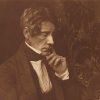
John Duncan (1796-1870), affectionately known as ‘Rabbi’ Duncan, remains well-known to contemporary Reformed Christians, chiefly for two qualities: his depths of experimental piety and his heights of sanctified eloquence. His godly life combined child-like faith with penetrating insight into the Scriptures. He served as a scribe instructed in the kingdom of heaven, “which bringeth forth out of his treasure things new and old” (Mt. 13:52). His sustained meditation on the Bible enabled him to identify the crux of truth and to express it with profound simplicity. His preaching opened up the biblical text in a manner that also aimed at opening up the minds of hearers to receive it.
The Lord brought Duncan to saving conversion under the influence of César Malan of Geneva in 1826, after a period spent in the murky waters of speculative unbelief and heterodox doctrine. Duncan served as a minister in Glasgow and then as a missionary to the Jews in Budapest, Hungary. At the Disruption in 1843, he cast in his lot with the Free Church, who appointed him professor of Hebrew at New College in Edinburgh. The luster of his vibrant piety continues to attract believers to the One who is “fairer than the children of men” (Ps. 45:2). Christ, the Word, invites the believer to behold his glory and to enjoy his fellowship in the Scriptures.
Duncan’s submission to Scripture and his jealousy for “rightly dividing the word of truth” (2 Tim. 2:15) controlled both his method and manner in stating truth. Although Duncan wrote very little, he used words skillfully and persuasively in the cause of the gospel by pressing his encyclopedic insights into the form of pithy, potent aphorisms. Ever since, saints have associated his spiritual acumen with the concise, vivid, epigrammatic style for which he is known. But Duncan also understood that the words of men can detract from, if not supplant, the Word of God (Col. 2:8). A minister’s words, like the frame around a stunning painting, are intended to draw eyes into the Scriptures, not to divert the mind to man’s ornate language. “And my speech and my preaching was not with enticing words of man’s wisdom, but in demonstration of the Spirit and of power: That your faith should not stand in the wisdom of men, but in the power of God” (1 Cor. 2:4, 5).
God’s Word informs, delights, persuades, compels, and even conquers hearers by the Spirit. May the quotations below draw our minds to Christ, “in whom are hid all the treasures of wisdom and knowledge” (Col. 2:3).
– Robert D. McCurley
Words Fitly Spoken by ‘Rabbi’ Duncan
Spiritual joy is a delicate thing; it is easily spoiled; it requires great tenderness.1A. Moody Stuart, The Life of John Duncan (Edinburgh: The Banner of Truth, 1991), 144.
Many will be wishing you a happy New Year at this time: Gentlemen, I wish you a happy Eternity.2The Life, 83.
It will not do to tell a man that he may come to Christ, but that he must come, and that he cannot come; that he must come, or he will look to another to come for him; and that he cannot come, or he will look to himself for salvation.3Ibid., 96.
Sin says, ‘I’m not sin at all.’ Then Sin says, ‘I’m pleasant.’ Yes, pleasant poison. Then Sin says, ‘Ah! do you call that sin? Well, it is but a little sin.’ Alas! alas! for us men there can be no little sin, unless there be a little God against whom to commit it. Then Sin says, ‘It is a common sin; good people do that.’ A good man has crooked legs; are crooked legs therefore no evil? He has stiff joints; are stiff joints therefore no evil? Ah! men don’t argue that way about the natural evil, but they do about the spiritual evil, because they love sin, and will take any excuse for it, and never readier than when they find it in a good man. Then Sin says, ‘If you sin there’s Christ to go to.’4Ibid., 109.
Christ came to save the contrasts of Himself; but not to leave them such. There’s nobody perfect: That’s the believer’s bed of thorns: That’s the hypocrite’s couch of ease.5Ibid., 166.
If you address children you will find that what lays hold on them is everything that appeals to the conscience.6Ibid., 172.
I have never heard the gospel better stated than it was put by a poor negress: ‘Me die, or He die; He die, me no die.’7Ibid., 194.
[Jonathan Edwards’ preaching]: His doctrine is all application, and his application all doctrine.8Ibid., 216.
If we have not got a cross, alas! We may conclude that we have not got Christ, for it is the first of his gifts.9Ibid., 219.
Sin and misery: It is not, The cruel God loves misery, but the righteous God loves righteousness.10Ibid., 219.
Sinning is not a rare thing, but repenting is; sinning not rare, but taking a right view of sin, saying right about sin, that is rare.11Ibid., 220.
Every sin will be adequately punished; blessed be God, not every sinner.12Ibid., 220.
You don’t make Christ a present when you give him your heart, you only give him that which He has already bought.13Ibid., 220.
There is no doubting in faith; there may be much doubting in the believer.14Ibid., 220.
Christ has a threefold work; a word for us, a work in us, and a work by us.15Ibid., 220.
The man who would rest content with God’s mercy at some future time, is the man who is content to rest without it.16Ibid., 224.
God filled the world with Man: Sin filled the world with sinners.17Ibid., 225.
The tendency of all my thinking is not to look upwards from man to God, but downwards from God to man.18John Duncan, Colloquia Peripatetica (Edinburgh: Edmonston & Douglas, 1873), 1.
There’s no such thing as Calvinism. The teachings of Augustine, Remigius, Anselm, and Luther, were just pieced together by one remarkable man, and the result baptized with his name. Augustine taught and developed the doctrine of salvation by grace and the Divine election; Remigius, particular redemption; Anselm, the doctrine of vicarious atonement; and Luther, that of justification by faith.19Ibid., 9.
But it is a truth, becoming more and more evident to me as time passes, that “no man can call Jesus Lord, but by the Holy Ghost;” and I am prepared to prove it. For what is it to call Jesus Lord? It is to worship him. Either, then, Christ is God, or he is not. If he is not, and if we worship him, we are idolaters. And how can a man be absolutely certain that he is no idolater, or worshipper of man, in worshipping one who was essentially man, whatever else he was? He cannot, unless he is taught it from above.20Ibid., 16.
It is a monstrous thing that that horrible word “heresy” is now used on all occasions so freely, and applied so recklessly to all error. All error is not heresy.21Ibid., 37.
I often think that our church errs in taking it for granted (indirectly at least) that the fervour and life that characterised the beginning of its history will remain with it, without experiencing an ebb of the tide. There are tides in all things; and the great wave of Divine Blessing seems to keep ebbing and flowing amongst the churches.22Ibid., 38.
It is a strange thing that so fine a spirit is let loose to do so much mischief, but he is only “the prince of the power of the air,” not of the power of the spirit. I believe there may be more devils than men. They are legion, and go in companies, so far as we can gather from the hints of Scripture. I think each temptation that assails a man may be from a separate devil. And they are not far off; probably our atmosphere was the place of their original banishment. And there they live,— air-princes. But mark, they have no power over the innermost spirit; nay, they can have no knowledge of the secrets of the heart of man. No single heart-secret is known to any single devil. These are known only to the Searcher of the hearts, who is also their Maker. Some good Christians disquiet themselves by forgetting this. I would say that our adversary can look and hear, see and listen, and make inferences. He has only a phenomenal knowledge, and that not perfect. He is but a creature, and cannot know the secrets of the universe. It ought to comfort all men that only our Maker knows our constitution…23Ibid., 39-40.
I suspect that, after all, there is only one heresy, and that is Antinomianism.24Ibid., 70.
I preach a free gospel to every man, or I don’t preach the gospel at all, but I know that its acceptance without the help of the Spirit is an impossibility. I am not going to hinder a man from attempting an impossibility. I would never forbid him to try his strength to come to God, while I hold that he cannot do so without the help of the Spirit.25Ibid., 86.
Evil is a fact, but not an entity. It is not a “thing” at all. It is a minus quality, like a deficit in a merchant’s ledger.26Ibid., 98.
Aesthetic religionism is at bottom the bringing of religion to God, instead of bringing the soul to God to get religion. It is thus that men make a God of religion, instead of allowing religion to remain a worshipper of God.27Ibid., 121.
The fact that everywhere man makes for himself a god after his own image, is a suggestive hint of the counter-truth that God made man in his image. Idolatry is but man’s helpless effort to get back to God, in whose image he was made…28Ibid., 122-123.
Christ did not not die for sin. He could not do that. He died for something deeper than sin. A lady once said to me, “The more I see of myself, I see nothing so properly mine as my sin.” I said to her, “Well, you do not see deep enough. There is something far more properly yours than your sin; and your sin is improperly yours. It is a blot in your being, which, if you do not get quit of it, will never cease to be unnatural to you. No; the image of God is more properly yours, though you had no share in the production of it.” Very many pious people do not rise high enough in their anthropology. They ascend to the fall, and forget the higher fact that we fell from a height, where we were fitted to dwell, and where we were intended to remain. And Jesus Christ has come that he might raise us even higher than that height, and make us sit in the “super-celestials” with Himself.29Ibid., 124.
It is a great gift to the Church that psalter of Israel. I never tire of the magnificent ancient poetry of the Jews. The way the psalmists speak of Nature is very touching, and their sympathy with the life of lower creatures: “The wild asses drink their fill.” It is a grand thing that God appointed such a sentence to be sung in the Christian churches in all time to come.30Ibid., 128.
The Law ordained, “Thou shalt love;” and love ordained that law. Man could not keep it, and love ordained a gospel; that gospel is “God so loved.” Thus, “Thou shalt love” is the whole of the law; “God so loved” is the whole of the gospel. That is so clear, that it is at once law and gospel for children and for savages; but it is so deep in its limpid clearness that no philosopher can fathom it.31Ibid., 130.
The marvels of the faculty of memory are inexhaustible…I think that both future reward and future punishment will be largely accomplished by the opening of the floodgates of memory. It is a terrible thought that a man might be left to the agony of his own reminiscence forever.32Ibid., 139.
I have heard of a professional thief giving a very large donation to a society for the suppression of crime, saying as he sent it, “I am by profession a thief; but yours is a good society, and deserves the support of all honest men.” The homage which the bad give to the principle of goodness is also seen in this, that bad men almost always wish their children to be good.33Ibid., 140.
Death is the severance of things which were once united, and which were meant to remain united. God is the life of the soul, as the soul is the life of the body; and death spiritual severs the first connection, as death physical cuts the second.34Ibid., 145.
In all religious movements, especially when they become excited and widespread, I would insist on family worship being at once established. Willingness to begin it, and to prefer it to excited meetings, is a good criterion. You approach to the cultus of Rome, if you have no altar in the house. It is an unhuman thing to substitute a daily ministry for the family worship of God; and daily meetings of many, even for devotion, are not always to be encouraged. I should consider a widespread regard for household worship always a good sign of a community.35Ibid., 148.
A very usual way for God to bring down the lofty, whether in Church or State, is to allow them to dig a pit, and then to fall therein.36Ibid., 149.
Hyper-Calvinism is all house and no door; Arminianism is all door and no house.37John Duncan, Colloquia Peripatetica, 6th edition (Edinburgh: Oliphant, Anderson & Ferrier, 1907), 156.
Some persons preach only doctrine; that makes people all head, which is a monster. Some preach only experience; that makes the people all heart, which is a monster too. Others preach only practice; that makes people all hands and feet, which is likewise a monster. But if you preach doctrine and experience and practice, by the blessing of God, you will have head, and heart, and hands, and feet–a perfect man in Christ Jesus.38Ibid., 167.
Footnotes
- 1A. Moody Stuart, The Life of John Duncan (Edinburgh: The Banner of Truth, 1991), 144. ↩︎
- 2The Life, 83. ↩︎
- 3Ibid., 96. ↩︎
- 4Ibid., 109. ↩︎
- 5Ibid., 166. ↩︎
- 6Ibid., 172. ↩︎
- 7Ibid., 194. ↩︎
- 8Ibid., 216. ↩︎
- 9Ibid., 219. ↩︎
- 10Ibid., 219. ↩︎
- 11Ibid., 220. ↩︎
- 12Ibid., 220. ↩︎
- 13Ibid., 220. ↩︎
- 14Ibid., 220. ↩︎
- 15Ibid., 220. ↩︎
- 16Ibid., 224. ↩︎
- 17Ibid., 225. ↩︎
- 18John Duncan, Colloquia Peripatetica (Edinburgh: Edmonston & Douglas, 1873), 1. ↩︎
- 19Ibid., 9. ↩︎
- 20Ibid., 16. ↩︎
- 21Ibid., 37. ↩︎
- 22Ibid., 38. ↩︎
- 23Ibid., 39-40. ↩︎
- 24Ibid., 70. ↩︎
- 25Ibid., 86. ↩︎
- 26Ibid., 98. ↩︎
- 27Ibid., 121. ↩︎
- 28Ibid., 122-123. ↩︎
- 29Ibid., 124. ↩︎
- 30Ibid., 128. ↩︎
- 31Ibid., 130. ↩︎
- 32Ibid., 139. ↩︎
- 33Ibid., 140. ↩︎
- 34Ibid., 145. ↩︎
- 35Ibid., 148. ↩︎
- 36Ibid., 149. ↩︎
- 37John Duncan, Colloquia Peripatetica, 6th edition (Edinburgh: Oliphant, Anderson & Ferrier, 1907), 156. ↩︎
- 38Ibid., 167. ↩︎