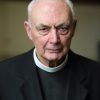
Robert Bruce deserves to be remembered today. He was a faithful and powerful preacher in days when the reigning King James VI was using his authority to put a stop to Reformed doctrine and worship in Scotland. Bruce had a wonderful God-given authority as a preacher. This is a mark of God’s rich grace in any age. It is something we greatly need everywhere today.
Bruce, born in 1554, inherited royal blood from his mother, who was descended from King James I of Scotland. He graduated from university in 1572 with the intention of becoming a lawyer. But God had other plans for him. During the night of 31 August 1581, he had an experience in his soul, which convinced him that he must enter the ministry of the recently formed Protestant church in Scotland, which was now Reformed and Bible-based in doctrine and worship.
The eminent Scottish Reformer, John Knox, who led to the formation of the Presbyterian church in his own country in 1560, had passed away in 1572, only a few years before Robert Bruce’s call to the ministry.
Bruce was appointed to the ministry of St Giles Church in Edinburgh. He was soon recognised as a highly gifted and spiritual preacher and was elected as Moderator of the church in 1592. This period of history in Scotland was now to become very difficult.
The King began to adopt a policy to resist the Reformed doctrine and practise of the church. In its place he wanted a less consistently biblical church over which he, as King, could exercise control.
In 1599, the King had Bruce and some other faithful preachers arrested. He was, in the following years of his life, exiled twice to Inverness, a town in the northern Highlands. At that date the Reformation had not reached the Highlands, which were still under Roman Catholic influence.
But God was with Robert Bruce, whose preaching in the area of Inverness was so anointed by the Holy Spirit that great numbers of people in the north came to a saving knowledge of Christ. People who heard him felt the power of the Spirit with the truth preached and were changed into godly and serious believers. It is reported that several thousands of precious souls were, through his anointed preaching of the gospel, brought to know Christ.
One whose life was changed through the preaching of Robert Bruce was an Episcopal minister named Alexander Henderson. Henderson was curious to hear Bruce preach and so he crept into a seat in the corner of the church where Bruce was to minister. Bruce, in the pulpit, quoted the words of Christ, “He that entereth not by the door…into the sheepfold…the same is a thief and a robber” (John 10:1). These words had a life-changing effect on Alexander Henderson, who became a faithful servant of Christ and a great and godly leader in the period of the Scottish Second Reformation. So wonderful are God’s ways!
It is very important to note the characteristics of Bruce’s ministry. Like John Knox, he was a man of one book, the Bible. He made it his practice, before going into the pulpit for preaching, to pray hard to God that gospel power be given to him. He cried out to God to go with him and to anoint his preaching with divine grace.
Bruce was not silenced by the persecuting policy of King James VI. He put his duty to Christ first. His greatest concern was not to offend Christ, who alone is the true King of the church.
In the latter half of his life, Robert Bruce saw great blessing. In addition to seeing thousands converted to Christ in Inverness, he witnessed revival blessing in the South of Scotland. At Larbert it was said, “O how strange a man is this, for he knocked down the Spirit of God upon us all!”1John Howie, The Scots Worthies, Revised by W.H. Carlaw (Edinburgh, 1885), 148. In the year 1630, he was one of the preachers in the Kirk of Shotts revival, in which a great number of souls were saved. It has been called Scotland’s greatest revival.2Thomas M’Crie, The Story of the Scottish Church: From the Reformation to the Disruption (London: Blackie and Son, 1875), 132-135. Bruce’s life and ministry came to an end in August if 1631. While his daughter was preparing food for him he cried out, “Hold! my Master calleth!” With his finger on Romans 8, he cried, “I have breakfasted with you, and I shall sup with my Lord Jesus Christ this night.”3James Smith, A Popular Sketch of the History of the Kirk of Scotland (Glasgow: William Collins, 1840), 30. So he passed into glory.
Footnotes
- 1John Howie, The Scots Worthies, Revised by W.H. Carlaw (Edinburgh, 1885), 148. ↩︎
- 2Thomas M’Crie, The Story of the Scottish Church: From the Reformation to the Disruption (London: Blackie and Son, 1875), 132-135. ↩︎
- 3James Smith, A Popular Sketch of the History of the Kirk of Scotland (Glasgow: William Collins, 1840), 30. ↩︎