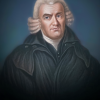
Selected from: John Brown, The shame and contempt of professed Christians, who neglect to raise up spiritual children to Jesus Christ (Edinburgh: Alexander Maclaren Bryce, 1797), 63-92. Preached at Bathgate on the Monday after the celebration of the Lord’s Supper, August 22, 1768.
“Behold, I come quickly: hold fast that which thou hast, that no man take thy crown.”— Revelation 3:11
Dear friends, our communicating work at this time is over; our preaching and your hearing work is almost over; but our account for these things is still before us—who knows how near! Let us think what we have done, and what we have got, that will abide the trial. In this solemn charge of Heaven, now read and directed to your conscience and mine, we have: 1) An awful warning of the future judgment, from the lips of the Judge: Behold, I come quickly. 2) A solemn charge to take heed to ourselves in the view of our certain and sudden appearance before God, the Judge of all. Hold that fast which thou hast, that no man take thy crown.
In assaying1assaying— attempting to explain this solemn charge of God to us, I shall: 1) Offer a few thoughts concerning Jesus’ coming to call us to account; 2) Shew what is to be held fast in the view of his coming; 3) Enquire what is implied in holding fast these things till he come; 4) Exhibit the advantage of holding fast what good things we have attained.
I. On the First, we shall only say,
1. Jesus will certainly come. He hath already come in the likeness of sinful flesh, and bearing our iniquities; he has come in the power of the Holy Ghost to gather the nations to himself; he has come in vengeance to ruin the church and state of Judah; and he will appear the second time without sin unto salvation: he shall come in his glory, and sit on the throne of his glory. The appearing of our Lord Jesus Christ, in his times, he shall shew (Heb. 9:28; Matt. 25:31; 1 Tim. 6:14–15). Let us pause and think: Is Jesus’ last coming as certain now as ever it will be, though not so perceptible? Why then have I so little faith of, and so infrequent, so small impressions of it? Why is not my great care to be found in him, and to approve myself in his sight? Why am not I careful to have my heart in such a state and frame, and my life in such a form, as if I already heard the awful blast of the last trumpet, “Arise ye dead, and come to judgment.”—Behold the Bridegroom cometh, go ye forth to meet him! Why am I consumed with care to provide ten thousand trifles for moments, for events I will never see; and not concerned to be found of him in peace, without spot and blameless! (Matt. 25:6; 2 Pet. 3:14) Ah! my folly makes it so!
2. He will come quickly. Behold, I come quickly: he will come suddenly and unexpectedly, as a thief in the night. In such an hour as we think not, the Son of man cometh (Rev. 22:20; 16:15; Matt. 24:44); when men are eating, drinking, marrying, and giving in marriage; nay, whoring, stealing, blaspheming, belching forth idle or reproachful language, shall the coming of the Son of man be. Let us think, Is Jesus’ coming so near and sudden, and am I wasting so much of my days of grace to so little purpose? Have I wasted the three or four days of this solemnity to little, to ah! next to no purpose, when perhaps I must, with the patriarch, go down and die? Is eternity so near; and are eternal things even now so little the object of my inmost care? Is eternity so near, and have I done nothing, or next to it, but what, when I see the Judge, I would wish, would give ten thousand worlds, had never been done.
3. He will come in a tremendous and awful manner; he has been coming and speaking here these days past; but how many of us have sat like stones before him? We cannot tell from experience whether there be a Christ; but it shall be otherwise at that day; the most deaf shall hear; the most blind shall see; the most careless shall, with deep concern, behold his glory and listen to his words. Behold, he cometh with clouds, and every eye shall see him: they also which pierced him, and all kindreds of the earth shall wail because of him. Our God shall come, and shall not keep silence: a fire shall devour before him, and it shall be very tempestuous round about him. The dead, small and great, shall stand before God (Rev. 1:7; Ps. 50:3; Rev. 20:12).
In the view hereof, why do we not think, O my soul, why art thou now amused with trifles? Why do any things below the better part ingross thy care? Will these idle thoughts, these foolish diversions, this worldly honour or wealth encourage thee before thine appearing God? Alas! Why do not I now hear? Why not communicate, pray, and practice, as if I saw the earth all on flames, Jesus on his great white throne, and I and all nations at his bar? Why do not I now give him my heart, as I would then wish I had done? Why receive I not him as my friend? O what if I, who refuse him now in the day of his mercy, then stand crying to hills and mountains to fall on me and hide me from the face of him that sitteth on the throne, because the great day of his wrath is come, and who shall be able to stand?
4. He will come to judge us. We must all appear before the judgment seat of Christ; that every one may receive the things done in his body, according to that he hath done, whether it be good or bad. God will bring every work into judgment (2 Cor. 5:10; Eccles. 12:14). Ah! My brethren, is every thing to be accounted for? Every mercy, every affliction, every deliverance, every moment, every talent, every season of grace, every sermon, and every sentence of truth in it? Who then can be saved! Ah! Where shall we flee for help! Or where shall we leave our glory! If thou, Lord shalt mark iniquities, who can stand? Who can answer for one of a thousand? (Ps. 130:3; Job 9:3) I tremble to think what danger we are in of being called to account for what has happened here; our careless preaching, prayer, communicating, or converse, whereby we have transformed the feast into three or four days’ uproar against Jesus, who gave his life for us. Ah! How can I answer for having a heart so long, and Christ so little room in it, and so few thoughts about him! Or for having a tongue so long, and Christ so little honoured, and my neighbours so little profited by it! Ah! let us even now flee under the covert of his blood, that then we may give a right answer, It was exacted, and he answered it.
II. Let us now consider, What is to be held fast in the view of Christ’s coming to call us to an account.
1. Let us hold fast Jesus’ person as our espoused husband, our chosen Saviour, Portion, and Master; let us hold him by faith in his promise, as made of God to us wisdom, righteousness, sanctification, and redemption. So Barnabas exhorted the Greeks, that with purpose of heart they would cleave to the Lord. We must abide in him, and he in us, for we can bear no fruit, except we abide in him—separate from him, we can do nothing; but he that abideth in Christ, and Christ in him, the same bringeth forth much fruit of good works, to the praise of the glory of God. Having received the Lord Jesus, we must walk in him, rooted and built up in him. All pretences to religious steadfastness is but a farce, a stiffness of humour, if we hold not the Head, from which all the body of true church members, by joints and bands, having nourishment ministered, and knit together, increaseth with the increase of God (Acts 11:23; John 15:4, 5; Col. 2:6, 7, 19). We are to hold him fast, that we may be fitted for, directed in, excited, and strengthened to every good word and work. O the horrid deceit, to have Jesus’ name called on us, and his truth in our mouth; and yet refuse to retain him in the highest room of our heart, and neglect to use him as our all in all!—Ah, shocking character! A Christian in name, without Christ in his heart?
2. What grace we have received, let us hold it fast and increase therein. We are made partakers of Christ, if we hold the beginning of our confidence steadfast unto the end; and take heed of an evil heart of unbelief, departing from the living God. That good thing which was committed unto us, we must keep by the Holy Ghost that dwelleth in us. We must keep ourselves in the love of God, building up ourselves in our most holy faith. We must keep our heart with all diligence, lest we lose any degrees of what grace God has there wrought: for out of it are the issues of life. We must continue stablished and grounded in the faith, and abounding therein; and let brotherly love continue; nay, must grow in grace, and in the knowledge of our Lord Jesus Christ; must give all diligence, to add to our faith, virtue; and to virtue, knowledge; and to knowledge, temperance; and to temperance, patience; and to patience, godliness; and to godliness, brotherly kindness; and to brotherly kindness, charity: for if these things be in us, and abound, we shall neither be barren nor unfruitful in the knowledge of our Lord Jesus Christ (Heb. 3:14; 2 Tim. 1:14; Jude 20, 21; Prov. 4:23; Col. 2:7; 1:23; Heb. 13:1; 2 Pet. 3:18; 1:5–8).
I beseech you, sirs, let all your religious steadfastness be as it were rooted in these things, in holding Jesus and his grace; without this, you be but build on the sand, and after all your high pretences to witnessing, this shall ye have of God’s hand, ye shall lie down in everlasting sorrow; ye shall be cut asunder, and have your portion with hypocrites. And indeed, let us think seriously, Can there be greater deceivers, more villainous persons on earth, than pretended witnesses for Christ and his truths, indulging themselves in a Christless and graceless state, and unholy temper and life? But I hope better things of you, and things that accompany salvation.
3. Whereunto we have attained, let us hold fast the truths of God in our professing and practising them. Seeing we have a great high priest passed into the heavens, let us hold fast our profession: let us hold fast the form of sound words, in faith and love which is in Christ Jesus. Whereunto we have attained in respect of knowledge, in respect of open and avowed profession, in respect of solemn covenant, let us hold fast; let us walk by the same rule; let us mind the same thing. Let us contend earnestly for the faith once delivered to the saints, and maintained by our holy ancestors, at the expense of every thing dear on earth, life not excepted. Let us buy the truth at any rate, and sell it at none. It is the truth that makes us free, and therefore what liberty we have obtained by it, let us stand fast in it, and not be entangled in any yoke of bondage, by letting slip our hold of it. Let us stand fast in one Spirit, with one mind, striving together for the FAITH of the gospel. Particularly we must hold fast, and keep the word of Christ’s patience (Heb. 4:14; 2 Tim. 1:13; Phil. 3:16; Jude 3; Heb.10:23; Prov. 23:23; John 8:32; Gal. 5:1; Phil. 1:27; Rev. 3:10), truths that are opposed in our times, such as, that the scriptures are the word of God and sole rule for directing us to true holiness or happiness (2 Tim. 3:15, 17); that by nature we are altogether corrupt and incapable to do any thing spiritually good (Rom. 3:10–20; Eph. 2:1–3); that God’s sovereign grace, not our free will, is the source of our salvation (Eph. 2:4–9; Rom. 5:20, 21); that the change of our nature is affected only by the Spirit’s uniting us to Christ, and creating us in him unto good works (Rom. 8:2; Eph. 3:10); that no works of ours can justify us before God, in whole or in part, but Jesus’ obedience and suffering fulfilled in our stead and imputed to us (Rom. 3:20–26); that if we are once united to Christ, we shall be kept in him by the mighty power of God, through faith unto salvation, and none be able to pluck us out of his hand, or separate us from his love (1 Pet. 1:5); that Jesus, and his full salvation, are freely offered in the gospel to men, as sinners, even the chief (Isa. 55:1–4; Matt. 9:13); that Jesus is the sole King and Head of his church, and none but he has any power to make any law, any term of fellowship, therein (Ps. 2:7; Matt. 23:8); that his kingdom is spiritual, not of this world; not to be regulated according to civil laws or carnal inclinations of men, but entirely according to the scriptures of truth (John 18:36; Matt. 28:20); that the Presbyterian government of her, by ministers acting with equal authority, and by ruling elders and deacons, and in sessions, presbyteries, and synods, is the only form prescribed in God’s word, as well as the only form our solemn covenants will admit us, without perjury, to countenance (Luke 22:24–26; 1 Tim. 5:17; 4:14; Acts 15); that Christ’s people are free indeed, and have a power and the sole power to choose their own ordinary officers, who take the charge and oversight of their souls, and that no earthly title or property can give any a right to impose a pastor on them; that no person can, without treachery against Christ, pretend to preach or administer sacraments without a regular call, or be owned as a preacher or minister (Acts 1 and 6; and 14:23; 1 John 4:1; Jer. 23:32; Heb. 5:4); etc.
Christ’s truths, when oppressed and in prison, must be owned, even amidst an adulterous and sinful generation, under pain of our being disowned by Christ in the future judgment. All truths must be held fast and confessed. The doctrines of the gospel are the foundation of our hopes of eternal life; the laws of God are our obligatory rule of universal conduct; the ordinances of the gospel are the channels of God’s grace to men in this imperfect state; and the discipline and government of the church are the means of preserving these channels entire and clean, that the grace of God may without hindrance be conveyed to us therein; can any of these be rejected or wanted without unspeakable prejudice to our soul? Or shall I say, the doctrines of the gospel and ordinances of divine worship are the fat pastures, wherein men’s souls are fed and nourished up to eternal life; and discipline and government are the hedges appointed of God for preserving these pastures from being spoiled, and for preserving the saints from straying therefrom? Can any of these be wanted, but at the hazard of men’s souls? Hath not God charged us ministers to shew, and you hearers to observe, the form of his house, and the fashion thereof, and the goings out thereof, and the comings in thereof, and all the ordinances thereof, and all the forms thereof, and all the laws thereof, that we may keep the whole form thereof, and all the ordinances thereof; and measuring the pattern, may be ashamed of all our iniquities (Ezek. 43:10–11). It is the truth that is the means of our sanctification (John 17:17). Can we rightly love universal holiness while we contemn or deny the means of it? The truths of revelation are in Jesus (Eph. 4:21); he therefore that wrongfully toucheth them must touch the apple of his eye; he that divides them, holding one in part, and indulging himself in contemning another, must indulge himself in attempting to divide, to crucify Christ afresh. Divine truths, even these relating to discipline and government, are founded in Jesus’ suffering and death, are a part of the New Testament in his blood (Matt. 26:28), and are conformed and conveyed to us by means of the blood of martyrs, who loved not their lives unto death, but resisted unto blood, striving against sin (Heb. 12:4).
Let us beware of bringing on our heads the blood of that Saviour, and of these men, by neglecting these divine truths which the one died to found, and the other died to confirm and convey to us in their purity. Let us tremble to think of practically declaring they died as fools did. Let us further consider that divine truth is a body compacted together with joints and bands, not a heap of detached parcels, and in its connections with Christ, and with the other parts of it, doth the glory thereof consist. It is the TRUTH that must be kept; THE TRUTH that must be bought, and not sold; THE TRUTH that must be received in the love of it; THE FAITH that must be contended earnestly for; there is one faith (Isa. 26:2; Prov. 23:23; 2 Thess. 2:10–12; Jude 3; Eph. 4:5), as well as one God, one Saviour, one baptism. If then one member of this body suffer, all the other members suffer with it. Some would tell me, If we hold fast fundamental truths, no matter, or certainly small matter, about these which are circumstantial. But, friend, has the God of infinite wisdom declared or appointed in his word what is unworthy of our notice? Are we higher or wiser than he? Let us beware of taking from his words, even circumstantial things, lest he take away our name out of the book of life (Rev. 22:19). Put the case you had a darling child and gave it out to a keeper; if the keeper should take it into her head to cut off the arms and legs of your child, and when returning it should tell you she had but cut off the circumstantial parts, that they might not draw the nourishment from the more essential ones, which were all left entire, would you think you and your child had received no injury, no abuse? What then must Jesus think of such to whom he has entrusted the keeping of his child, his darling child of revealed truth, brought forth by the travail of his soul, if under pretence of noted improvement of fundamental truths, and attention to the practical concerns of Christianity, they cut off, by neglect or contempt, the truths relative to discipline and government, which we shall grant are but the arms and legs of the body of truth?—What real benefit men’s souls or the church, or the essential articles of truth, get by the neglect of these arms and legs, let the present state of things in Britain and Ireland be a mournful witness. What do these manglers of truth, under pretence of attachment to more substantial things, more than others? What are they better than our zealous ancestors, holy Rutherford, Renwick, etc.? Nay, are they ought but pygmies in holiness, or in fellowship with God, in comparison of them? Nay, what are they better than their withered fellow professors of the present age, except in dislike or reproach of such as profess more strictness, and in wonderful fondness of such as are more or as loose in their opinions or ways as themselves.
4. What we have attained in practical religion, let us hold it fast, in the view of the coming of Christ. Have we escaped the corruption that is in the world through lust? Let us beware of being again entangled therein, lest it become worse for us than if we had never known the holy commandment, and begun to obey it. Let us never build up what evil courses we have destroyed, lest we be found transgressors (2 Pet. 2:20–21; Gal. 2:18). Have we set up the worship of God in our closets and families both morning and evening? Let us, no not in the greatest hurry of earthly business, expose ourselves to the divine fury, poured out on such as call not on God’s name (Jer. 10:25). Have we got into a reverential regard for the name of God, abhorring even minced oaths, or light mentioning of any thing sacred? Let us continue to fear this great and glorious name, the Lord our God, lest he make our plagues wonderful (Deut. 28:58–59).
Have we begun to sanctify the Sabbath, not seeking our carnal ease, thinking our carnal thoughts, or doing our carnal works? Let us continue remembering to keep it holy, and call it our delight, the holy of the Lord, honourable, and honour him (Ex. 20:8; Isa 58:13). Have we begun to use occasional meetings for prayer, and holy conference? Let us not forsake the assembling of ourselves together, as the manner of some is, but speak often one to another, that the Lord may hearken and hear it (Heb. 10:25; Mal. 3:16). Have we begun to be agreeable relatives in the family, the church, or the state? Let us abound more and more herein in the Lord. Devotion without natural affection and performance of relative duties sadly marks men hypocrites (Eph. 5 and 6; Col. 3 and 4; Romans 7 and 8).
Having tasted that the Lord is gracious, have we laid aside superfluity of naughtiness and all malice, guile, hypocrisies, and evil speaking? Let us never return with the dog to such vomit, or with the sow that was washed to her wallowing in the mire; let us love one another and love all that bear Christ’s image, however opposite to us, with a pure heart fervently; let us esteem others better than ourselves; provoke one another to love and good works; and speak the truth every one to his neighbour, as we think in our heart (Rom. 12:10; Heb. 10:24; Zech. 8:16; Psalm 15). Have we begun to mortify our members that are upon the earth, fornication, uncleanness, inordinate affection, and left off drunkenness, light companions, vain and lascivious dancings, the gaudy attire of sops or harlots? Let us continue to act as these whose bodies are temples of the Holy Ghost, and as believing that mad mirth and lascivious carriage ill suit the character of professed mourners for the abounding sins of the land (Eph. 5:3–12). Having renounced the hidden things of dishonesty let us steal, let us defraud, let us covet no more; but render to every man his due, tribute to whom tribute is due, custom to whom custom, fear to whom fear, honour to whom honour; and study to owe no man any thing but to love one another. Whatever we would that men should do to us, let us do so unto them. As we have opportunity, let us do good to all men, especially to them that are of the household of faith, whether of our party or not (Eph. 4:28; Rom. 13:7–8; Matt. 7:12; Gal 6:10).
Have we, in a conscientious manner, separated, as to church fellowship, from brethren that walk disorderly, and not according to the received and solemnly espoused doctrines of our public standards and founded on the word of God? Let us continue in our withdrawment, while the grounds of it are more and more increasing; let us mark them that cause divisions and offences contrary to the doctrine we have learned, and avoid them (2 Thess. 3:6; Rom. 16:17). Thus having proved all things, let us hold fast that which is good; let us keep our garments, lest we be found naked, and men see our shame: let us observe whatever God has commanded, neither adding to it, nor diminishing from it; neither turning to the right hand, nor to the left. Let us not be weary in well doing: for in due season we shall reap, if we faint not: but men unstable as water shall not prevail. He that wavereth, is like a wave of the sea, driven with the wind, and tossed. A double-minded man is unstable in all his ways—is like a child tossed to and fro with every wind of false doctrine or ensnaring temptation (Rev. 16:15; Deut. 12:32; Gal. 6:9; James 1:6, 8; Eph. 4:14).
III. But let us now consider what is implied in, or necessarily connected with our holding fast what we have.
1. Let us make sure work of having what is proper to be held; that we have Jesus and his grace in us, his truth known, believed, and professed by us, and a course of true holiness begun by us. Examine yourselves, whether ye be in the faith; prove your own selves; know ye not your own selves? Let us search ourselves, yea, search ourselves. Let us prove all things by the unerring standard and discriminating touchstone of God’s word (2 Cor. 13:5; Zeph. 2:1; 1 Thess. 5:21). My dear brethren, let us not amuse ourselves with fancies, while the Judge standeth at the door; while the day hasteneth that shall try every man’s stock, temper, and course, of what kind it is. Let us not deceive ourselves; Christ is not in us, except he sanctify us soul, body, and spirit, save us from our sins, and turn away ungodliness from us. His grace is not in us, unless we can shew it by our good works. Faith, or hope, or love, or repentance without works is dead (1 Thess. 5:23; James 2:18, 20; John 14:15). His truth is not in us, except we have received it at the mouth of the Lord, and it is worked effectually towards our sanctification (1 Thess. 2:13). A proper course of virtue is not begun by us unless it flows from union to and fellowship with Christ by faith, and implies in it a denying ungodliness, and worldly lusts, and living soberly, righteously, and godly, in this present evil world, and be fulfilled, because this is the will of God, even our sanctification (Titus 2:11–12). For the Lord’s sake, and your soul’s sake, make sure of receiving Jesus offered in the gospel, as your righteousness and strength; give all diligence to make your calling, the effectual change of your nature, and your election sure. Fix on no religious principle, but in the way of the most diligent search of God’s word, and of the most earnest prayer for his direction. To the law and to the testimony of God, if we believe not, if we speak not according to this word, it is because there is no light in us. Let us receive the truth in the love of it, and that not as the word of men, parents, ministers, or others; but as it is in truth in the word of God, which effectually worketh in us that believe. Let us beware of being Papists under a Protestant name, taking up religious principles on the testimony of parents, pastors, or our own fancy; but be like the noble Bereans, receive the word with all readiness of mind, and search the scriptures daily, whether these things be so (Isa. 8:20; Acts 17:11). Let us use our excellent public forms of sound words, our Confession of Faith, Larger and Shorter Catechisms, and Form of Presbyterian Church Government as excellent helps, but rest no faith here; but push up the matter to a Thus saith the Lord, trying whether the scriptures there adduced, or others of like import, establish what is asserted. Such as lightly take up their religious principles are, on the one hand, ready to be extremely fond of imposing them on others. You can scarce talk with them a few moments, but they will drag the conversation upon some of their darling nostrums, and if people cannot as easily believe these matters as they did, they may lay their account to be reproached as poor, weak creatures, ignorant bigots, or even loose connivers at sin. And on the other hand, they are no less ready to abandon their principles on the smallest temptation. A little offence, or even the shadow of it, from a court, a minister, or neighbour, or a marriage, or the hope of one, or the prospect of the smallest advantage, or a little inclination to imitate the world in their vain sports, or to have a little more freedom to employ their itching ears, will make them at once, perhaps contrary to the most solemn vows, abandon their religious principles and the party they have for many years adhered to. Let us, like true Protestants, seriously fix our religious principles on a divine bottom, that will enable us to cleave to them amid offences, crosses, reproaches, and even flames of fire.
2. Let us commit to God in Christ, the holding us fast, and what good we have. Let us commit our spirit, our heart, into the hand of a God of truth. Let us commit our way to him, and trust that he will bring it to pass—commit the keeping of our souls to him in well doing, as to a faithful Creator—casting all our care upon him, as one that careth for us. Let us be sober and vigilant. Let us imitate the man according to God’s heart, in crying, Preserve me, for I trust in thee; and the apostle, who committed unto God his good things, to keep for him, against that day (Ps. 31:5; 37:5; 1 Pet. 4:19; 5:7–8; Ps. 16:1; 2 Tim. 1:12–13). Alas! how many self-conceited professors, who in their own eyes are fully capable to keep themselves, turn out a shame and scandal to the cause which they professed!
3. Let us with great earnestness consult God’s word, and ask his direction by prayer in the particular circumstances we have to do with. In all our ways let us acknowledge him, and he shall direct our paths. In every thing by prayer and supplication, let our requests be made known unto God (Prov. 3:6; Phil. 4:6). And let us not only study to consult God, but to have his answer from his word, ere we proceed in an action or course. Would we but follow this one rule, what sin might be prevented? For alas! how many things we do that we durst not so much as consult God in, and our conscience would stare us in the face, if we should say we had God’s warrant for them. Is it, my friends, like Christians, or even like men that have rational souls, and are to answer to their conduct at God’s tribunal, to run headlong and first act and then think, what could be a proper reason for such actions? Yet alas! how much of our conduct is of this kind!
4. Let us avoid every approach towards, or temptation to make ourselves or others quit what we ought to hold fast. Let us watch and pray, that we enter not into temptation, nor prove tempters to others. Let us, not ignorant of his devices, be sober, be vigilant, because our adversary the devil goeth about as a roaring lion, seeking whom he may devour. Let us beware of loose companions. Forsake, saith God, the foolish, and live; and go in the way of understanding. He that walketh with wise men, shall be wise; but a companion of fools shall be destroyed (Mark 14:38; 2 Cor. 2:11; 1 Pet. 5:8; Prov. 9:6; and 13:20). If men begin to eat and drink with the drunken, accompany with scorners, profane swearers, etc., you need not be surprised though you should quickly see them drunkards, scorners, profane swearers or the like, instead of tender Christians. Alas! Sirs, how oft it has been mournfully manifest in our own times that professors, turning intimate companions of graceless and profane men, have quickly cast their solemn vows, their high profession, and their once tender practice all at their heels! Let us therefore be on our guard, lest our entering into the counsel of the ungodly issue in our standing in the way of sinners, and at last in deliberate sitting in the scorner’s chair (Ps. 1:1). When we have no soul to be in danger, no God, no conscience to commune with, no eternity to think of, then, and not till then, let us make openly wicked men our darling companions. Ah! how few that go in to them return again or take hold of the paths of life! How truly is their house the way to hell! How many of the dead are there! How many of their guests are in the depths of hell!
Therefore if sinners entice us to their intimate fellowship, let us not consent. Let us also beware of a loose practice, which indeed may be called the worst of heresies. Let him that nameth the name of Christ, depart from iniquity. Since the day of judgment is at hand, let us cast off the works of darkness, and put on the armour of light, that we may do all to stand in the evil day, against the wiles of the devil. Let us walk honestly, as in the day; not in rioting and drunkenness, not in chambering and wantonness, not in strife and envying. But put on the Lord Jesus Christ, and make not provision for the flesh, to fulfill the lusts thereof (2 Tim. 2:19; Rom. 13:11–14; Eph. 6:10). If once our life become untender and unholy, none can say what good we may not quit hold of to cover or defend our wickedness, screen ourselves from censure, or procure indulgence in sin.
The loose practice of professed Christians, or witnesses too, has a mighty influence in making others disrelish the good way of the Lord, and abstain from it as if all were but a farce of dissimulation. One loose professor may do more hurt to religion than an hundred profane persons. What, Sirs, can we think of these of you, that are professed witnesses against the evils of others, and yet indulge yourselves in looseness of practice against any commandment; but that you are Satan’s agents, instigated by him to join a good cause, to be a noted disgrace to it, and to God by means of it? Let each of us, with a trembling heart, think, Lord, is it I? Finally, let us beware of loose hearing of preachers, whose mission to us and perhaps his proper practice and principles we know next to nothing about. Cease, my son, to hear the instruction that causeth to err from the words of knowledge, by craftily instilling error, or preparing us for it, or decoying us to own as Christ’s ambassador to us one to whom he never gave a commission, or at least none to preach in the circumstances in which we heard him, or gives us no call to hear him therein (Prov. 19:27). We are charged to mark such as cause divisions and offences, contrary to the doctrine we have received, and avoid them (Rom. 16:17–18). Satan and his agents, like the Jesuits, oft by good words and fair speeches, exert themselves, first to unsettle people as to almost every principle or body of professors, as if it were a small matter what principles they held, whom they heard or joined with; and having done so, they can easily fix them in almost any thing they please.
Who sees not that the hearing of a few English preachers deserting their mechanic trades, or deserting wholly or in part the charges they had undertaken the curacy of, has made multitudes in our nation quite indifferent as to all form of church discipline or government, and has better prepared us for the reception of abjured Prelacy, that mother and daughter of Popery, than twenty-eight years of bloody persecution did? Shall I ask, Is the notion of hearing, what preachers come in our way, and of the coalescence of all supposed to be good men, be of what principle they will, of God, or of men? Not of God, who hath charged us as above, to withdraw from every brother that walketh disorderly, and to come out of Babylon, or the Antichristian state, where yet there may be excellent sermons and even some saints (2 Thess. 3:6; Rev. 18:4). Before God, the communion of saints chiefly lies in their centering their love on Jesus, the Head of the church, and its thence reflecting on the saints, as bearing his image. Wherever this is, there is the grand essence of the communion of saints, and where this is awanting, there is none; real heathens often attend with saints at sermons, and sit with them at the Lord’s table, yet it is impossible they can share of the communion of saints, properly so called. This notion must therefore be of men; yes, and of the very worst of men. For ought I find in the history of the church, the Socinians2Socinianism is a non-Trinitarian system of doctrine that arose out of the Radical Reformation and developed in Poland during the 16th and 17th centuries. Socinianism developed into contemporary Unitarianism, which rejects the views of orthodox Christianity on God’s knowledge, on the doctrine of the Trinity and the divinity of Christ, etc. [Ed.], the most noted heretics and blasphemers that ever breathed, were the parents thereof. To decoy people to their party, they insisted that the whole substance of real religion consisted in men’s embracing the promises and obeying the commands of God, and that there was little matter what principle men were of in other things; that as no man will ever be called to account at the last judgment for his particular sentiments, there ought to be no difference in church fellowship on account of them. Meanwhile, these gentlemen and their disciples, the Remonstrants, heartily hated the Calvinists and others, who were not so complacent as to embrace their new trimmed blasphemies, or join with their synagogues of Satan. Is it honourable to copy after such? As roving about, even where one would think there was least need, and like a wandering star, shooting from place to place with a blazing glaze may suit the inclination of an ostentatious preacher, who conceits himself an almost apostle, far superior to others, and is fond of widespread admiration; but cannot consist with the character of an ordinary minister of Christ, whose work is to feed the flock over which the Holy Ghost hath made him an overseer, and to rule over, and labour among them in the Lord (Acts 20:28; 1 Thess. 5:12). So the giddy rolling of people from one party to another, without so much as thinking on the grounds of their conduct, or giddy wandering in respect of hearing, at the expense of their pastor’s comfort, the peace of the congregation, the grieving of tender Christians, and the stumbling of the weak; and especially when they have access to all the ordinary means of grace in a regular manner, may suit the inclination of these who, having itching ears, are desirous to heap up teachers; and being heady and high-minded, have so much self-conceit, as to imagine themselves valuable enough to be a sufficient rule to themselves, regardless of all others; and must have their itch gratified; or their mind a little delighted at the expense of marring the peace of the congregation, and hindering the success of the gospel in the body, wherewith they are connected; but how it can consist with the character of not being as children, tossed to and fro with every wind of doctrine, or of a humble Christian, who reckons himself less than the least of all saints, and studies to please his neighbour to his edification, and to know such a pastor as is over him in the Lord; and studies to do all things decently, and in order, and to edifying (Eph. 4:14; 3:8; 1 Thess. 5:12; 1 Cor. 14:26, 40); or, who makes a sufficient account of a ministerial mission, I know not. In times of division, the utmost care ought to be taken to class ourselves the rightest way we can; but if after we have been convinced of sufficient grounds to separate from any body of professed Christians, as to the external part of church communion, with what consistency can we, at every turn, gratify our fancy by occasional returns thereto?
Where can you find me the person that has all circumstances considered, demonstrably gained by such a course? On the other hand, in our neighbouring nation of England, I can see even Independents and Episcopalians who have acted singly and consistently with themselves that have been highly honoured of God, to appear in the defence of the leading truths of the gospel; while the Presbyterian party, whose profession was better, and whose keenness for occasional conformity to the English church was long ago manifest, have been mournfully left to looseness enough. How many of them Arians, or thorough-paced Arminians? Nay, how mournful to find their most noted and, I cannot but believe, pious writers, so strongly disposed to part with not only a hoof, but almost the half of many divine truths, in order to gratify Arians and Arminians; and as their friend asks one of them, what did he gain hereby, but harden the adversaries and make them triumph over him, as a proselyte to their cause? Let us, Sirs, take heed lest we fall after the same example of looseness. These things I have hinted not to shame you, but that, as my beloved children, I might warn you. As I am fully apprehensive of the return of Antichrist to this and other Protestant churches, I would have myself and all my friends on their guard against the smallest approaches towards him, or the least going forth to meet him.
IV. Let us therefore, in the 4th place, assign some reasons why we should hold fast what good we have attained. We are to do so, that no man take our crown.
1. Great is the pleasure which God takes in them who hold fast what good they have attained. When he saith, If any man draw back, my soul shall have no pleasure in him, it is plainly hinted that his soul hath great pleasure in such as do not draw back. With a pleasant countenance, he beholdeth the upright (Heb. 10:38; Ps. 11:5). Is it not far better to please our God with our constancy and uprightness than to please Satan and a carnal world with our apostacy and unsteadfast giddiness in religion.
2. Great is the happiness which God bestows on them here. The righteous nation that keepeth the truth enter into the city whose walls and bulwarks are salvation. Such as keep the word of Christ’s patience, he keeps in the hour of temptation, that comes on all them that dwell on the earth. What large measures of holiness he gives them! The righteous holds on his way; and he that hath clean hands, shall wax stronger and stronger. What inward peace they enjoy! Their rejoicing is this, the testimony of their conscience, that in simplicity, and godly sincerity, not with fleshly wisdom, they have had their conversation in this world (Isa. 26:2; Rev. 3:10; Job 17:9; 2 Cor. 1:12). How plainly verified were these things in the case of our own zealous fathers and martyrs! How marvelous was God’s kindness to them both about 1638, and during their double persecution! How noted their holiness! How abundant their inward joy! How ravishing their fellowship with God! The Holy Ghost was not given till Jesus ascended to his royal throne; even so now the Spirit is not with us, because Jesus as a king is not glorified amongst us (John 7:39).
3. Great is the honour which God puts upon them. Them that honour me, saith he, I will honour; and they that despise me, shall be lightly esteemed. If any man faithfully cleave to and serve Christ, him will his Father honour (1 Sam. 2:30; John 12:26). How plainly has this been verified in Scotland! The very haters of our zealous ancestors could not forbear honouring them. Was ever a man a more faithful reprover than Knox? And yet the wicked Mary avowed, she was more afraid of his prayers than of ten thousand armed men. Was any of our martyrs more faithful than Renwick? And we may observe that, even his murderous persecutors could not but regard him. But now, when a number of us called ministers are become so complacent cringers to the great, do they esteem us? Or regard our prayers? No, but the very reverse. Nay, I cannot remember to have ever observed a man that did not study to act up to his profession, but made himself in so far the object of contempt.
4. Such as faithfully hold fast what they have attained are a blessing to their nation, and their posterity after them. (Ps. 12:1; Isa. 5:13; 57:1; 65:3). Twice Prelacy, with its perpetual attendants in Scotland, perjury, profaneness, persecution, and murder, had brought our nation to the brink of ruin. Did our fathers cringe? No, they chose strangling and death, rather than so much as submit to the ministry of curates. And to this faithfulness, British liberty under God is owing. Had they, in our manner, tamely, nay voluntarily, heard such preachers, the nation had been sleepened; Scotland had been in the religious circumstances of England, or rather both had been in the condition of France. But their faithful witnessing kept the nation awake. The blood they cheerfully lost in the cause drew vengeance on the Stewartine race, and twice, in answer to their cries, God wrought for them a marvelous deliverance. By means of these righteous persons was our British Sodom preserved and partly purged. Let not us basely requite them by courting back that apostacy that bereaved them of their precious lives. If we do, let us think what we shall entail on our country, and how we shall leave our name for a curse unto God’s chosen, while he shall call his servants by another name (Isa. 65:15).
5. Great is the future reward of these who faithfully hold fast what good they have attained. Such as are ashamed of and deny Christ and his truths before an adulterous and sinful generation, him will Christ deny and be ashamed of, when he cometh in the glory of his Father, with the holy angels; but such as faithfully confess him, will he confess before his Father, and his holy angels; such as follow him in the regeneration shall sit on thrones, judging the tribes of mankind. Such as forsake houses, or brethren, or sisters, or father, or mother, or children, or lands, for Jesus’ name’s sake, shall receive an hundredfold, and shall inherit everlasting life. Whosoever will save his life, at the expense of denying Christ, shall lose it, and whosoever will lose his life for Christ’s sake, shall find it. Be thou faithful unto death, saith Jesus to us, and I will give thee a crown of life. Let us then faithfully fight the good fight, and finish our course; and the Lord, the righteous Judge, will give us a crown of righteousness at that day (Mark 8:38; Luke 12:8; Matt. 19:28–29; Rev. 2:10; 2 Tim. 4:7–8).
Let us now shut up the discourse with a double address. That to you, redeemed of the Lord, shall be very short, as what we have hitherto said has been little else than an address to you. O study to have your heart filled with Christ, and the fulness of God in him (Eph. 3:17–19); that out of a heart abundantly inflamed with his love, your zeal may proceed. Zeal springing from any other source is but a spark of our own kindling. No witnessing will be accepted of God, but what proceeds from Jesus, and his Spirit, dwelling in and actuating our heart. Ah! How hypocritical, how base for us, to have our tongue and outward profession more full of Jesus than our heart! Let your mouth be filled with his honour all the day (Ps. 71:8). Woes me, Sirs, are we not ashamed to talk trifles, unworthy of one who has an immortal soul? Are we not ashamed to speak evil of our neighbour, or to boast of ourselves; and yet ashamed to speak to the commendation of Jesus! Nevertheless, let not our tongue outrun our deeds. Too oft, tonguey professors are but wretched workers. Let us remember, Jesus doth not ask us what we say, but what we think of Christ? Does not ask what we say, but what we do more than others? Whatsoever things are true, whatsoever things are honest, whatsoever things are just, whatsoever things are pure, whatsoever things are lovely, whatsoever things are of good report; if there be any virtue, if there be any praise, let us think on, and practise these things. And whatsoever we do, let us do all in the name of the Lord Jesus, giving thanks to God, even the Father by him (Phil. 4:8; Col. 3:17).
To you, Christless sinners, my address is—and may Jesus open your heart and ear to receive it:
O think seriously, what you have, and hold fast. You have Satan as your master and inward lodger; you have sin as your all-comprehensive quality; you have a wicked life, and multitudes of vain hopes; you have the world, the sum of which is the lust of the eye, the lust of the flesh, and the pride of life for your portion. Thrice dreadful stock!—Dare you meet Jesus on his great white throne with these in your fast embrace? No, no! Oh quit them, and receive in the gospel promise, Jesus and his grace and truth in their stead. In a little, Sirs, we must go home from this solemnity, and what know we but God has determined that we shall go from the judgment seat to our eternal home, in the very state in which we go from this spot tonight; and shall we then dare to go Christless!—After these four days striving of Jesus for your heart, to fill it with himself and his grace, must his last word be, They would have none of me; they were called to the Most High, but none at all would exalt him (Ps. 81:11; Hosea 11:7).
Just this moment, Jesus and Satan are, as it were, at strife. Who shall go home in your heart? Now the great God your Saviour addresses you, Men, and brethren of the stock of Adam, give audience, To you is the word of this salvation sent. God so loved the world, that he gave his only begotten Son, that whosoever believeth in him should not perish, but have everlasting life. I came not to call the righteous, but sinners to repentance. The Son of man is come to seek and save that which is lost. Behold, I stand at the door and knock: if any man will open unto me, I will come in, and sup with him, and he with me. Come with me, from Lebanon, my spouse; with me from Lebanon. Open to me, my sister, my love, my undefiled; for my head is filled with dew, and my locks with the drops of the night (Acts 13:26; John 3:16; Luke 5:32; 19:10; Rev. 3:20; Song 4:8; 5:2). And now Satan whispers into your ear, Oh retain me, and I will promote you to honour; give you the pleasures of sin; give you all the kingdoms of the world, and the glory of them.—Ah, dreadful thought! Methinks your heart, man, and yours, is just now replying, High-valued devil, pleasant lusts, and precious world, I grant you my whole heart and soul from henceforth and forever.—And thou Jesus, depart from me, for I desire not the knowledge of thy ways. What have I to do with thee, thou Son of God? Art thou come to torment me before the time? Not thee, but Barabbas. Does not thy conscience echo back, Oh, Sir, that is true of me. Ah, then must we ministers leave you contradicting and blaspheming! Oh! could we bewail your madness with tears of blood! Are you indeed content to be for ever shut out from God, the fountain of life! Content to be the endless prey of filthy and vexatious lusts! Content to be the everlasting derision of devils! Content to lie for ever in the arms of the almighty vengeance of God as a consuming fire! Content to be for ever without the blessed Jesus, the wonder of angels, the ravishment of saints, and delight of Jehovah! Do ye well to hate him? Why, what evil hath he done? Has he not made you? Has he not preserved you? Has he not loved our tribe and suffered the just for the unjust, that he might bring us unto God?
Ah! what hell-hardened steel must thy heart be that can say to him, Nay. And oh, how will you hold up your face to him at the tribunal.—Listen—a voice from the excellent glory addresses you. This is my beloved Son, in whom I am well pleased: hear ye him. Let him speak for himself, To you, O men, I call, and my voice is to the sons of man. Whoso is simple, let him turn in hither; and as for him that wanteth understanding, let him eat of my bread, and drink of the wine that I have mingled. Whosoever will, let him come unto me and drink. Let him that is athirst come: and whosoever will, let him come, and take of the water of life freely. O that you were wise! That you understood this! that you would consider your latter end! Oh! that you would know in this day, the things that belong to thy peace! As I live, I have no pleasure in the death of you wicked; but rather should return and live. Turn you, turn you, why will you die? Come, let us reason together; though your sins be as scarlet, they shall be white as snow. Hearken unto me, ye stout-hearted, and far from righteousness; behold I bring near my righteousness, and my salvation shall not tarry. The hour cometh, and now is, when the dead in trespasses and sins shall hear his voice, and shall live. I will sprinkle clean water on you, and from all your filthiness and idols will I cleanse you. A new heart also will I give you, and a new spirit will I put within you, and I will take away the heart of stone out of your flesh, and give you an heart of flesh. And I will put my Spirit within you, and cause you to walk in my statutes, and ye shall keep my judgments, and do them. I will betroth thee unto me for ever; yea, I will betroth thee unto me in righteousness, and in judgment, and in lovingkindness, and in mercies. My son, give me thy heart (Matt. 17:5; Prov. 8:4; 9:4–5; John 7:37; Rev. 22:17; Deut. 32:29; Luke 19:42; Ezek. 33:11; Isa. 1:18; 46:12; John 5:25; Ezek. 36:25–27; Hos. 2:19; Prov. 23:26). Are you, man, saying, Blessed Jesus, apprehend mine?—and you, Lord Jesus take mine, by thy strong hand and stretched out arm? Are you, man, saying, Content I am the Lord’s? and are you subscribing with your heart to the Lord? O faithful saying, and worthy of all acceptance, that Jesus Christ is come into the world to save sinners; of whom I am the chief. Now, as in the presence of God, I take you witnesses against yourselves, and let listening angels, and every thing around us bear witness against the day of Jesus’ coming, that your blood is on your own heads, if you go hence refusers of him. Methinks some person’s conscience is replying, Yes, Sir, I am witness; and now while you utter your last sentence, I call God for a record on my soul that I am content that Jesus take my heart as it is; take my brutish heart, and instruct it in the knowledge of himself; take my naked heart, and cover it with his robe of righteousness; take my polluted heart, and wash it in his blood; take my heart full of enmity, and conquer it with the power of his love; take my graceless, godless heart, and fill it with all the fullness of God; take my carnal heart, and put his Spirit within me, and cause me to walk in his statutes and keep his judgments, and do them.—Thus, thus, blessed Jesus, apprehend our hearts.
A Note of the Author’s Sermon on Sabbath.
So exceeding abundant is the love of God towards his people, that it never ceases; never changes: no, not sin itself can interrupt his love, nor change their happy state of fellowship with him, or hinder the communication of such influences from him as are altogether necessary for the preservation of their new nature. He indeed hates their sin; but he loves their person as well as ever, and in love to it, corrects them for their sin. When they outrageously sin, he withdraws from them his comfortable intimacy, and diminishes his gracious influence; but their fellowship of interest in him is still the same; God is still their God and guide even unto death; Jesus still their Husband and Saviour; the Holy Ghost still their inhabitant; and they are still justified heirs of God, and joint heirs with Christ (Ps. 48:14; Rom. 8:17). Such measures of gracious influence as are necessary so the existence of their spiritual life are still communicated from Christ to their soul: for the saints’ acts of sin cannot render their new nature an independent deity that can support itself:—nay, if sin could break the bond of union between Christ and his people, or totally stop their fellowship with him in his love, how could he have any fellowship of interest, or communion of influence with them here, while sin dwelleth in them?—Indeed, were an Arminian present, he would cry out, What abominable doctrine! What damnable heresy is this!
But let us hear what Jesus, what JEHOVAH saith: Having loved his own, he loved them unto the end:—with everlasting kindness, will I gather them. I have sworn that I would not be wroth with thee—my kindness shall not depart from thee, nor the covenant of my peace be removed.—I will betroth thee unto me for ever. I will make an everlasting covenant with them, that I will not depart from them to do them good, and I will put my fear in their heart, that they shall not depart from me. I will never leave thee, nor forsake thee: they are kept by the power of God through faith unto salvation. I give to my sheep eternal life, and none shall pluck them out of my hand, none is able to pluck them out of my Father’s hand. I the Lord do keep it; I will water it every moment; lest any hurt it, I will keep it night and day. The water that I shall give him, shall be in him a well of water springing up to everlasting life. The Comforter abides with the saints for ever, and shall be in them. The good part shall not be taken away: the gifts and calling of God are without repentance. Neither death nor life—nor any other creature, is able to separate us from the love of God, which is in Christ Jesus our Lord (John 13:1; Isa. 54:8–10; Hos. 2:19; Jer. 32:39–40; Heb. 13:5; 1 Pet. 1:5; John 10:28–29; Isa. 27:3; John 4:14; 14:16–17; Luke 10:42; Rom. 11:29; 8:38–39; Westminster Confession of Faith, ch. 17).
Footnotes
- 1assaying— attempting ↩︎
- 2Socinianism is a non-Trinitarian system of doctrine that arose out of the Radical Reformation and developed in Poland during the 16th and 17th centuries. Socinianism developed into contemporary Unitarianism, which rejects the views of orthodox Christianity on God’s knowledge, on the doctrine of the Trinity and the divinity of Christ, etc. [Ed.] ↩︎