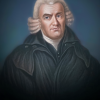
Selected from: John Brown, Preface, in The Psalms of David in Metre (Pittsburgh: John Snowden, 1812).
“I will sing with the spirit, and I will sing with the understanding also.”
— 1 Corinthians 14:15
No part of the Christian worship is more plainly warranted by the oracles of God than the ordinance of Singing of Psalms. The ancient Hebrews practised it at the Red Sea before their system of ceremonial worship was prescribed them by God (Exod. 15). It was preferred to the most pompous sacrifices, even while the ceremonial observances remained in their vigour (Ps. 69:30–31). The divine obligation to it remained in full force when the ceremonial law, with all its rites, was abolished (Ps. 47:1–7; 67:4; 100:1–4; Eph. 5:19; Col. 3:16; James 5:13). We have it enforced with the most engaging example of the angels who kept their first estate (Job 38:6–8; Luke 2:13–14; Rev. 5:11–12), and of apostles and saints (Acts 16:25; 1 Cor. 14:15, etc.); nay, of our Redeemer himself (Matt. 26:30). This exercise, performed in a manner suited to the dignity of the glorified state, will be the everlasting employ of established angels and ransomed men (Isa. 26:19; 51:11; Rev. 5:9–13).
Nor is this exercise of inconsiderable usefulness. The whole glories of Jehovah, as made known to creatures, and all the wonders of his creating power, his redeeming love and providential care belonging to its extensive theme, it is an excellent means of conveying holy instructions (Col. 3:16); of inspiring heavenly affections (Ps. 57:7–8); of recreating holy souls (James 5:13); and, in fine, of bearing up and comforting amidst grief and trouble (Acts 16:25; Ps. 119:54). And hence it is seasonable, not only in this valley of tears, but even in the most distressful condition (Ps. 101:1; Hab. 3:17–18).
It is a duty which ought to be practised by every person in secret by himself (James 5:13; Ps. 119:62–164), by every Christian family and society (Ps. 118:15; Acts 16:25). And in every public worshipping assembly and congregation (Isa 35:1–10; and 52:7–9; Rev. 5:9–10; 14:3; 15:3, etc.).
This duty being of so much importance, we ought to perform it under the special influence of the Holy Ghost (1 Cor. 14:15; John 4:24); with understanding of the warrantableness, matter, manner, and end of our praise (Ps. 47:6–7; 1 Cor. 14:15); with an holy ardour of affection and vigour of mind (Ps. 57:10 and 103:1–2); with grace in our heart, making melody therein to the Lord (Eph. 5:19; Col. 3:16); in the name of Christ as Mediator between God and us (Col. 3:16–17; 1 Peter 2:5); and with an earnest aim to glorify God (Col. 3:16; 1 Peter 4:11). The matter ought to be prudently suited to our occasions and conditions (Ps. 112:5; Eph 5:15); nor ought the melody, or in social worship, the harmony of voices to be overlooked (Ps. 101).
No doubt, one may compose spiritual hymns for his own and others religious recreation, but to admit forms of human composure into the stated and public worship of God appears to me very improper.
(1) It is extremely dangerous. Heresies and errors, by this means may, and often, have been very insensibly introduced into churches, congregations, or families.
(2) There is no need of it. The Holy Ghost hath, in the Psalms of David and other scriptural songs, furnished us with such a rich collection of gospel doctrines and precious promises; an extensive fund of solid experiences; an exhaustless mine of gospel grace and truth; an endless variety to suit every state or condition, in which, either our own soul or the church of Christ can be upon earth. These were framed by Him who searcheth the hearts and knows the deep things of God; and hence must be better adapted to the case of souls or societies than any private composition whatever.
(3) Though the Holy Ghost never saw meet to leave us a liturgy of prayers, yet, from the poetical composition thereof, it is plain He intended these Psalms and songs for a standing form of praise in the church. It is certain they were used in this manner under the Old Testament. The Holy Ghost hath, under the New, plainly directed us to the use hereof (Col. 3:16, Eph. 5:19). The psalms, hymns, and spiritual songs there recommended are plainly the same with the Mizmorim, Tehillim, and Shirim mentioned in the Hebrew titles of David’s Psalms (Ps. 3, 4, 5, and 145, and 120 through 134).
It hath been pretended the language and manner of these Psalms are not suited to the spiritual nature of our gospel worship. That, however, may as well be urged against the reading of them as against the singing of them; nay, against the reading of a great part of the Old Testament in our Christian worship. It is certain, many passages in the Book of Psalms, or of other Scripture songs, are expressive of the exercises of faith, repentance, love, or the like graces, which still remain of the same form as under the Old Testament. The predictions are either accomplished, and so may be sung to the honour of God’s mercy and faithfulness; or, if not accomplished, may be sung in the hopes that God will accomplish them in his time. The history of what God did for his Jewish servants and church may be sung with admiration of his love, wisdom, power, and grace therein manifested. It is further to be considered that much of what related to David, or the Jewish church, was typical of the character and concerns of Jesus Christ and the gospel church, and so ought to be sung with a special application thereto.
As for these Psalms which contain denunciations of divine vengeance upon the enemies of God and his church, we are to consider that these expressions were dictated by the infallible Spirit of God; that the objects of them were foreseen to be irreconcilable enemies of Christ and his church; that those who sing them only applaud the equity of the doom, which God hath justly pronounced upon such offenders; and that they are to be sung with a full persuasion of the event, as a certain, awful and just display of the glory and tremendous justice of Jehovah. Though we ought, therefore, never to apply them to particular parties or persons who have injured us, yet to decline using them, out of a pretence of charity, is to suppose ourselves wiser than him whose understanding is infinite, and more merciful than the Father of mercies, who is full of compassion and delighteth in mercy. Moreover, as these external enemies devoted to destruction were in some sense emblematic of our spiritual enemies within or without us, the passages may be sung with application to ourselves, as directed against these principalities and powers, and spiritual wickednesses in high places, with whom we have to wrestle while on earth (Eph. 6:10, 19; 1 Pet. 5:8, 9; Rom. 8:13; Gal. 5:17, 24).
The Book of Psalms is one of the most extensive and useful in Holy Scriptures, as it is everywhere suited to the case of the saints. It is at first much mixed with complaints and supplications, and at last issues in pure and lasting praise. That Heman composed Psalm 88, Ethan the 89th, and Moses 90th is certain. Whether these under the name of Asaph were mostly penned by him, or only assigned to be sung by him as a master of the temple music, as others were to Juduthun, or to the sons of Korah, or other chief musicians, we cannot determine. Some, as Psalm 74, 79, 126, and 137, appear to have been composed after the begun captivity to Babylon, but by whom we know not. The rest, including these two marked with the name of Solomon, Psalms 72 and 127, might be composed by David, the sweet psalmist of Israel.
Twenty-five of the Psalms have no title at all; and whether the titles of the rest are of divine authority is not altogether agreed. But when it is considered that these titles everywhere appear in the Hebrew original, and how often they serve as a key to the Psalm, and are sometimes connected therewith by the accentuating points, there is no real ground to suspect the authenticity thereof. Nor are interpreters agreed with respect to the signification of some of the Hebrew words standing in these titles. We think that Maschil always signifies that the Psalm is designed for instruction—Psalms 32, 42, 45, 53, 54, 55, 74, 78, 88, 89. Michtam denotes the precious or golden nature of the Psalm, as in 16, 56, 60; Al-taschith, that the scope of the Psalm is to deprecate destruction—Psalms 57, 58, 59, and 75; Muthlabben, that the Psalm was composed on the occasion of the death of his son, or of Goliath the duelist—Psalm 9; Aijeleth Shahar, that its subject is Jesus Christ the hind of the morning—Psalm 22; Jonath-elem-rechokim, that David is therein represented as a mute dove among foreigners—Psalm 56. Shoshannim-nim-eduth, or Shusham-eduth, may either signify that Christ and his people, who are lilies, or lilies of the congregation or testimony, are the subject, or that it was sung on an instrument of six strings—Psalms 45, 60, 69, 80, as Sheminith denotes an instrument of eight strings, Psalms 6 and 12. Mahalath may either signify the disease, and Mahalath Leanoth the afflicting disease, or Mahalath may signify a wind instrument of music—Psalms 53 and 88. Neginoth and Neginah denotes stringed instruments of music—Psalm 4 and 61, etc.; Nehiloth, wind ones—Psalm 5; Gittith, a musical instrument or tune invented at Gath—Psalms 8, 81, and 84; Alamoth, the virginals, or a song to be sung by the virgins—Psalm 46. Shiggaion, or Shigionoth, may denote the diversified matter or tune of the Psalm—Psalm 7. The 120th and the fourteen next following are called Songs of Degrees, perhaps because they were sung on the different steps of the temple stairs, or were sung at certain halts made by David and the Israelites, when they brought up the ark of God from Kirjath-jearim to Jerusalem; or were sung by the Hebrews at their different rests when they came up from the country to their three solemn feast; or were partly sung by the Jews at their different halts in their return from Babylon.