Editor’s Introduction
“And these words, which I command thee this day, shall be in thine heart: And thou shalt teach them diligently unto thy children …” (Deut. 6:6-7).
The final steps leading to the threshold of death rivet the Christian’s mind on what matters most. As a whole lifetime rushes across the terrain of memory, the essentials of life emerge with crystal clarity. Those who listen attentively to the dying saint enjoy a priceless privilege and stand to glean immense insight. The dying expands the horizon for the living.
The advice below does not come from a young man at the commencement of fatherhood, one filled with the optimistic prospects of grand accomplishments in parenting. Some readers would dismiss such counsel as reflective of inexperience and naiveté. Rather, our author writes from a place and perspective beyond all those who read his words. He issues counsel from his deathbed, drawing on the wisdom of a life immersed in the Scriptures and seasoned by hardship and struggle. Furthermore, he does not write to strangers unfamiliar with his life and character – but rather to those who knew him most intimately and sincerely. He spoke to his own children, children comprising a blended family from both his first and second wives. All of these factors should capture our interest and demand our attention.
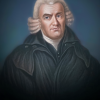
John Brown of Haddington (1722-1787) served as a Scottish Presbyterian minister in the Associate Synod. Born into poverty and bereft of both parents at any early age, he taught himself Latin, Greek, and Hebrew while serving as a shepherd boy and peddler. The influence of Ebenezer Erskine led to his eventual acceptance into the theological hall, followed by ordination in 1751. In addition to laboring as pastor in Haddington, the Synod appointed him to serve as theological professor in 1767. He developed his God-given gifts with arduous discipline and diligence, evidenced by his learning around a dozen ancient and modern languages, while authoring over thirty books spanning theology, history, biography, biblical studies and devotional literature. He wore to tatters five copies of the Bible while preparing his Self-Interpreting Bible (reprinted continuously into the twentieth century), which functioned as an encyclopedic aid to tutor believers in the study of the Scriptures. His voluminous writings molded the minds of several generations in Britain, America and beyond. Spurgeon’s description of Bunyan may apply even more fully to John Brown:
Read anything of his, and you will see that it is almost like reading the Bible itself. He had read it till his very soul was saturated with Scripture … ‘Why, this man is a living Bible!’ Prick him anywhere—his blood is Bibline, the very essence of the Bible flows from him. He cannot speak without quoting a text, for his very soul is full of the Word of God.1Charles Spurgeon, The Autobiography of Charles H. Spurgeon, Compiled from His Letters, Diaries, and Records by His Wife and Private Secretary, vol. 4, 1878-1892 (Curtis & Jennings, 1900), 268.
The Lord granted Brown a spiritual lineage that included notable ministers in several successive generations of his descendants.
God calls Christian parents to pass a spiritual torch to their children. This single task surpasses every other responsibility in child-rearing. Some parents risk fumbling the torch (or even blowing out the flame) by acquiescing to competing diversions of worldly interest, thereby dishonoring the Lord and damaging their posterity. But love for Christ, love for his Word, and love for immortal souls compels us to guide our children in the ways of the Lord.
That so the race which was to come
might well them learn and know;
And sons unborn, who should arise,
might to their sons them show:
That they might set their hope in God,
and suffer not to fall
His mighty works out of their mind,
but keep his precepts all.2Psalm 78:6-7, Scottish Metrical Version.
The letter below portrays a God-fearing father bequeathing a spiritual inheritance to his sons and daughters – and to us, his spiritual heirs. Let us heed his advice and follow his example.
– Robert D. McCurley
Mr. Brown’s Dying Advices to His Younger Children
Selected From: John Brown, Select Remains of the Rev. John Brown (London: T. Bensley, 1789), 264-273.3This volume was prepared by Rev. Brown’s two sons, John and Ebenezer, both of whom were Scottish Presbyterian ministers. I have made slight modifications to the form of Scripture references and punctuation to aid the contemporary reader. This piece was also reprinted in: William Brown (ed.), The Life of John Brown With Select Writings (Edinburgh: The Banner of Truth Trust, 2004), 197-202.
My Dear Children,
Believing that God hath made with me, and with my seed after me, his everlasting covenant, to be a God to me and to my seed, I did, in your baptism, and often since, and now do, before God and his angels, make a solemn surrender of you all into the hands of my God, and my father’s God, and of the God of your mother, and her father’s God; and in the presence of that God, and as ye shall answer at his second coming, I charge you:
1. To learn diligently the principles of our Christian and of our Protestant religion, from your Catechisms and Confession of Faith, but especially from your Bible. God’s word hath a light and life, a power and sweetness in it, which no other book hath, and by it your souls must be quickened and live, or you must be damned forever; and the more closely you press the words of the Bible to your hearts, and pray and think them over before God, you will find them the more powerful and pleasant. My soul hath found inexpressibly more sweetness and satisfaction in a single line of the Bible, nay, in two such words as these, Thy God, and my God, than all the pleasures found in the things of the world, since the creation, could equal.
2. Give yourselves to prayer. Jesus hath said, ‘Suffer little children, and forbid them not, to come unto me: for of such is the kingdom of heaven. I love them that love me; and those that seek me early shall find me. Remember now thy Creator in the days of thy youth. The Lord is good to them that seek him. He is the hearer of prayer; and therefore to him should all flesh come.’ The Lord, the Father of the fatherless, takes an especial pleasure in hearing the prayers of the fatherless young ones.
When I was left destitute of a father, and soon after a mother, the Lord dealt so with me; and though I was too bent on childish diversions, the Lord on some occasions made prayer more pleasant to me than any of them. By prayer improve the Lord as your Father, consulting him and asking his direction in all your ways, and seeking his blessing on your learning, and on whatever you do agreeable to his will.
3. Study earnestly to love, honour, and obey your mother, and to be a comfort to her. Much trouble hath she had in bringing you so far in the world, and much affection hath she showed you. She hath now a double charge and authority over you. The Lord now observes particularly what is done to her. Oh, for the Lord’s sake, do not dishonor her, nor break her heart, by your disobedience and graceless walk; otherwise the Lord’s dreadful curse will light upon you, and ye will readily soon perish: for think what God hath said, Prov. 17:25, ‘A foolish son is a grief to his father, and bitterness to her that bore him.’ Chap. 20:20. ‘Whoso curseth his father or his mother, his lamp shall be put out in obscure darkness.’ See also Lev. 20:3,4; Deut. 21:18,19; Prov. 10:1; 13:1; 15:5,20; 19:13, 26; 28:7, 24; 30:17.
4. Avoid as plagues, every light, frothy, and wicked companion. Be not a disgrace to me, and cause of damnation to yourselves, by keeping company with idle talkers, swearers, drunkards, tipplers, frothy or lewd persons. Scarce anything more infallibly brings persons to misery in this world, or to hell in the next, than loose and trifling companions. Prov. 13.20, ‘He that walketh with wise men shall be wise; but a companion of fools shall be destroyed.’ Prov. 28.7, ‘Whoso keepeth the law is a wise son; but he that is a companion of riotous men shameth his father.’ See also Prov. 1; 2; 5; 6; 7; 9, and 1 Cor. 5:9,11. Never make any your companions with whom you would not wish to appear at the judgment seat of Christ, and with whom you would not wish to live forever.
5. Mind earnestly the infinitely important concerns of your eternal salvation. I hereby constitute the Addresses, annexed to my Shorter and Larger Catechisms, a part of my dying directions to you. Oh, ponder and practice them! Woe to you, if, by your carelessness and wickedness, you thrust the grace of God out from among my posterity! Ah, my dear young children, shall I at the last day have to echo my Amen to Christ’s sentence of your eternal damnation! In order to stir up your concern about eternal things, let me beseech you to read Boston’s Fourfold State, Pearce’s Best Match, Rutherford’s Letters, Guise’s Sermons to Young People, Allen’s Alarm, and Baxter’s Call; but beware of some legal directions in the last two. Read also the lives of Elizabeth Cairns, of Alexander Archibald, and especially the lives of Messrs. Thomas Halyburton, James Fraser, and James Hog. Perhaps also my Journal may be useful to you; but, above all, read the Book of Inspiration.
6. Never affect conformity to the vain and vile fashions of this world: if you do, you disobey God, and hazard the ruin of your own souls. Rom. 12:2, ‘Be not conformed to this world, but be ye transformed by the renewing of your mind.’ Jam. 4.4, ‘Know ye not that the friendship of this world is enmity with God? Whosoever, therefore, will be a friend of the world, is the enemy of God.’ See also 1 Cor. 7:31; 1 John 2:15-17; 4:5, 6; 5:4,19; John 7:7; 15:18,19; Ps. 15:4; 139:21; 119:53, 115, 136, 158.
7. Never marry, nor take one step toward marriage, without much serious and solemn consultation of God, and patient waiting for his direction. By means of rash marriages was the old world defiled; and it was partly on this account that it was drowned, Gen. 6. In consequence of these examples, posterity were cast out from the Church of God to all generations, Gen. 26:34,35; Judah’s family was disgraced and killed, and it is to be feared that his two sons perished, Gen. 38; not only Jehoshaphat’s family, but the kingdom of Judah was almost ruined, 2 Chron. 21-22. How dreadful for your own souls, and for those of your children, if you take into your bosom an unconverted lump of wrath! For the Lord’s sake, let no beauty, no affability, no wealth, decoy any of you into this dangerous snare, which may exclude the grace of God from your family till the end of time. 1 Cor. 7:39; Deut. 7:3,4; Ezra 9:2, 3, 12, 14.
8. If the Lord give you families and children, bring them up for God. I have essayed to point out your duty in this respect in my two sermons at Whitburn and Inverkeithing, which were printed. I pray you seriously to peruse these, and to comply with the advices given in the same.
9. Set the Lord always before you as your Saviour, Witness, Master, Pattern and future Judge. David saith, Psalm 16:8, ‘I have set the Lord always before me: because he is at my right hand I shall not be moved.’ It is the command of God, 1 Cor. 10:31, ‘Whether therefore ye eat or drink, or whatsoever ye do, do all to the glory of God.’
10. Adhere constantly, cordially, and honestly, to the Covenanted principles of the Church of Scotland, and to that testimony which hath been lifted up for them. I fear a generation is rising up, which will endeavor silently to let slip these matters, as if they were ashamed to hold them fast, or even to speak of them. May the Lord forbid that any of you should ever enter into this confederacy against Jesus Christ and his cause! This from a dying father and minister, and a witness for Christ.
Footnotes
- 1Charles Spurgeon, The Autobiography of Charles H. Spurgeon, Compiled from His Letters, Diaries, and Records by His Wife and Private Secretary, vol. 4, 1878-1892 (Curtis & Jennings, 1900), 268. ↩︎
- 2Psalm 78:6-7, Scottish Metrical Version. ↩︎
- 3This volume was prepared by Rev. Brown’s two sons, John and Ebenezer, both of whom were Scottish Presbyterian ministers. I have made slight modifications to the form of Scripture references and punctuation to aid the contemporary reader. This piece was also reprinted in: William Brown (ed.), The Life of John Brown With Select Writings (Edinburgh: The Banner of Truth Trust, 2004), 197-202. ↩︎