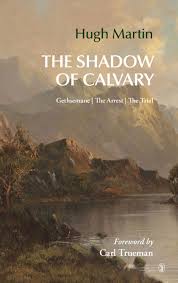
 Hugh Martin, The Shadow of Calvary: Gethsemane, the Arrest, the Trial (Edinburgh: The Banner of Truth Trust, 2016).
Sometimes men pay the least attention to what they see most often. They can drive a familiar route to work on ‘auto-pilot’, noticing few details along the roadside. Physiological developments in children pass unnoticed by parents who see them every day. We, however, become conscious of our oversight as soon as someone points out these overlooked details. A similar experience can occur in reading familiar passages of Scripture. Repeated acquaintance with the wording can leave the language imbedded in our memory, while disabling our inclination to think deeply about the meaning. We appreciate, therefore, the aid of those who come alongside and draw our attention to insights we have failed to observe. Hugh Martin proves an ideal help in this regard.
He served as a minister of the Free Church of Scotland in the period following the Disruption. He stood tenaciously in the old paths of Reformed orthodoxy, while conveying those truths in a manner laden with fresh insight. The Shadow of Calvary provides a notable specimen of those gifts, unequal to most books in our generation. The book draws on the accounts of Christ’s experience in Gethsemane, his arrest and his trial.
The events immediately preceding the Lord’s atoning death convey heavenly transactions that brim with potent implications. The believer senses that he stands on hallowed ground and before profound mysteries. Depths lie below what meets the eye on the surface of the text. But Martin places those revealed truths within reach of even the least experienced believer. He skillfully leads his readers by the hand into exploring those recesses below by weaving together what this reviewer deems three illuminating strands.
First, Martin helps the reader peer into the internal experience of the Redeemer’s soul. In doing so, we learn important biblical truths, but we also glean from the method Martin employs in studying Scripture. For example, he begins with the words recorded in the Gospels regarding Christ’s sorrow and agony in the garden. Then he draws on an array of other Scriptures, chiefly the Psalms, and fleshes out the picture of all that transpires within the thoughts and feelings of Christ in those moments of heaviness. He opens wide vistas that overpower the believing soul, leading the reader to adore the only Savior of sinners.
Second, Martin expounds in painstaking detail the orthodox doctrine of the person and work of Christ. The precision of credal formulations lies underneath all that he writes, but he conveys these truths with color and texture from the accounts within the Gospels themselves. Astute theologians can trace the lineaments of orthodoxy behind his words, but it is the living, engrossing portrayal of the God-Man that captivates the attention. He brings to the forefront of our minds the inescapable bridge between who the Incarnate Son is (his person) and all that he does on behalf of his people (his work). The reader comes to understand more clearly the connection between the Savior’s unique person as God-Man and his ability to secure the salvation of the elect.
Third, at every step into the depths of these biblical truths, Martin probes the soul of the believer and unbeliever alike. While this experimental application penetrates the heart, it never protrudes awkwardly as if forced upon the text. It flows so naturally and clearly from the Scriptures that the reader wonders how it was ever missed. Consequently, the soul stirs at both the illuminating sight of the Savior and the implications for their life and experience. The book throws open a window in heaven, bringing fresh gales that engulf us.
Spurgeon advised young ministers to preach the ‘great texts,’ by which he meant passages lying near the heart of the gospel. He insisted that such savory texts would preach themselves. While true, this wise counsel creates obstacles for young men. How do they expound verses so familiar to their hearers, while bringing forth fresh gleanings from their study and meditation? Again, Martin provides a model, which if studied, will profit both pastors and their people.
The book divides into three sections: Gethsemane (five chapters), Christ’s arrest (three chapters), and Christ’s trial (five chapters), each of the thirteen chapters consisting of roughly twenty pages each. We follow the Savior from the garden to the brink of Calvary, stopping to ponder every detail along the way. Though this period remains the darkest in human history, light falls upon our path as we traverse these steps.
Professor John Murray, former professor at Westminster Seminary, said of Hugh Martin: “All his writings exhibit an unexcelled warmth and fervor. No one could scale the higher heights of sanctified eloquence. His polemics were dignified but his criticism of deviation from the faith was devasting. He gave no quarter at any point to departure from the testimony of Jesus and the whole counsel of God.”
The Shadow of Calvary will draw readers back to its pages again and again. It will prove a great boon to all those preparing for a communion season, as the book presses upon the soul the sublime mysteries of Christ’s atoning love. Readers will receive help with self-examination, the nature of prayer, the exercise of faith, resisting temptation, mortifying sin, the components of sanctified love, and much more, all wrapped in the absorbing manifestations of the glory of Christ. We learn to secure a seat at the feet of Jesus, observing him in every stage of his earthly ministry and gazing into the wonder of his person and the triumph of his work.